
Retro
Social Suplex Newsletter No.14
April 16th 2026
Retro
Social Suplex Newsletter No.14
April 16th 2026
© NJPW
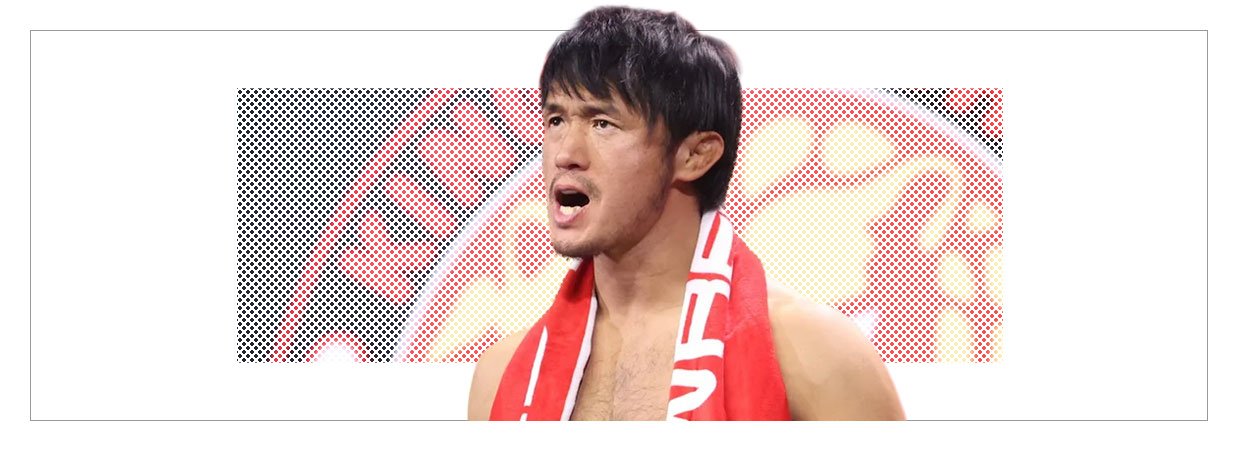
When Fighting Spirit Transcends The Ring: Katsuyori Shibata And The Headbutt Heard Around The World
By Grant Baxter
One of the core elements of pro wrestling is the art of manipulating the emotions of the audience. As a viewer, you are meant to sympathize with the faces and feel irate at the heels. If you ask wrestling fans when they were moved the most emotionally by wrestling, a lot of people would probably tell you that it was when their favorite face was able to triumph and get their crowning moment: wrestlers that were able to tap into an underdog persona and resonate with fans on an individual level tend to get the biggest emotional response. We’ve seen it throughout time with the likes of Dusty Rhodes, Mick Foley, Tetsuya Naito, and most recently, Hangman Page.
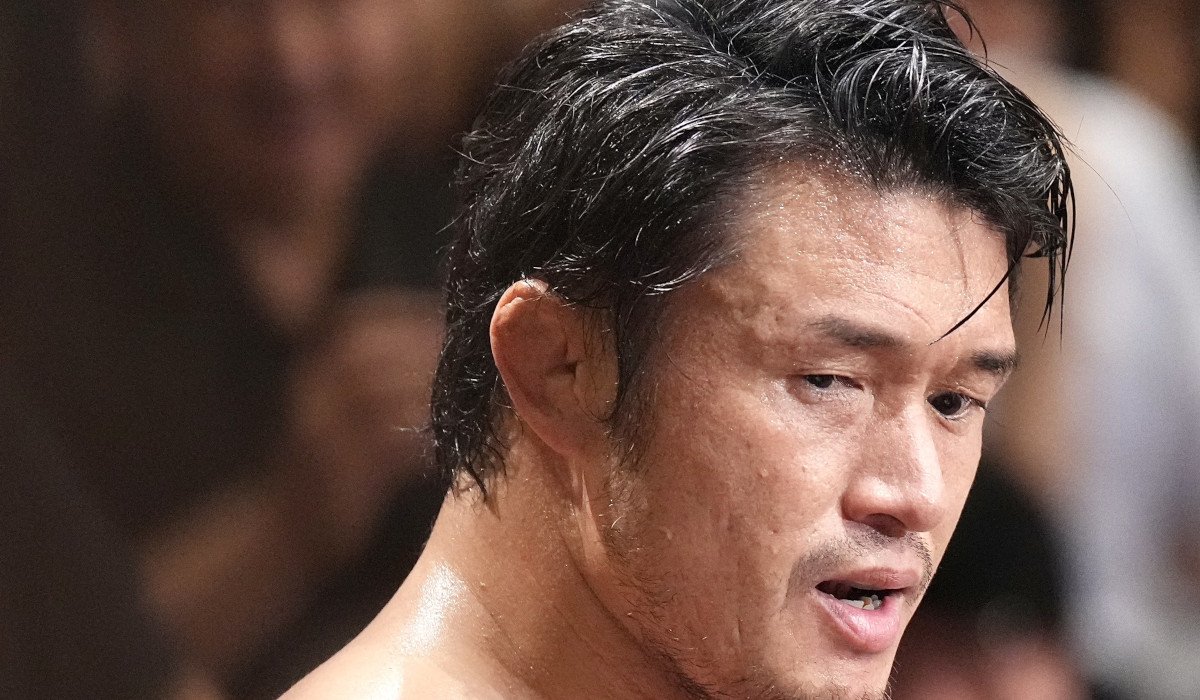
Wrestling rarely moves me like that from a purely kayfabe perspective. There are times where the work in a match is so great I feel emotional from the high level of performance I witnessed, but generally speaking, the times when I have actually felt something on a deeper level have come from that grey area where kayfabe and real life overlap. Think of rivalries that had real life heat, such as Mitsuharu Misawa and Toshiaka Kawada’s rocky relationship throughout their lives outside of the ring, or knowing the context of what a wrestler went through to reach the top of the card when it comes to the hard work they put in or actual struggles they went through in their personal lives. The wrestling match that embodies this more so than any other match I have ever seen is Katsuyori Shibata vs. Kazuchika Okada from New Japan’s “Sakura Genesis 2017”.
To me, this is a match that transcends pro wrestling and that genuinely has made me think about the meaning of life. Yes, that’s right, a worked sport that many look down upon and view as the lowest form of art evoked this level of thought from me. In many ways, those people who frown at wrestling are correct! Wrestling will always be there to disappoint me, and it’s an industry that’s chewed people up and ruined lives, and yet when wrestling does land, I feel a very specific high from it that no other sport or art form can give me. Shibata/Okada epitomizes this.
© yuuri_cameko
I had not yet become a wrestling fan in 2017. That didn’t come until the birth of AEW a few years later, and by that point New Japan’s golden era of the 2010’s was about to come to an end as talent gradually declined or departed the promotion alongside the pandemic turning the wrestling landscape upside down, particularly outside of the United States where television isn’t the primary revenue stream. However, without that golden era of New Japan, I wouldn’t have become a wrestling fan. I saw Bullet Club shirts out in the wild and the rise of Kenny Omega as a mainstream star was what piqued my curiosity into eventually trying wrestling out and learning there was an entire world of wrestling outside of the WWE monopoly and house style that I always found off-putting.
This, of course, means I did not watch this Shibata/Okada match in real time. I knew of Shibata as a name that New Japan fans spoke of like this legendary figure and I knew that he was no longer active due to tragic circumstances. I am normally someone who looks at pro wrestling through a predominantly workrate lens. Many fans, particularly those who only watch American pro wrestling, feel like they need an elaborate “story” to get into a match. While those can enhance a match going in, to me the actual in-ring work should tell the story of the match and a great match stands on its own accord regardless of whether you’ve watched promos or are familiar with the wrestlers and their history going in. With that being said, Shibata/Okada is a special case for me. I cannot separate the fallout from this match and the context of what happened due to that headbutt spot from the work in the match in a vacuum. I’m not sure this match would have moved me in the same way had I watched it in real time, even though the work is on par with the incredibly high ceiling Okada reached during his legendary IWGP Heavyweight Title reign from this period.
When I watched this match, I felt the same way as I do when I read or watch a piece of fiction that ends in tragedy. This match is wrestling’s Romeo and Juliet. One of my favorite tropes in fiction is when a character knows they’ve been beaten but goes down with a fight until the very end until their body can’t keep up with their spirit. Of course, wrestling is different. While it is a work, these are real human beings and real bodies and lives on the line, and it may seem callous to compare these things together. Shibata is alive, and I am grateful that this match and its aftermath didn’t end like other wrestling tragedies have in the past, such as Misawa. I do think real life has these moments of going down fighting as well. In sports, you’ll see players have their peak cut off prematurely due to injury or other circumstances. Athletes like Derrick Rose come to mind, but again, maybe that comparison is in poor taste, because unlike Shibata, Derrick Rose’s life wasn’t on the line from his injury. Even in the art world, you’ll see musicians and performers have their careers ended early due to their own personal demons or whatever other challenges life throws at them.
The match is the embodiment of going out in a blaze of glory. Shibata’s career was already marred by tragedy and controversy, and he scratched and clawed his way through it to get to this point. Shibata was involved in a freak accident where another wrestler, Masakazu Fukuda, died from a match they had in the 2000 Young Lion Cup. Despite being appointed one of New Japan’s “New Three Musketeers,” Shibata wound up leaving New Japan in controversial fashion in 2005 to help form the shoot style-based Big Mouth Loud promotion as well as do some freelance work. While the details behind his departure are unclear, it happens to coincide with the year Antonio Inoki’s controlling stock in New Japan was purchased, and with Shibata being one of the last disciples of Inoki and working a style of wrestling that remained true to Inoki’s spirit, you can put two and two together. In 2007, Shibata left pro wrestling to pursue a career in MMA that didn’t exactly take off. In 2012, he made his return to New Japan and to pro wrestling (outside of a tag match in Inoki Genome Federation in 2011), but many wrestlers, particularly Hiroshi Tanahashi, weren’t thrilled with his return and saw him jumping on the bandwagon of something they had built after he had abandoned them. However, this period of Shibata from the return during the early stages of New Japan’s golden era until the faithful day of April 9th, 2017 is pretty much universally seen as the best run of Shibata’s career and is the version of Shibata that became a darling amongst a certain segment of the fanbase.
In what feels like unintentional foreshadowing, the VTR before Shibata and Okada’s 2017 match recaps Shibata’s tumultuous history with New Japan and his path towards earning the IWGP title shot against Okada. Watching the match with hindsight, it really does feel like this VTR is building up the match as if it’s the peak of Shibata’s career, which wound up being true. These two have an incredible match worked at the level only two all-time great workers at the peak of their powers would be capable of, and Shibata, after finally working his way back to the top of the Japanese wrestling scene, takes the cocky yet seemingly invincible Okada to his limit and Okada demonstrates vulnerability.
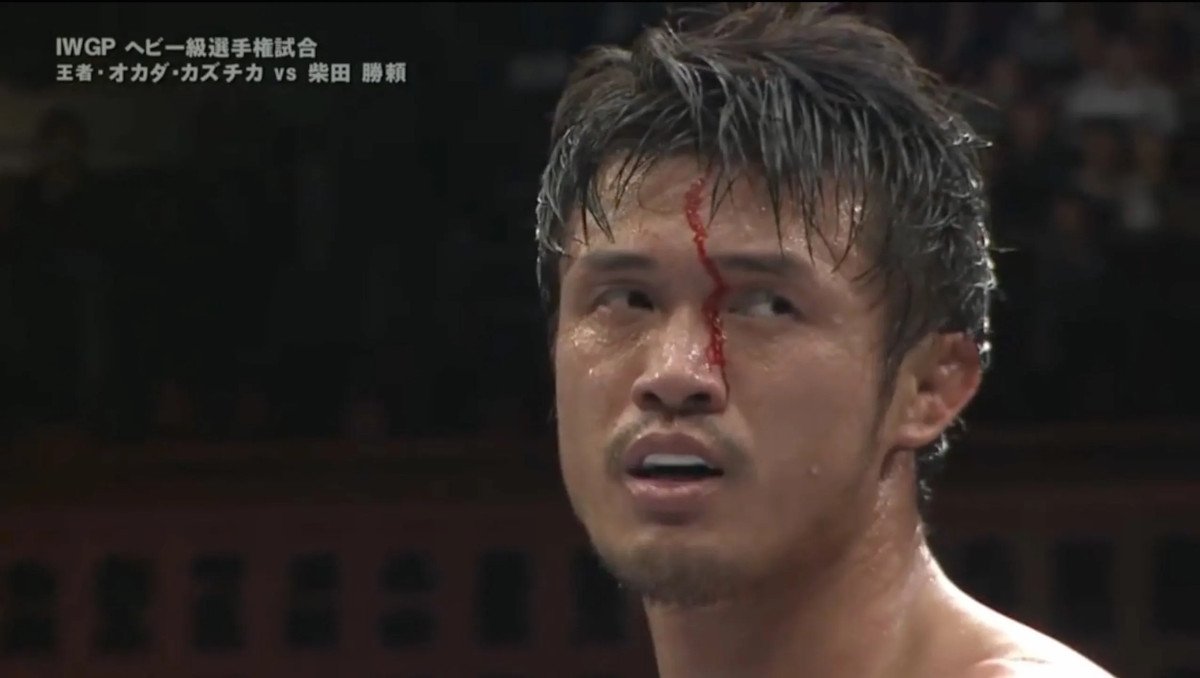
Then, the headbutt happens.
© NJPW
It has a sickening thud to it, about as loud as any of the strikes or bumps on the mat heard in the match. Seconds after it’s delivered, Shibata infamously starts oozing blood down his face from the gash in his forehead that the headbutt gave him. In an eerie example of reality blending with the worked world of professional wrestling, Shibata’s chances to win the world title both end shortly after the headbutt, as Okada regains control within the next few minutes, and the demise of the Katsuyori Shibata we knew ended there. Shibata finishes the match, but after he gets out of the ring, he stumbles around ringside in a disoriented manner. The Young Lions at ringside are trying to point him to the back as he slumps towards the wrong direction, seemingly having no idea where he’s going. He looks as if he can barely stand and continues to stumble as he makes his way to the back and Okada gives his victory speech and an angle happens as if everything is normal. If you were watching this match as it happened, you probably would have just thought Shibata was selling the match he’d been through and the loss from eating a Rainmaker. Knowing what actually happened, it’s unsettling to see. Shibata really was barely holding himself together.
The headbutt is the perfect example of how suddenly life can take something away from us. Shibata gave the performance of his career in the biggest spot of his career, and because of one single moment, The Wrestler as we knew him met his demise. To be fair, according to what Dave Meltzer reported on the incident and its aftermath, a mix of dehydration and the repeated use of shoot headbutts adding up over time was what led to Shibata’s hematoma and partial paralysis after, but that headbutt in particular was the moment everything changed. To me, the match embodies both how incredible humans can be but also how fragile we are. Shibata displayed pro wrestling at the highest level in a masterful match with an incredible level of attention to detail and polish. He takes plenty of nasty strikes and drops from Okada as well, yet much like how tragedy can strike without warning at any moment, one single move destroyed a man who had an aura of being an invincible tough guy.
I think of life like grabbing a handful of sand on the beach. It slips away and is gone before you know it. Saying that life is short is a cliche, but it really is true. As you get older, years start to pass by much like the handful of sand. Some people are concerned most with living as long as possible and do everything they can to find wellness secrets to squeeze a few extra years out of their lifespan. Obviously, it’s good to take care of yourself, but I’ve never been necessarily concerned with how long I live. What I do think about every single day is getting the most out of life. To me, a fulfilling life where I accomplished all of my goals and that I can feel pride in who I am as a person is much more important than living until I’m ninety years old or whatever. I’d gladly trade a few years off my life in order to find fulfillment rather than live a long yet uneventful life. Death, loss, and life-altering tragedy don’t come when you’re ready for them, but we can all live without regret while we have time. Many folks aren’t afforded the privilege of good health or being able-bodied from the start of their lives. That’s not to say recklessness is good, but there’s a difference between taking unnecessary risks and doing something like cliff diving because you are genuinely passionate about it.
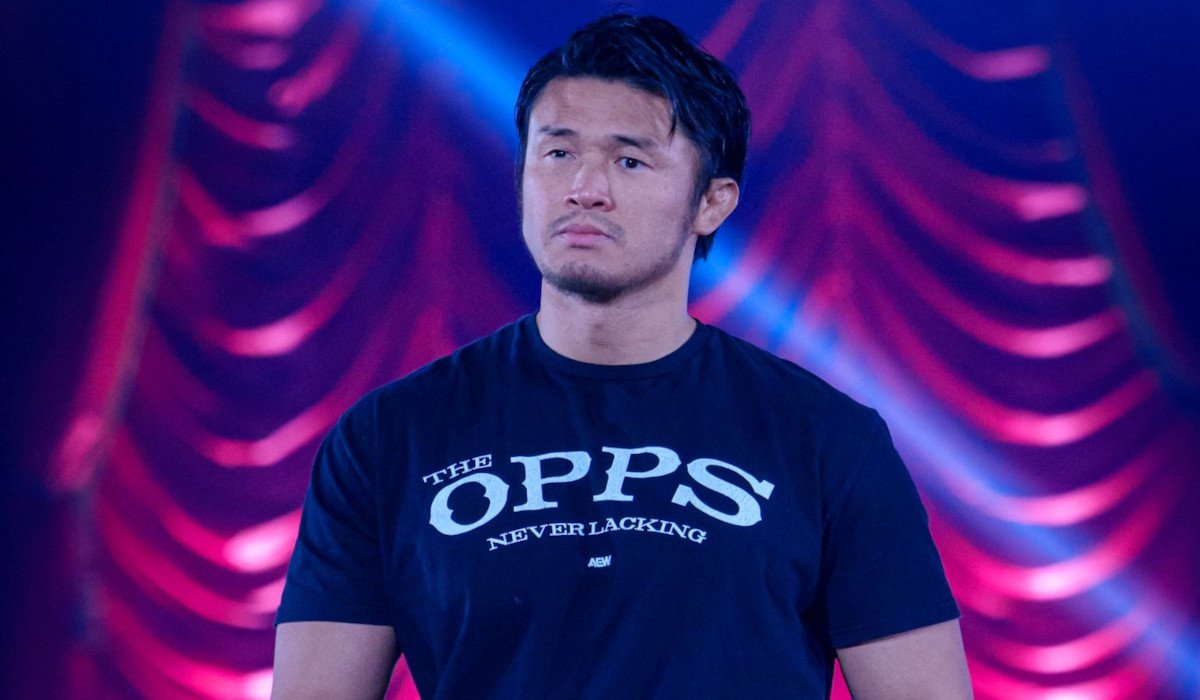
This leads us back to Shibata. Obviously, the man is still alive, but he legitimately had to fight for his life after that match with Okada. The next few years were tumultuous, with Shibata struggling to be able to have the physical ability to wrestle again, and again struggling to be medically cleared by New Japan. He had a few grappling exhibition matches, including one against Ren Narita that was meant to have no strikes allowed. However, Shibata went into business for himself and declared it to be regular match on the spot without being cleared by New Japan’s doctors to do so (as Dave Meltzer later revealed), and we didn’t see him truly wrestle again until he wound up popping up in AEW and ROH, where he now works full time. However, I mentioned that “The Wrestler” version of Shibata met his demise shortly after he hit that headbutt on Okada. If you’ve seen him wrestle in Tony Khan’s promotions, this is not the same guy he once was. I had the opportunity to finally see Shibata live recently at a Dynamite I went to, and while I am happy for Shibata every time I’ve seen him wrestle after he made his return and grateful he is alive and able to wrestle, I couldn’t help but feel somewhat empty. I was finally seeing a wrestler I had heard spoken of like a legend in person, yet I didn’t feel like I was watching that person. Instead, “The Wrestler” left it all in the ring against Okada on April 9th, 2017.
© middle_wr
I don’t want to project my own life philosophies onto Shibata, a man I don’t know and will most likely never meet. Parasocial relationships are particularly common these days in pro wrestling circles when we can see more behind the scenes than ever thanks to social media. A lot of people want to see themselves and their own values in the wrestlers they like, and sometimes fall for the public personas of wrestlers, who are professional liars. More often than not, wrestlers will let you down and have a skeleton in their closet. With that being said, I can’t help but wonder how Katsuyori Shibata, the human being, feels about how his life and career has played out. If you go back and look at columns and blog posts from 2017 shortly after the “Sakura Genesis” match happened, many pundits wagged their fingers at what Shibata did and clutched their pearls at the dangers of Japanese wrestling, despite many of them only being casual observers of the scene and not understanding the diversity of styles in Japan throughout many different promotions.
There have been more conversations than ever about dangerous spots in wrestling, even though wrestling is safer than ever, as pointed out by Voices of Wrestling’s Jesse Collings recently: Why does nobody talk about wrestling being safer than ever? While many of these conversations are in bad faith and many people misunderstand the ability wrestlers have to take dangerous looking moves in a way that protects themselves, we can all agree there is no safe way to throw a shoot headbutt. We know about CTE and the many risks that trauma to the head presents. However, I don’t admonish Shibata or what he did. The man knew and understood the risks and did it anyway, because that was the style of pro wrestling and intensity level he wanted to present. I am not saying wrestlers who take these types of risks are better wrestlers than those who don’t or are braver human beings, nor do I encourage wrestlers to take these risks, but I can’t help but admire Shibata for his willingness to give his body to his craft and put his life on the line. I am of the belief someone should be able to do whatever they want with their own bodies. Do I think something like the Jackass series, that I’ve always viewed as just getting hurt for the spectacle of it, was worth it? No. Do I think Shibata’s headbutts added to his wrestling matches? I do.
Was it worth it? If I could talk to any wrestler off the record and ask them any question, that’s what I’d want to ask Katsuyori Shibata. Maybe he doesn’t regret what happened and feels like he gave his all to wrestle the way he wanted. Maybe he wakes up every day in regret that his body and career were forever altered. Maybe he’s just happy to be able to wrestle again and doesn’t think that much about the past. He is now frequently featured on national US TV, was briefly part of a main event act when Samoa Joe briefly had the AEW World Title late last year, and is probably making more money than any other point in his career. Maybe Shibata sees more to life than wrestling, or his true passions in life don’t lie with wrestling. He left wrestling for several years to pursue MMA and returned at a time when New Japan was starting to get hot. Maybe he kept wrestling just to keep having a career, but we also saw in the years after the Sakura Genesis match that he seemed to desperately want to wrestle again.
When it comes to real sports, every Olympic athlete wants to win a gold medal and every baseball player dreams of winning the World Series. However, because there’s no objective top of the mountain in wrestling, every wrestler has their own goal. For some, it’s about money. There’s an entire generation of wrestlers that views WWE as the “big leagues” and dream of appearing at WrestleMania. Some wrestlers just want to leave their legacy as being the best at having great matches, such as Kenny Omega or Will Ospreay. There’s more to life than pro wrestling, but for some, pro wrestling is their life.
As a fellow human being, I just hope Shibata is content with himself, his career, his life, and his health, and I am grateful that his willingness to push beyond his limits in the wrestling ring led me to think about the wrestling industry, life, and my own mortality on a deeper level.
No wrestler will ever shine quite as brightly as Katsuyori Shibata did on April 9th, 2017.
© Chris Gannon
A Match You Should Know About: Safire Reed v Mercedes Martinez
By Chris Gannon
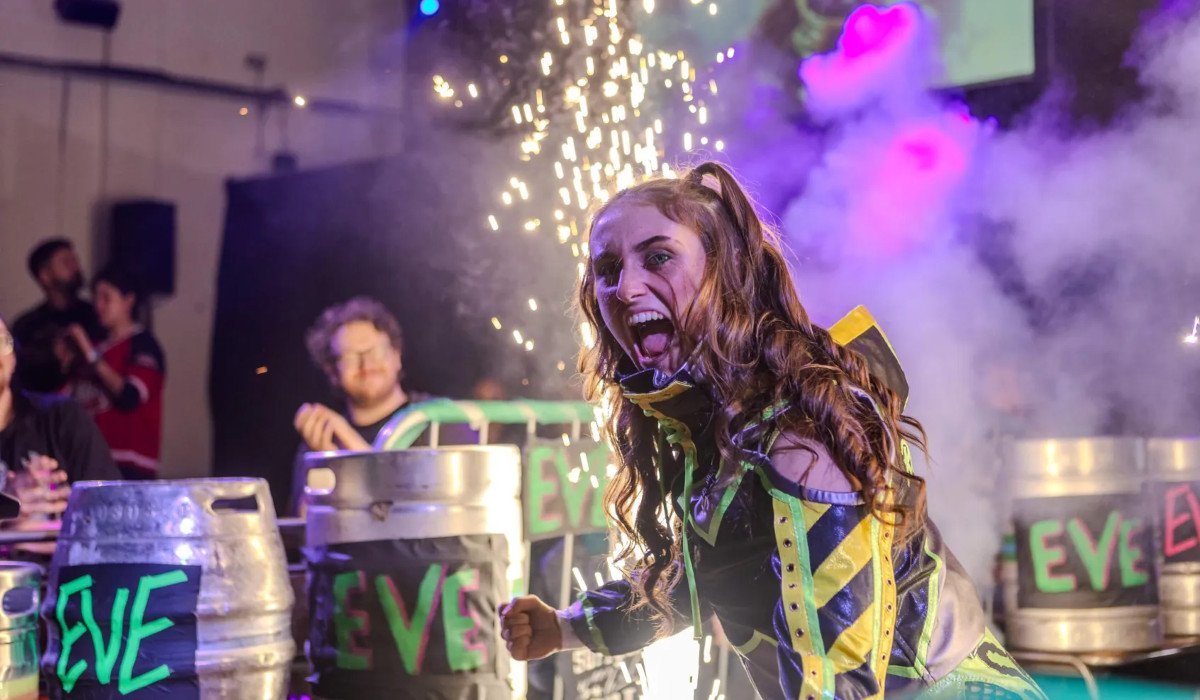
On the 11/3/26 episode of Joshi’ing Around Weekly, during their review of EVE’s “Wrestle Queendom 8”, one of the co-hosts, Eric, wondered how the UK had managed to produce a talent on the level of Safire Reed. At 22, she’s one of the standouts on the UK scene, ranked number 20 on the Social Suplex Women’s 50. She’s already worked in Germany and America and is about to work in Japan on an extended tour with Sendai Girls. She is a wrestler who is already getting a lot of attention and is about to get a whole lot more, and there is one match that acts as a pivotal point in her career, and it’s a match she had in July 2023 against Mercedes Martinez.
The Steamboat Scale
It opens in the Yard Theatre in Hackney, a venue with a little over a hundred people, all amped up from a so far excellent show. Safire Reed enters, firing up the crowd to get them ready for her first main event of an EVE show, being loud, proud and ready to go. And yet, when you look in her eyes, it betrays that she is terrified because this match is going to be different. When it comes to wrestling matches, there is a scale of how prepared the performers are when they get into the ring. It’s a scale that’s best exemplified by two different matches that Ricky Steamboat fought in. The first was against Randy Savage at “WrestleMania 3” in 1986 where the match was scripted move for move by Savage, with every move numbered and everything set beforehand. The second was an NWA World Heavyweight Title match where Steamboat and his opponent, Ric Flair, knew the time they had and the finish of the match but they planned nothing else out beforehand. They were ready to call everything in the ring. This match was going to be much closer to the latter than the former, the first time where Safire was going to be working a match where it hadn’t been planned entirely beforehand, where she was going to have to work everything but a few planned spots with her opponent live. She projected confidence to the crowd. Her eyes let you know that she was bricking it.
Her opponent, Mercedes Martinez, had been wrestling for literally longer than Safire had been alive. She was one of the toughest wrestlers you would ever see, and everything you need to know about her could be shown by the boots she wore. Heavy boots with thick soles, that let you know about the no-nonsense ass-kicker that she was.
The crowd was behind Safire, they’d seen her grow as a performer for the last year, working harder and harder, showing how capable she was even though she was yet to get a victory. Mercedes was also someone the crowd loved, having done several shows in 2019, showing her toughness and ability, even reaching the SHE-1 finals that year. Before that she’s been a shining light of the women’s independent scene, working all over the world and earning the reputation of one of the hardest fuckers in wrestling, regardless of gender. She was ready to teach Safire a lot of lessons.
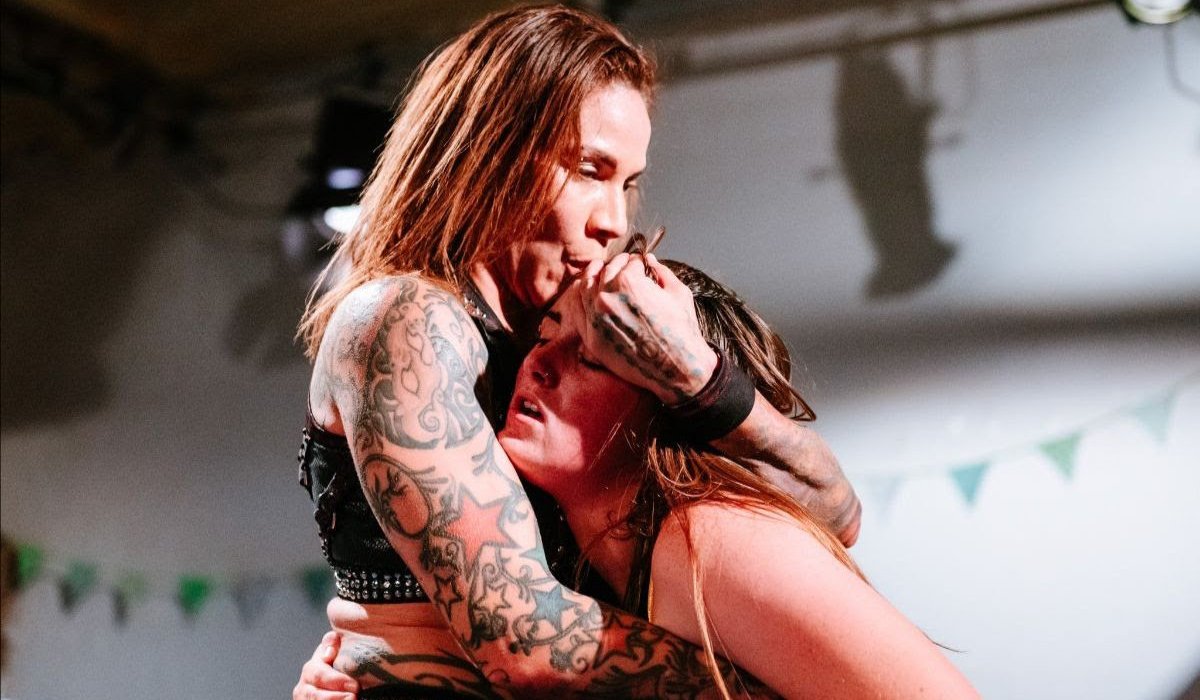
They spent the first minute circling each other before finally locking up, with Mercedes easily outclassing the less experienced Safire, throwing her into the corner and posing to the crowd. They locked up again, with Safire pinning Mercedes for a one count, afterwards trying to show Mercedes that she wasn’t scared. Mercedes took that as a challenge.
They grappled for a while before Mercedes struck Safire to assert dominance. They fought more, and every time that Safire looked like she was gaining an advantage, Mercedes struck back, showing that she was not going to go easy on her. They continued to fight, grappling, striking, the flow of the match shifting back and forth between them and then Mercedes showed her true veteran status by poking Safire in the eyes. Underhanded, certainly, but effective. They fought more with Mercedes using every means, both fair and foul, to stay on top. They fought to the outside, with Safire briefly coming out on top, before Mercedes threw her into the ringpost and then played to the crowd, letting them know she wasn’t breaking a sweat in spite of the humid July day. Mercedes kicked Safire in the ribs, but that fired Reed up, to drive her opponent into the stairs of the Yard Theatre, and start unleashing a flurry of punches. She might have been the rookie in this situation, but she was not going down easily. She punctuated that with a superkick to Mercedes as she lay prone on the stairs. Safire moved the match back into the ring, but sadly Mercedes took control, forcing Safire into the corner and stomping her down. After a brief separation, Safire fought back against her more experienced opponent, landing an enzuigiri then forcing Martinez back into the corner unleashing a flurry of offence, before forcing Martinez back to the centre of the ring and hitting a diving European uppercut. The offence went back and forth until Martinez hit Safire with a half and half suplex, before Martinez did something she hadn’t done so far in the match: taking some time to recover.
For the first time it was clear that Martinez couldn’t rely on her veteran status to dominate the match and had to recalculate her approach. She tried pinning Safire three times, each more imposing than the last and each met with a defiant kickout. She tried paintbrushing Safire, only to be met with another enzigiri. Safire forced Martinez into the corner, and Martinez lifted her over the top rope and dumped her to the floor. A sign of dominance, certainly, but also a sign of desperation, showing she needed space from the young upstart. After a brief scuffle on the outside, they moved back into the ring where Reed gained the upper hand using a shotgun dropkick off the middle rope. Reed went for a Border City Stretch and Martinez responded by biting down on Safire’s hand. Martinez hit a spinebuster, and followed up with a folding press but it wasn’t enough. She couldn’t hide her rage at Reed being able to kick out. Martinez beat her further, forced Reed up onto the ropes and hit a Razor’s Edge piledriver, and still that wasn’t enough to keep Reed down. Martinez screamed, the crowd roared. Reed tries to get some trap pins, with a rollup and backslide, and both are met by a kickout at one by Martinez. Reed hits a shining wizard, gives Martinez just enough time to recover and then hits her with a second, then pins her. One, two –
Martinez grabbed the rope –
She couldn’t kick out, but she could prevent the loss. Reed looked devastated for a second, before picking herself up to try to put Martinez down for good. Reed was met by an air raid crash, three knees to the face, a forearm to the back of the head, and finally the Brass City Sleeper. It was over, and Reed had no choice but to tap.
As the bell rang, every single person in the audience was applauding for the incredible match they’d just witnessed.
© EVE
Watershed
As a Safire Reed fan, I can tell you that this match acts as a demarcation point in her career. Beyond just being an incredible match in its own right, this was one where she was forced to work without every single bit of it worked out beforehand, one where she had to trust in the veteran she was facing to lead the match moment by moment and trust that it was going to turn out well. She not only survived this match, but she thrived, reportedly calling moves herself at points and responding to the crowd in front of her.
As a fan, I don’t particularly care if a match is entirely spontaneous or scripted from the opening bell to the final pin, so long as what’s presented is entertaining. That said, when a match is entirely generated in front of your eyes, you can’t help but feel that you’re seeing a magic act happen right in front of you, as a piece of art is born in front of your eyes. Dann Read, the booker of EVE, said that he put this match together not just because it would be a great match, but also because it was an investment in Safire Reed as a future main eventer, and that seems to have paid off many times over. After this point, Safire Reed had a visible amount of confidence in herself as a wrestler, and in the last two and a half years she has only grown as a performer. Along with her tag team partner Anita Vaughan, she’s about to embark on her first tour of Japan with Sendai Girls. I’m looking forward to seeing what the two of them accomplish as a team, but I feel certain that Safire is going to have an incredible singles showing as well. If you don’t already have a Wrestle Universe subscription, get one now because it feels like the next three months are going to pay for themselves.
This newsletter is free to access with the ambition of providing news, data and analysis to as many people as possible. All contributors are compensated for their content as we look to provide a home for both existing and emerging writers, photographers and artists.
AEW: Revolution 2026
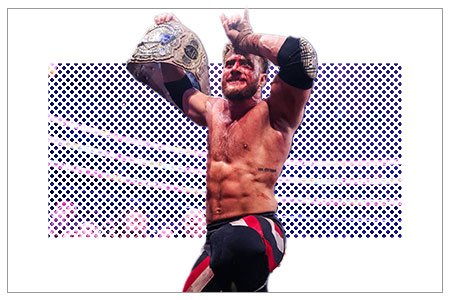
Emiliana Rico-Toro shines light on the masterful story behind the Texas Death match with another of her stunning, one-of-a-kind recaps of Revolution
Accountability In Wrestling
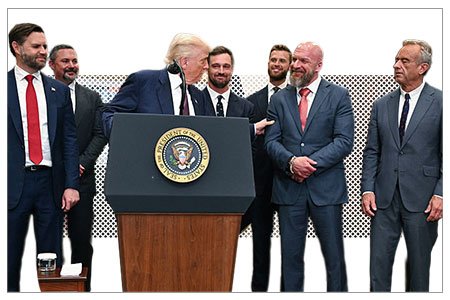
Seán O’Brien discusses ongoing political and social issues and how they interact with the wrestling industry
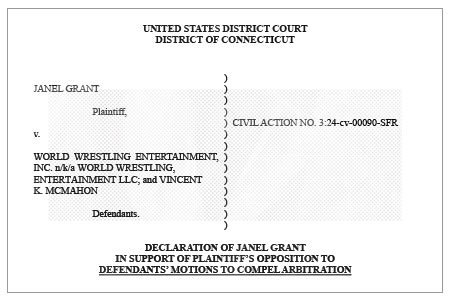
WrestleMania News
David Hayter reviews what has been going on in WWE, all the good, the bad, and the downright ugly, while H. Katch reminds us all of the importance of not forgetting Janel Grant’s plight
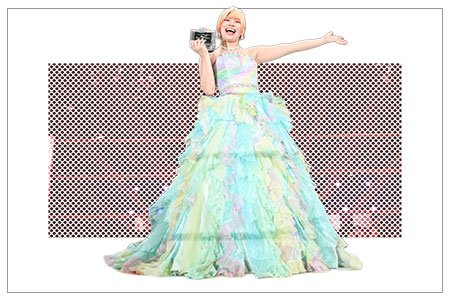
The Road to All Star Grand Queendom
Within our best-in-class coverage of Japan, we take a look at the road to STARDOM’s biggest show of the year, as well as looking at almost every Japanese independent you can think of
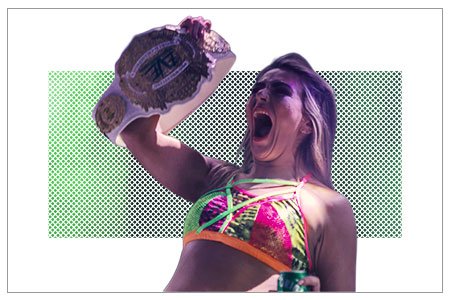
EVE’s Historic Weekend
Peter Edge reviews EVE’s show which broke the record for an all-women’s show in Europe with over 1,200 fans packing the O2 Indigo in London
Check out these other articles from this week!
The Road to All Star Grand Queendom
Within our best-in-class coverage of Japan, we take a look at the road to STARDOM’s biggest show of the year, as well as looking at almost every Japanese independent you can think of
AEW: Revolution 2026
Emiliana Rico-Toro shines light on the masterful story behind the Texas Death match with another of her stunning, one-of-a-kind recaps of Revolution
WrestleMania News
David Hayter reviews what has been going on in WWE, all the good, the bad, and the downright ugly, while H. Katch reminds us all of the importance of not forgetting Janel Grant’s plight
EVE’s Historic Weekend
Peter Edge reviews EVE’s show which broke the record for an all-women’s show in Europe with over 1,200 fans packing the O2 Indigo in London