
Features
September 18th 2026
Features
September 18th 2026
© kimikimimaito_x
G1 Final 2026: Was It Really Great?
One man’s thoughts on a match that broke people’s brains for a good week and a half
By Grant Baxter
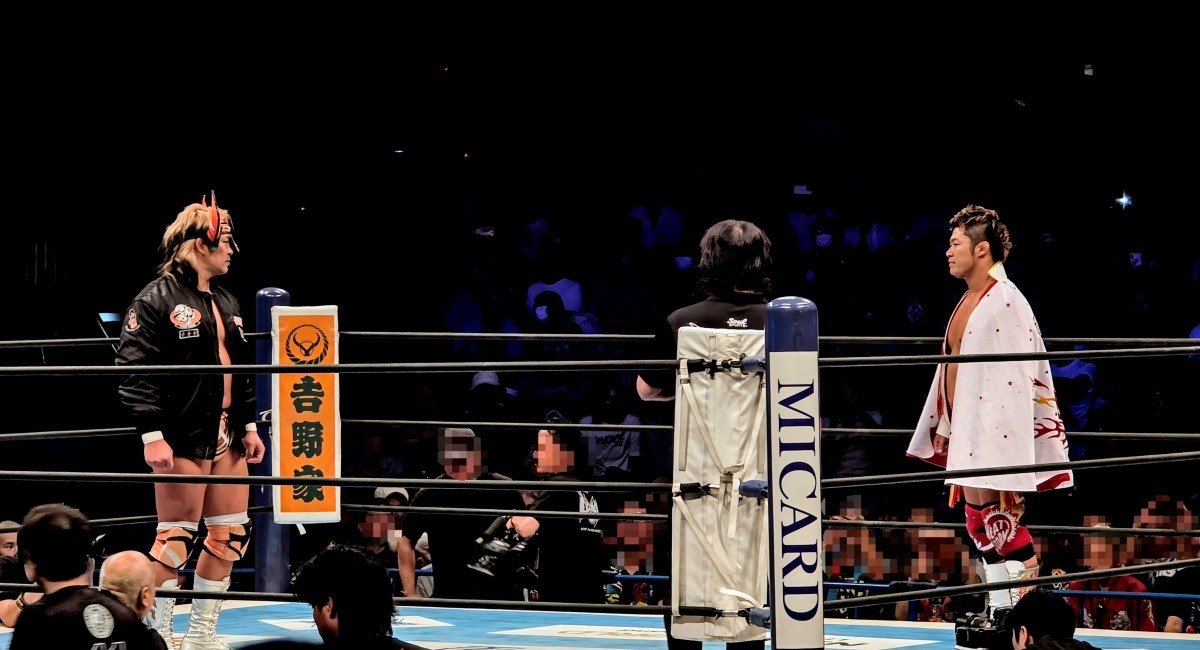
At the time of this writing, the 2026 G1 Climax final between Ryohei Oiwa and Yuya Uemura is ranked in the top 25 matches of all-time according to Cagematch. It sits within less than a tenth of a point between Bryan Danielson vs. Will Ospreay from 2024, Mitsuharu Misawa vs. Toshiaki Kawada from June 4th 1994, and Kensuke Sasaki vs. Kenta Kobashi from NOAH “Destiny 2005”. It’s also sitting above Kenta Kobashi and Tsuyoshi Kikuchi vs. the Can-Am Express from 1992 and Will Ospreay vs. Shingo Takagi from Best of the Super Juniors 2019. All of the matches I mentioned are contenders for what I think is the greatest wrestling match I have ever seen, and I could name countless others on the top 100 list that I believe to be a better match than Oiwa/Uemura. People will mock me for getting upset about Cagematch ratings, but Cagematch – to me – is a very important resource and is the closest thing wrestling has to an overall historic record of match quality. I think this is far different from those who get outraged over Dave Meltzer’s star ratings. At the end of the day, while Dave has been a tremendous tastemaker historically, his ratings are the opinions of one person. Cagematch differs because anyone can submit a rating, and I think its ratings generally and truly reflect what the best matches are and who the best workers are – because to be amongst the highest rated matches or wrestlers, you have to get hundreds of people smarky enough to even know what Cagematch is to make an account and all agree pretty universally.
My opinions on both Oiwa and Uemura going in were not great. Oiwa is someone I’ve been constantly underwhelmed by since his return from his excursion to NOAH. In NOAH, he excited me, between the confidence he carried himself with, his body type and elements of his working style that felt like a throwback, and his feud with Kaito Kiyomiya where he showed an edge I feel has largely been lacking from the men’s side of Japanese pro wrestling so far this decade. However, since he returned to New Japan, slotting him in as another member of TMDK, having a lackluster points total in his first G1, and not really being featured in prominent matches on big shows made my excitement for his return fade away. I understand that is the way Gedo books, but when you push someone like David Finlay, who was already being pushed because so many actual stars had departed, over someone like Oiwa, it feels like you are telling me as a fan that these younger guys can’t hack it over the wrestling equivalent of a bench player starting because someone else got hurt. More importantly than how he was booked and presented was his underwhelming presence and match quality. He didn’t come across like he exuded confidence and toughness like he did in NOAH, and his singles matches were good but I never came away from them excited. Even in some of his acclaimed tag matches with Zack Sabre Jr., he felt like the fourth most impressive guy in the match and I felt like the heavy lifting of that team was largely done by Zack, who I consider to be one of the greatest wrestlers of all time. Oiwa’s build, his excursion to NOAH, and some of his moves, such as a senton or Doctor Bomb, harken back to the King’s Road lineage and my favorite style of wrestling. However, Oiwa doesn’t work to that style or intensity, and while this may be my fault for projecting onto him what I want out of him instead of what he actually is, I feel like he hasn’t become the kind of wrestler I find exciting on paper even though he has the tools to do so.
Yuya Uemura was my favorite of his era of young lions. He struck me as having a certain level of snap and explosiveness to him that resonated with me. Imagine my horror when he returned to join Just 5 Guys, the short-lived unit led by Sanada that had absolute geek energy even when Sanada was holding the world title. On top of that, any sense of intensity I got from him as a young lion quickly vanished when he made it clear his matches were going to be built around doing arm drags. Commentary kept putting over his fundamentals and constantly compared him to Ricky Steamboat, and Uemura’s double-armed chops were a deliberate nod to Steamboat. Many folks compared his look and insistence on being a pure white meat babyface to a young Hiroshi Tanahashi, and he even started doing his own version of the High Fly Flow. I might be more disconnected from what pundits think of Uemura more than any other non-WWE wrestler in the world right now. I have NEVER been bored watching Ricky Steamboat or Hiroshi Tanahashi in a big match. They had a level of energy and charisma that only a handful of wrestlers in history can match. Doing a fundamentally sound arm drag does not make you Ricky Steamboat. Steamboat is an all-time great because his work was snug and dynamic, he could garner sympathy by how he’d bounce all over the place taking bumps, and his big matches were filled with heat. (Ironic, given that Uemura has the moniker of “Heat Storm!”) The work from Steamboat’s era may not have the flashiness of modern wrestling, but the best wrestlers have matches that hold up from that period because of how well they’re paced and structured as well as the work having a grittiness to it that I feel like is a lost art in modern wrestling when it comes to basic moves and fundamentals. The Tanahashi comparison offends me just as much because Tanahashi was the complete package far earlier than a lot of people realize. I watched some 00’s Tanahashi late last year in preparation for his retirement, and by about 2007-2008, he was the Hiroshi Tanahashi we know and love in terms of charisma, presence, and wrestling genius, and he has plenty of matches that are equally as good as his more famous legendary matches from the 2010s. If you think I’m being harsh, Uemura has brought these comparisons onto himself and was just in a G1 final. He graduated from being a young lion in early 2024. I don’t get him. He reminds me more of Sanada than Hiroshi Tanahashi. Like I said with Oiwa, he should have all the tools on paper but just comes across bland and generic in practice. He is maybe the most dull “good” wrestler I have seen from this century. Because of his New Japan dojo training, there is a good base working standard there, but I’m always bored watching his matches.
Charisma is part of in-ring work in pro wrestling. I don’t mean this in the sense some do where you need a silly gimmick or comedy spot to entertain me. Instead, I think you have to show fire, intensity, cockiness, or some other sort of edge to help invest me in your match, particularly if you’re going to do the most basic of moves. Take Kento Miyahara for example, who I personally think is an all-time great worker. His finisher is a straitjacket German suplex, which probably wouldn’t be considered unique enough of a finisher even in the ‘90s for a lot of promotions. However, the way Kento sells the struggle and desperation of trying to get his opponent into position and then lift him up is one of the most dramatic and compelling things in wrestling. This leads me into the actual G1 final itself. When I watched Oiwa and Uemura, I watched it the same day it happened, but I also came in knowing the Cagematch rating and seeing it at the time rated above even Misawa/Kawada and Kobashi/Sasaki. Perhaps I was a victim of expectations, but I was certainly not underwhelmed by any of the top 30 or so highest rated matches on Cagematch before this. Given my thoughts about both wrestlers involved going into the match, you could argue there was a bias there, but I didn’t come in wanting to dislike the match. I wanted to see one of the greatest matches of all time. Instead, once I realized what they were going for, my excitement plummeted. To the credit of both guys, the first few minutes felt like the finals of a tournament. I never felt like I was going to fall asleep during the match, but while it was well worked, it was about as uninspiring as what I feel an objectively “good” match can be. The match essentially reflects my feelings on both wrestlers, particularly Uemura. I have to give credit to the fact that they had the crowd invested, especially given they were having this style of match in the year 2026 and went for 35 minutes. Uemura in particular seems to have built a crowd connection. Uemura and Oiwa have to be doing something right as wrestlers if they’re able to do that. However, I just don’t feel like either guy has anything special about them.

A lot of the reactions to this match feel like part of various culture wars. I feel like New Japan fans want to pretend this generation of wrestlers is on the same level as the prior generation of guys like Tanahashi and Okada. They want to feel like they were right about this current generation. I feel like this match is proof these guys aren’t on par with their predecessors. They can’t have the main event “epic” that New Japan was renowned for in the 2010s. There has been praise heaped onto Oiwa and Uemura for trying to carve out their own style for their generation, and while I agree in theory that they need to find their own identity, are they really doing that? This match is trying to emulate something from the ‘80s, but to me failed to have the intensity or physicality of something like Flair/Steamboat. It also was as long as the main event matches of the previous era and as a result, I think it suffered from a lot of periods of sitting in holds. Is it really innovating if you’re merely pulling from the past? How are these guys carving out their own style if one of them is doing a Ricky Steamboat tribute act? I’m not against the idea of wrestlers emulating all-time greats, but they have to be able to rise to that level. Compare Uemura to Go Shiozaki, who emulates Kenta Kobashi in many ways and is someone who could have made my GWE 100 had I made a list. I’m not against a throwback style or aesthetic either, but compare any of this current generation of New Japan wrestlers to Yuma Anzai in All Japan. Anzai harkens back aesthetically to the likes of Jumbo Tsuruta and even does Jumbo’s signature jumping knee as a tribute, but unlike Uemura, he has created his own moveset and has the fire, charisma, and working ability to hang with the prior generation. He had a match I nearly gave five stars to against the aforementioned Go Shiozaki in this year’s Champion Carnival, and if you can shine as bright as Go, the last holdout from the true King’s Road lineage, then you’re the real deal. I feel like if a real star like Kazuchika Okada returned to have a match against Oiwa, Uemura, or any of these other guys, they’d be exposed completely. People may accuse me of not liking technical wrestling, but Zack Sabre Jr. is one of my favorite wrestlers of all time and I believe belongs in the Observer Hall of Fame because he innovates grappling by making it flashy, athletic, and nasty looking. Even when it comes to grappling with less showmanship, compare this match to a match between El Desperado and Kosei Fujita from February 2025. There was a grittiness to the holds in that match that felt visceral to watch. I could feel beads of sweat at how legitimately painful some of those holds looked, and it felt like Despy or Fujita was going to tear their opponent’s ligaments. I never felt that about any of the holds in this match. I appreciate that Oiwa got the side headlock ‘over’ and I like how he won with it in a vacuum, but we do not have to praise this match just because it was based around a side headlock. Compare this match to Oiwa versus Kaito Kiyomiya from a couple of years ago in NOAH’s N-1 tournament. That match had the intensity and pace this one lacked. Another modern comparison point is Darby Allin versus MJF from AEW “Full Gear 2021”. That match was also built around the idea the MJF could beat Darby by simply using a side headlock, but it was a thrilling sprint of a match worked at a modern pace, and I would argue combining the basic move of a side headlock with the modern match structure was far more innovative than this G1 final.
Speaking of modern match structure, the other culture war this match fueled was the crowd that thinks modern wrestling is “too much.” They think wrestlers do too many flashy moves and need to slow down and grab a hold. They feel like this match is some kind of indictment or referendum against the style of wrestlers like the Young Bucks or Will Ospreay, who are seen as the torch bearers of what modern wrestling is. I could not disagree with this more. While I do understand the sentiment that wrestling has become somewhat homogenized worldwide by too many wrestlers trying to do high flying who aren’t that great at it and feeling burnt out by too many wrestlers trying to chase the “epic,” I largely think the modern working standard smokes anything we had in the 20th century. While I mentioned that there’s a lost art to certain fundamentals that great wrestlers had in the past, the wrestlers of today I generally find to be far more athletic, creative, and willing to take risks than all but the best of the best from prior generations. I am on record saying that I think Will Ospreay is the greatest in-ring wrestler of all time, and he’s currently active. A lot of the best wrestlers in the world today have more great matches than basically anyone outside a handful of retired wrestlers. While you have to give Uemura and Oiwa credit for keeping their audience engaged, I think the pacing, the ability to pull off death defying spots with fluidity, and the athleticism on display is far more impressive than a barebones grappling exhibition. I became a fan of pro wrestling coming from a sports fan background. The irony of people who think this style of wrestling is more sports-like is that the stuff that drew me into the world of wrestling were the likes of wrestlers such as Kenny Omega, the Young Bucks, Will Ospreay, Kota Ibushi, and Rey Fénix – all of whom do absurdly athletic, “unrealistic” offense and have been accused of being “excessive.” They showed me that wrestling can give me a rush that real sports can’t give me.
I understand that wrestling has to constantly change and evolve or it will get stale, even if the match styles and wrestlers that are phased out are legendary. The current generation of New Japan dojo graduates don’t have the ability to put on an Okada or Tanahashi main event epic. However, going backwards isn’t the answer either. You can break stagnation while still innovating. For example, KENTA and Naomichi Marufuji had to follow some of the greatest wrestlers of all time like Mitsuharu Misawa, Kenta Kobashi, and Jun Akiyama. Instead of following the well-established King’s Road formula, they carved out their own style. While much has been made about how they failed to draw on top and NOAH had to go back to the old guard, they had all-time great matches together and their innovation was copied across the world by some of the top drawing stars elsewhere. You could also look at the birth of AAA. AAA and Antonio Peña rejected the traditional heavyweight style of lucha libre found in EMLL; and after splitting away, the innovative, smaller high flyers of AAA led to massive success, to the point US promotions felt the need to copy their success. WCW helped them produce the legendary “When Worlds Collide” PPV and AAA talent from that period went on to be featured on US TV and become massive stars outside of Mexico.
I can’t help but feel an air of pretentiousness around the reaction to the G1 final. So many New Japan fans think they have superior taste in wrestling because they were able to appreciate a simple match or that they’re rejecting the excess of modern wrestling, even though the 2010s New Japan house style that they once enjoyed, as well as many talents from that era, play a massive role in current day wrestling. However, this is the same promotion that features a never ending parade of the House of Torture running into matches and Jake Lee running around as a literal clown. While the match didn’t feature any of this, it’s hard to take a promotion seriously when these sorts of things exist at the same time and lead to a wild shift in tone. I will take this G1 final any day over stuff like the House of Torture and a lot of the cheating going on in the United Empire from Callum Newman, even outside of whatever Jake Lee is supposed to be. However, I don’t get the sense this final is going to make any of that go away, because nothing else has for the past half decade. How am I supposed to believe New Japan is “the King of Sports” when everything feels derivative, dull, silly, or insulting to my time?
This match filled me with a lot of existential dread about the future of New Japan and Japanese wrestling overall going forward. Given I’m of the minority opinion when it comes to the G1 final, especially when it comes to a lot of pundits whose opinions I respect, I do feel like I’m having my, “No, it’s the children who are wrong!” moment. I think Uemura is a zilch and Oiwa constantly underwhelms me, yet I keep seeing praise heaped onto them, particularly with how people feel an emotional connection to Uemura. You see it with the crowd and the fans. While New Japan’s attendance is a far cry from their golden age of the 2010s, you can’t say it’s bad, especially in a down period of business since COVID. What if this becomes the house style at the top of the card in New Japan going forward? I already dread having to watch some of these guys for the next decade and am really hoping this generation gets passed by for guys like Daiki Nagai who are next up. What if this style spreads to other promotions? We’ve seen how much the hot period of 2010s New Japan has influenced others. Granted, a more serious approach would be a blessing for places like NOAH in the year 2026, but I’m scared of losing the kind of hard-hitting wrestling that feels like it’s being phased out alongside the older veterans who are the last remnants of their era. Hirooki Goto and Shingo Takagi didn’t do great in the G1 as far as kayfabe point standings go, and they’re not going to be around forever. Compare this to the joshi scene, where I feel like I’m constantly seeing fresh new talent and matches that feel like they’re pushing the limits of what the human body can do and withstand in a wrestling ring forward. The dichotomy between the men’s and women’s scenes in Japan is night and day. If this match was a glimpse into the future of New Japan, I might finally have to stop watching one of the largest promotions in the world. If wrestling stays stuck in the past, we’re putting a glass ceiling on the next generation becoming their own legends.
This newsletter is free to access with the ambition of providing news, data and analysis to as many people as possible. All contributors are compensated for their content as we look to provide a home for both existing and emerging writers, photographers and artists.

A Promotion You Should Know About: Diana
If you’ve never heard of Diana before, I do not blame you. They are a promotion that flies completely under the radar in English-speaking media that covers professional wrestling. We are here to change this.
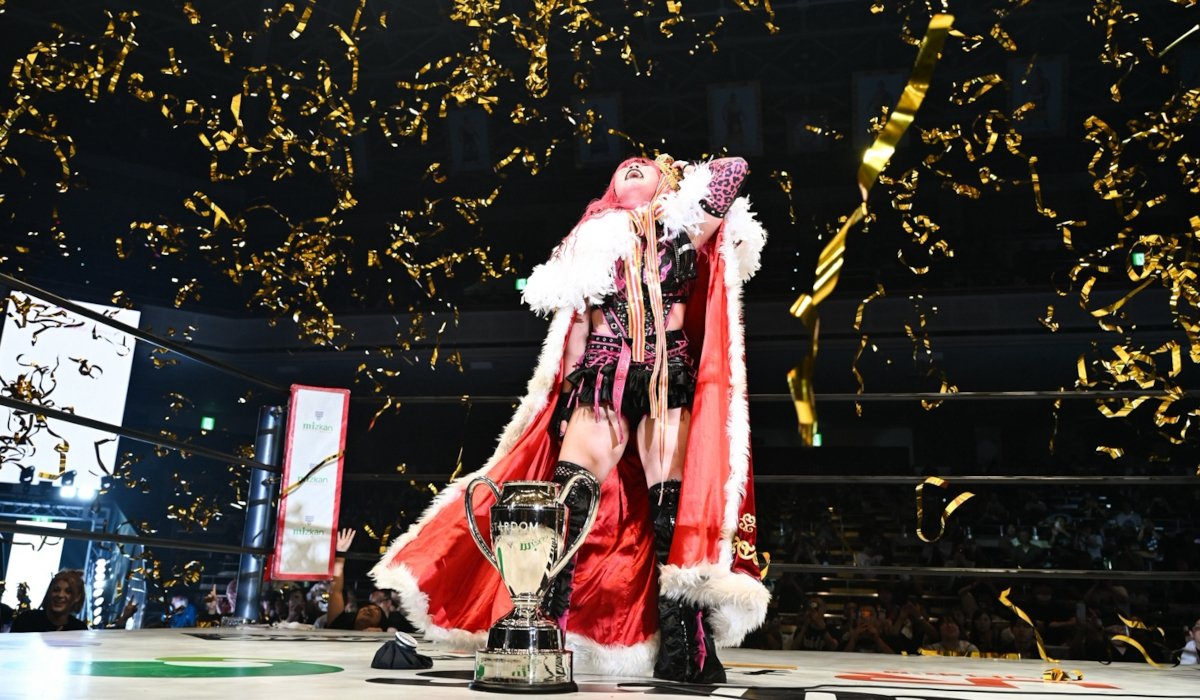
Japan Summer Tournament Wrap-up
Chris Whitehead and John Carroll take us through the 2026 iterations of the STARDOM Five Star Grand Prix and TJPW Tokyo Princess Cup
Endometriosis Is Not an Insult
…and Other Things Wrestlers Who Claim to Be Allies Need to Know
by Hillary
Asia & Oceania
Let’s put it simply: no one covers like Asia like Social Suplex.