
Features
Ocotber 14th 2026
Features
Ocotber 14th 2026

© WWE
The Rise and Fall of the Roman Empire: 8 Lessons I Learned As The Social Suplex’s WWE Correspondent
By David Hayter
Over the past two years I have had the pleasure and the privilege of being the Social Suplex’s primary WWE correspondent, reviewing every self-styled Premium Live Event the promotion has put on, from the bright shining lights of “WrestleMania” and “SummerSlam” through to the half-hearted and easily avoidable obstacles Triple H has thrown in AEW’s path (aka “NXT Heatwave” and “The Great American Bash”). My tenure has been genuinely eventful. My first year was dominated by the strange and ill-conceived spectacle that was the John Cena heel turn and, in hindsight, the tedium of witnessing a visibly uncomfortable Super Cena get the heat on Randy Orton feels almost quaint in comparison to the Pat McAfee debacle of 2026.
2025 and 2026 are often cast in a negative light for WWE, as the promotion desperately tried to stoke the dying embers of their recent golden age, spearheaded by the Bloodline, the returning CM Punk and the now ascendant QB1, Cody Rhodes. Fan sentiment has certainly turned against the promotion as TKO has sought to extract ever more revenue from a promotion on its way down from an almighty peak. Ticket prices are astronomical, commercial tie-ins and direct advertising are omnipresent, and the number of subscriptions required to follow the product (in the USA) has tripled. Despite this, business is genuinely good – it is most certainly down substantially year-on-year – but average attendance, gate receipts and, of course, television revenue remain incredibly strong.
Nevertheless, the warning signs are abundant and the vultures are circling: decay, decadence, apathy and indifference have infected the product. Standards appear to be slipping in the latest slow-motion fall of the Roman Empire. Make no mistake, however, there have been plenty of genuine highlights along the way and some signs of hope and optimism: the precipitous rise of Oba Femi, the wonderful bitter-rivals-turned-best-friends-forever tale that is RhIyo, the brutal pageantry of mask vs mask, and the cantankerous old man warfare of Reigns vs Punk, to name but a few.
Ultimately, this remains a period of uncertainty as aging main eventers ride off into the sunset and desperately cling on to fame, respectively, while TKO fundamentally reshapes what it means to be the world’s largest wrestling promotion. So the question remains: in these years of uncertainty and experimentation, what have I actually learned from observing the WWE so closely?
I have answered that question in the form of eight macro observations touching on business, booking and the WWE fandom at large. My apologies if they skew a little negative; my coverage is normally positive and (I hope) fun to read, but on the whole the overarching trends I have chosen to discuss represent genuine warning signs of decline as the sun sets on WWE’s latest golden era.

© CNBC
1. Mark Shapiro Is Right: Fans Are Fickle – Sorry, I Mean, “Resilient”
“WrestleMania 42” was one of the most divisive and, frankly, loathed events in the company’s storied history. Fans watching around the world were furious, not due to anything taking place in the in-ring (if only something actually was), but due to the insidious bombardment of obnoxious, obsequious and infuriatingly unskippable advertising that completely subsumed anything resembling actual wrestling content. The Saturday night show was so gross and transparently soulless in its greed that I dedicated the vast majority of my review to satirising the sheer absurdity of it all.
The backlash was so vociferous that the discontent echoed all the way from the Reddit threads to the plush mahogany-panelled boardrooms of TKO executives, like one Mark Shapiro no doubt sits at the head of. Faced with the fury, TKO didn’t run and certainly didn’t blink; in fact, they were fully prepared and had been expecting it all along. Unfortunately for us as fans (and the human race writ large), it turns out the masters of the universe are scarily attuned to the realities of the modern consumer. Speaking when questioned about the “WrestleMania” discontent on an investor’s call, Shapiro unleashed some hard truths: there will always be “periodic fan dissatisfaction”, but they would push forward because WWE fans are “resilient”.
This is the core tenet of the modern enjoyment extraction economy and is the core premise behind the ‘enshittification’ phenomenon: customers will moan, groan and tweet up a storm, but they are creatures of habit. They will keep consuming the product and, given time, they will simply become accustomed to the change; they’ll accept the adverts, paywalls and reduced content offerings even at a higher price point as, soon enough, it will simply become the new normal. The complaints will rapidly cease as the bar of acceptability is successfully lowered. Give it a few months, and they will repeat the same trick, squeezing the pips ever harder, pushing the bar ever lower and the fans will fleetingly cry all over again.
Truth be told, I am no better than any other fan. When I first had the opportunity to write about Saudi Arabia’s transparent and wildly successful sports-washing programme I was excited and engaged, but when the time came to review a second and third Saudi show, I found it hard to muster up the same enthusiasm. I’ve always tried to maintain a steady and thoughtful critique of TKO’s business practices, but apathy inevitably sets in as the show inevitably rolls on. Mercifully, WWE themselves may have reached a breaking point. In the months since “WrestleMania” they have tightened up their PLE formatting to include less downtime and less overt and incestuous advertising (although the sight of a crying Chad Gable celebrating his IC title win at “SummerSlam” with the Mugg Root Bear Dog was galling). So perhaps Nick Khan and company have realised they have pushed the fanbase too far and tarnished their own product in the process – or, more realistically, perhaps run-of-the-mill PLEs do not attract the same advertiser interest as “WrestleMania” and, as soon as the business picks up, the barrage of commercial slop will return.

© WWE
2. The WWE Style May Be Simple, But Be Warned: It Exposes Weaknesses and Hides Strengths
After watching notable AEW signees like Powerhouse Hobbs, Mariah May and Big Bill flounder, a narrative has quickly developed: WWE is holding them back, mismanaging their talents, and possibly sabotaging their pushes, but, truth be told, the WWE system was simply putting their respective weaknesses on display for the world to see.
WWE wasn’t “exposing” these AEW hires out of malice or malign mismanagement; instead, they were simply running these uniquely talented individuals through a rigid system that will make no effort to accommodate the talent within it.
Now close your eyes, I’m sure with little or no effort you will be able to visualise the cookie-cutter WWE formula match that runs all the way from NXT to WWE’s top PLEs. The babyface will get the shine, they will often hit a dive or flurry of offence (signalling a commercial break), the heel will cut them off and get the heat, and the babyface will proceed to sell and work the crowd in an effort to garner sympathy for their eventual comeback. The WWE comeback can then vary, but it will undoubtedly involve both competitors hitting their signature moves and a Pavlovian-patterned sequence to engage the crowd (think the Devil’s Kiss or the Five Knuckle Shuffle). Then, after a little big move back and forth and a kick-out or two, we will have our finish (or non-finish).
Truth be told, the WWE style isn’t so special. It is the most basic and often effective formula in wrestling. Everyone knows it – and by and large, it works. However, those paying attention will notice that while it requires a relatively low level of athletic dynamism and next to no complex cross-ups or inversions of the norm (think the wild high-speed sequences of Mei Seira in STARDOM), it does require its wrestlers to have strong fundamentals and a strong and established connection with the crowd. To be a success in WWE, you need to be able to act and entertain an audience with your mannerisms, you definitely need the ability to sell (however cartoonishly), and you need signature offence that engages the crowd that they can learn to react to.
For someone like Powerhouse Hobbs/Royce Keyes, this simple little template is a death trap. International viewers on Netflix, in particular, will have been forced to watch him both get the world’s most tedious heat and, even worse, sell a series of rest holds and beatdowns. Hobbs is frankly an awful seller. He lies motionless and, when he does gesticulate, his blocky muscle-man body exudes a strange anti-charisma as he makes little or no effort to engage the crowd. Worse still, when it’s time to run wild on offence, while he has a nice spinebuster, he doesn’t have a dazzling moveset or any call-and-response sequences to draw the crowd in. In short, he kind of stinks.
This may come as a shock to loyal AEW viewers, many of whom assured me he was a great prospect and a real killer. Unfortunately, the WWE main roster isn’t AEW. Triple H has loosened the reins to allow Fénix and Dragon Lee to fly, but even they must stick to the tried-and-tested formula. Tony Khan is the complete opposite; we don’t know exactly how much input (if any) he has in match layouts, but it is clear that he’s far more akin to Paul Heyman. His desire is to hide weaknesses and accentuate strengths. Will Hobbs never really had to worry about his bad physical acting or non-existent selling in AEW, because Tony would either match him with the best wrestlers in the world who’d take gigantic bumps for him or he’d be showcased in meat matches, going blow for blow in alpha-male wars of attrition – that isn’t an option in WWE.
In AEW, the question is always: what sort of wrestler are you and how do we cast you in the best possible light? In WWE, there is no question and certainly no questioning: you learn the system and you hit your time cues. Skye Blue is another instructive example. She is by all accounts a green and unimpressive wrestler, but in AEW she found her niche as a hardcore, free-bleeding spot monkey and it really works; not only does it help her get over, but it convinces fans that she’s really rather good. This led an army of AEW fans to excitedly inform me (and anyone who’d listen) that she’d be great in STARDOM and, of course, her debut was utterly heinous and involved her visibly counting her steps between spots as she wrestled in slow motion. The point here isn’t to critique a young developing worker, but to demonstrate how effectively AEW compensates for its talents’ limitations.

© WWE
Mariah May/Blake Monroe is perhaps the greatest example of all. Having followed her rise in STARDOM, I was fully aware of her limitations. She wasn’t a particularly fluid wrestler, her bumping and selling left a lot to be desired and her ring positioning wasn’t the greatest, but in STARDOM she found a shortcut to superstardom. She would take the centre of the ring, stand largely still, and she’d take a great deal of the offence as the world’s best women’s wrestlers ran around creating movement, taking giant bumps and selling their arses off for her. Mariah rose to the challenge in her own right; she did get considerably better in regards to poise and timing, but her main focus was on hitting hard, standing tall and then nailing cool signature moves, like her various Tombstones. In AEW some cracks did emerge (stilted promos that ran down her peers and a generally uninspired title run), but she was programmed with the great Toni Storm in a blood feud that built to an immaculate hardcore-style Hollywood Ending.
In NXT, Blake Monroe instantly sank. Not because WWE were sabotaging her or because they didn’t know what to do with her, but because their simplistic style exposed all her fundamental flaws. She couldn’t carry a match, she wasn’t a great seller, she had a wooden and cartoonishly two-dimensional character that appeared hollow and false outside of the Toni-verse – and, quite frankly, everyone else in the women’s division was better than her. She was surrounded by developmental talent and she was supposed to be the star, but time and again, whether it was promos or in-ring work, Kendal Gray, Tatum Paxley, Jacy Jayne, Lola Vice, Kelani Jordan, Jaida Parker and more were running laps around her. Regular NXT viewers (myself included) started to realise she might not even be a top 10 worker on the brand she was brought in to be the centrepiece of.
Little of this was Blake’s fault. She was slowly learning to improve her fundamentals, but all those clever tricks that had seen her flourish in STARDOM and all that superstar-level assistance she received in AEW had been stripped away, and her weaknesses were put on full display. The same happened to Giulia (who still struggles to this day), but when the Beautiful Madness was robbed of her ability to strike ultra hard and engage in modern fast-paced STARDOM-style matches, she could fall back on her technical wrestling ability to deliver good-to-great matches; Blake simply floundered.
To end on a less controversial and non-tribal note, consider Elias. Yes, remember him, The Drifter who, believe it or not, would have entire arenas singing “Walk With Elias” not so long ago. He was a hopelessly dull wrestler in every regard, but in another era (or in another territory) a promoter would have looked at a burgeoning star who was just catching fire and would have thought long and hard about how to get him through his wrestling matches. He’d likely have been positioned as a wild rockstar brawler, throwing punches and taking few bumps, but instead in WWE’s hands he was just another assembly-line muscle man, wrestling the same match everyone does, just slower, duller and far more awkwardly.
So be warned, whether you’re a shiny new signing or a day-one rookie, the WWE style will make no effort to accommodate you. It might be basic and supposedly foolproof compared to the creative freedom and dynamism that exists in the rest of the world, but much like classic lucha libre, if your fundamentals aren’t up to snuff you will be exposed.
3. Pro-Wrestling Isn’t Fast Food, WWE’s Approach To Roster Management Is Reductive
TKO are perfectly transparent in their intentions: they believe in the shareholder theory of value (aka the Friedman Doctrine) and their goal is to create growth (or the appearance of growth) every quarter. The trouble with this approach, if you are a wrestling fan rather than a shareholder, is that wrestling is a performance art rather than a traditional retail or service industry business. TKO continues to treat WWE as if it were a fast food restaurant. Their goal is to serve up the heavy hitters and proven winners: Roman Reigns, CM Punk and Cody Rhodes. They are the difference makers, the Big Macs of this world, the items that actually sell. Every other aspect of the business is essentially interchangeable and replaceable. This is particularly bad news for your career midcarders. Acts that may be far cheaper to source and maintain than a Brock Lesnar or Becky Lynch, but are expensive in relation to how much business they actually generate.

© WWE
Take Aleister Black or Kairi Sane for example. Sure, they are both talented wrestlers with a proven track record, who are also comfortable on-screen delivering lines and playing their character, they also get good crowd reactions, far better than, say, a rookie like Kiana James would. Unfortunately for Kairi and Aleister, they are also expensive in comparison to a fresh call-up from NXT and, frankly, they don’t move the numbers. No one really tunes in to see them specifically, no one is buying their merchandise in bulk and they are both a little older. On a spreadsheet, Kairi and Aleister have no value, in fact they are a pretty big negative when your goal is to make more money each year and when your underlying business isn’t actually growing. So why not swap them for a Lola Vice and Myles Borne? Sure, they’ll be starting at zero on the main roster as well, but who knows, they might catch on and, at worst, they will have the same exact effect on business for a quarter of the price.
In the world of sports or business it does make a sad kind of sense: spend big on your difference makers and keep everyone else on the lowest wages possible (“the minimum”). Sure, you can spice things up, we can swap Kairi and Aleister for a Will Hobbs and Big Bill for a year, but we don’t want too many of these annoyingly expensive assets hanging around; so we adopt a “one in, one out” policy.
The problem, of course, is that midcarders do have value. Not only as entertaining and talented performers whose hard work forms part of a greater whole, making the entire product feel energised and exciting from top-to-bottom, but also in terms of wrestler development and creative depth. The green wrestlers of this world benefit enormously from working with talented veterans week after week; it’s how they learn and grow. It also helps NXT call-ups ground themselves, by allowing their characters to brush shoulders with established and dynamic acts who are more sure of themselves on screen. Finally, and most importantly of all, midcarders give the product a sense of variety. One of the most painful aspects of watching WWE programming in 2026 is the sheer thinness of every division; they are all three or four bodies deep at most. Fans end up feeling like they are watching the same matches over and over again, because the Pentas of this world simply run out of fresh opponents within three or four weeks, especially in a world where Triple H likes to hold off top match-ups for “WrestleMania” and “SummerSlam”.
The best or depressing example of this phenomenon comes in the form of Giulia’s WWE United States title run. She was called up to the main roster, quickly shunted to SmackDown and had an impressive run to the US title where, to her credit, she did an fantastic job of carrying Zelina Vega and Chelsea Green to decent matches. So far so good, the only problem was that with those two victories she’d cleared out the entire division. As a result of having nothing much to do, she was essentially iced, appearing on TV less and less in ever shorter segments until they decided to give the belt back to Chelsea briefly to spice things up. She quickly became an afterthought and the WWE fanbase picked up on this fact and, by the time she won the belt back (still with no one new to feud with), she was dead in the water, spinning her wheels until they decided Tiffany Stratton, another act with no one new to face (and no ability or opportunity to develop her character), should take it from her.

© WWE
4. WWE’s Developmental Gamble Is Working, With One Major Caveat
Perhaps the biggest shock of the Paul Levesque/TKO era is that they essentially admitted that Vince McMahon and Kevin Dunn were right about developmental. While Triple H quickly ditched the day-glo NXT 2.0 branding, he has not remotely sought to bring back the ethos of the Black and Gold era. There have been a smattering of indie/AEW star signings (Ricky Saints, Ethan Page, Blake Monroe, Giulia, NARAKU, Dorian Van Dux, etc.), but the idea of producing a super indie with the hottest wrestlers on the global scene is long dead. Instead, NXT remains focused on developing crossover athletes, plucked from WWE’s tryouts alongside lower profile indie workers like Sean Legacy or Mason Rook, who are starting at the very bottom when it comes to international name recognition.
This might sound like a bad move on paper, but the truth is that WWE are producing future stars at an impressive rate (particularly in the women’s division). What’s more, and what’s far more important, is that the WWE is finally producing stars that they actually want to push. There are far fewer examples of Triple H serving up a Swerve Strickland or Toni Storm for promotion, who Vince McMahon had literally no idea how to present, let alone any inclination to push. Instead, NXT is delivering wrestlers that actually fit the main roster ethos: Oba Femi, Trick Williams, Sol Ruca, Tatum Paxley, Lola Vice – there is a conveyor belt of undeniably talented young stars that have the look, alongside the ability (particularly on the athletic side), to be presented as credible stars from day one. On the women’s side, they seem particularly blessed, with Kendal Grey already proving to be a prodigy in the ring, Jaida Parker blowing her peers away on the microphone, and Kelani Jordan offering a nice blend of the two, with a cocky heel persona and rapidly improving in-ring work – and all three have ultra-marketable looks.
Make no mistake, it’s not all roses for WWE developmental. The biggest issue is, of course, strategic. In soldiering on with a refined version of Vince McMahon’s formula, WWE have essentially waved the white flag and abandoned the fight for the world’s top free agents. They have signed the odd established name (most notably Giulia, Stephanie Vaquer and Hiromu Takahashi), but by and large they no longer compete with AEW to land the Speedball Mike Bailey or Kevin Knights of this world. WWE are known to substantially underpay and, whether it’s Callum Newman or Johnnie Robbie, it feels as though Triple H is content to watch one buzz-worthy signing after another debut on “Dynamite” in the years to come. NXT doesn’t have to be a super indie, but WWE feels like it is not only losing, but failing to put up a fight for the next generation of game-changing talent.
Naturally, if we were to ask WWE for a response, they would no doubt argue that they are competing, but at a far earlier stage. They’ll point to Je’Von Evans and (quite rightly) argue they spotted him early and quickly brought him into the system. They’ll argue they are doing the same with EK Prosper, Lizzy Rain and Romeo Moreno – all excellent signings – who were plucked from the indies before they established a truly global reputation. They can even claim to have the inside track on signing Leon Slater, another seemingly can’t-miss star. It is a worthy and, no doubt, cost-effective strategy, but surely at some point they’ll want the buzz of signing the next Will Ospreay fresh from an IWGP title run – the guy with the name, the reputation and proven track record of being the next big thing?
© WWE
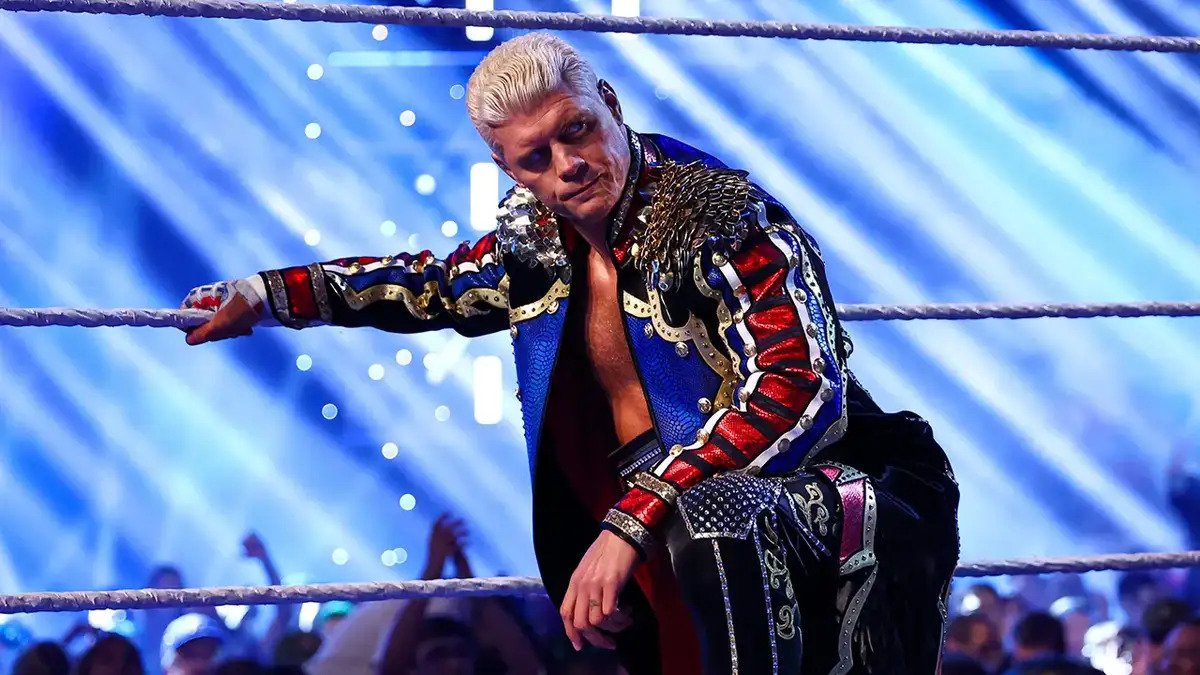
5. WWE Has Catastrophically Mishandled Cody Rhodes As Champion And No One Seems To Have Noticed
Whether you love him or you hate him, there’s no denying that Cody Rhodes is a tremendously effective babyface. Whenever fans seem to count him out or threaten to turn on him, he manages to summon one of those ultra-earnest, spittle-spewing promos to rally the WWE Universe back round to his cause. His popularity, however, is a blessing and a curse. Cody Rhodes is so stable as a main event attraction, so beloved by children, that WWE has managed to completely bungle his run(s) as world champion without facing the level of backlash they justly deserve.
Let’s not forget, Cody was the WWE’s ace in the hole: the hot free-agent signing that, along with the Bloodline story, set the promotion on its most successful run in decades and certainly the most commercially lucrative period of its entire existence. Cody famously finished his story at “WrestleMania 40”; the question, of course, was “what’s next”? Prior to winning the title, Triple H had heavily foreshadowed Rhodes’ future direction. He was carefully kept apart from Randy Orton while they constantly teased a future programme, Drew McIntyre appeared to loom large, he was on top of the world as the foil to CM Punk, who also represented a fresh opponent for Rhodes; then, of course, there was John Cena.
Unfortunately, for Cody, in the over two years since he dethroned Roman Reigns, his run as the face of the promotion has been staggeringly forgettable. He quickly found himself the face of “SmackDown” with no real compelling challengers. Think back over his run and the only feud that really landed from start-to-finish was his rivalry with Kevin Owens, that saw KO turn heel, piledrive Rhodes and steal the beloved ‘winged eagle’ belt. The feud was brilliantly built around a simple theme: could Cody maintain his cool and preserve his good-guy persona after KO targeted his friend Randy Orton and threatened to end his career? The question was defiantly answered at the “Royal Rumble” in a brutal ladder match that saw a darker side of Cody emerge, forever answering the question of whether he could really “go there” and “pull the trigger”.
Now hold that thought, because after that Owens feud things get seriously weird. John Cena turns heel in an ultra-memorable and hastily constructed angle at “Backlash” but refuses to actually commit to the bit and change his character (there is merchandise to sell, after all). Cody is caught in the crossfire, stuck cutting promos with a Cena character that the WWE audience has no real interest in booing. Despite proving himself a killer just one month earlier as he left Kevin Owens broken with a ladder wrapped around his neck, at “WrestleMania” Cody is transformed into a simpering ninny, unable to pull the trigger on his beloved hero John Cena. Suffice it to say, the angle did nothing positive for Rhodes and, by “SummerSlam”, when it was time for Rhodes to get his revenge and “pull the trigger”, WWE had wisely abandoned Cena’s heel turn and instead delivered the Homelander vs Superman battle their fans had wanted to see from the start. Cody “pulled the trigger” and won the match by hitting the now-babyface John Cena with a turnbuckle, but no one remotely really cared about Cody’s emotional arc by that point.
Then his run got weirder still. After one brief and rather excellent feud with Seth Rollins that sadly ended with Rollins on the shelf after he kamikaze’d himself across the ring at Rhodes, Cody’s booking fell apart again. He had a limp and lifeless feud with Drew McIntyre where it was clear that WWE had no set plan for “WrestleMania” and were just killing time. They had delayed too long, Drew had cooled off in the USA and when they had McIntyre win the belt in Europe, he was of course cheered to the rafters and Cody found himself getting booed all over again. Like in the Cena feud, Rhodes had the ability to flip hostile crowds with his promos (I saw him do this live in London during Drew’s title celebration), but the question had to be asked: why did WWE keep putting their era-defining top babyface in positions where the crowd were destined to turn on him?
It didn’t stop there. Suddenly every heel on the roster was laying into Rhodes for being boring, for being a corporate stooge, for being “the chosen one”. Literally, every feud Rhodes has now follows this pointless template: he’s a vanilla corporate suit who can’t pull the trigger – so cheer him, I guess? Thankfully, the long-awaited Randy Orton feud would emerge in February 2026 and this was the one fans had been waiting for. It had everything perfectly in place. Years of backstory to delve into, a hot and bloodthirsty first angle to kickstart it, and two stars so big that it didn’t really matter whether the crowd cheered or booed Rhodes, it was going to be electric. Then, in one of the most baffling booking decisions in wrestling history, TKO injected Pat McAfee into the storyline for a car-crash cameo that was putrid and destructive beyond belief, as he buried Cody and the current product on loop. Like the Cena programme before it, something that seemed so impossible to screw up (‘Homelander vs Superman’, now ‘mentor vs protégé’) was turned into an incoherent and utterly illogical storyline built around a clueless loudmouth celebrity. The “WrestleMania” match was, yet again, a disaster.
The mishandling would only grow worse. The great Gunther would be the latest to confront Cody and call him out as a plastic poster boy – but it’s The Ring General, so at least the matches would be great, right? Wrong. Whenever Cody and Gunther threatened to have a great match it would abruptly end so they could tell a bizarre story of a corporate conspiracy against Gunther as he would get his foot under the rope and not kick out in their first meeting, and all his subsequent title matches would end in some kind of disappointing farce. WWE was simply doing too much; rather than letting their best male wrestler go out there and tear it up with their champion, they turned a potentially hot feud into a disappointing mess.
In truth, when Sami Zayn finally dethroned Cody Rhodes in Saudi Arabia it was a relief. Cody had been so brutally mishandled that they needed a clean break and, to his credit, Rhodes put Zayn over in an excellent match. Now, in case you were wondering, the Zayn-Gunther-Cody feud was, of course, built around Zayn exposing Cody as a fake friend and TKO shill. Rhodes’s run on top is over (for now). CM Punk and Sami Zayn currently rule the roost on “SmackDown” and Cody is back feuding with Randy Orton. Thankfully, now that Pat McAfee is out of the picture they can finally delve into their background in Legacy and start cutting the promos they should have done eight months ago in the build to “Mania”.
For the most part they are, but almost unbelievably, old habits die hard. Randy and Cody are cutting impassioned promos calling back to their shared history, but what ultimately sits at the heart of their feud, a simple fucking question, can you guess what it is? Go on, say it with me: “Can Cody pull the trigger?” For the third time, after the KO feud and after the 2025-defining Cena storyline that was designed to tell that story and answer that question for good, the same Cody Rhodes who Alabama Slammed Kevin Owens through a ladder and knocked Cena out cold with a turnbuckle is back to trembling and pensively second-guessing himself over whether he should punt Randy Orton in the head or not. No doubt, his next feud will centre on whether he is or is not an empty corporate spokesperson.
Remarkably, just two years after he was on top of the wrestling world as the man who dethroned Roman Reigns and shattered the Bloodline, WWE’s top babyface has been transformed into a directionless, hesitant and simpering little dweeb stuck in storyline Groundhog Day, feeling less relevant and special by the day. His booking beggars belief.

© WWE
6. The Netflix Move Has Stifled Creativity and Killed The Midcard
In the early months following WWE’s move to Netflix it seemed a perfect fit – “RAW” alighted on an easy breezy formula, particularly for international viewers, who were treated to four long uninterrupted matches and a parade of big-time angles and short, sharp three-minute promo segments instead of adverts. On paper, it seemed like a genius move; all those acts that never got time to get themselves over, build storylines or cut promos would now have a huge opportunity to develop. Soon a nice rhythm began to emerge as acts like the New Day or Judgement Day would cut promos and shoot angles that would set up matches the next week; for the first time in an eternity it felt like WWE had the logical week-to-week storytelling structure that was completely absent during Vince McMahon’s tenure.
There was just one problem: only the tiniest sliver of WWE’s audience was actually seeing this content. If international viewers tuned in over 12 hours after “RAW” aired (which is natural in the streaming environment), all of these segments (along with the mid-portion of the matches) would be cut in their entirety. Worse still, the American audience never saw them to begin with. The result was that, far from developing midcard stars, the future top talents of the promotion were completely out of sight and out of mind. With no one witnessing these angles, the eventual matches they set up felt colder and colder as time passed. Far from breathing life into the midcard, the main television portion of “RAW” had been stripped down to long entrances and talking segments for the top stars, a barrage of advertising, and tiny 30-second cameos for the midcarders. No wonder Lyra Valkyria matches were met with silence.
The decision got more baffling still; soon entire entrances were being cut from the broadcast. Je’Von Evans would make his big “RAW” debut during a commercial, Joe Hendry would never actually make his full entrance on TV despite it being the very thing that had gotten him over, and whenever Raquel Rodriguez or Penta came up with a good catchphrase or line that might get over, absolutely no one was there to see it.
WWE have, belatedly, realised this and have now largely ditched the “international exclusive” interview segments, but it’s too little, too late. They are effectively having to start over again, reintroducing midcard segments and promos in the minuscule amount of space that’s left in Roman Reigns’ wake. Bizarrely, for a promotion so strongly built around personality and catchphrases, the only real opportunity the likes of Sol Ruca or Dragon Lee have to get ‘over’ is in the ring.

© WWE
7. Roman Reigns Is A Great Wrestler, As Long As He’s Wrestling His Opponent’s Match
It turns out the undisputed face of professional wrestling in 2026 is a follower and not a leader. This might not be a popular statement to make, but Roman Reigns is a really rather excellent wrestler. He has superb timing, he thoroughly inhabits his character through his every motion in-ring, and his execution of offence, in particular, is both superb and completely safe. Unfortunately, for all his admirable qualities, he does have one particular deficiency: he cannot either call or (more likely) lay out a truly compelling main event match.
One of the most interesting aspects of reviewing WWE PLEs has been seeing the stark difference between a Roman Reigns-led match and a main event where he follows his opponent’s lead. Make no mistake, Roman’s match isn’t bad, in fact it has a relatively high floor because so little can go wrong, but a painfully low ceiling because he leaves little room for dynamism or creativity. The Roman Reigns signature is a variant on the walk and brawl – the walk and talk and brawl. Whether working as a babyface or heel, he will painfully, slowly beat down his opponent, laying in stomps, cranking on holds, as he narrates to the camera. Essentially, nothing much happens for 10 minutes, but (and I have witnessed this in person at “Money In The Bank” in London) the crowd just gets more and more heated. Whether it’s his innate likeability or hateability, some aspect of his charisma connects live. Then after a solidly worked but unspectacular match, he’ll treat the crowd to five minutes of fast-paced, well-scripted nearfalls before hitting a spear and bouncing out of town. It’s always pretty good, rarely great and, truth be told, they all inevitably blend into one.
The contrast is stark when Roman isn’t behind the wheel; those rare matches where he follows his opponent’s lead can be genuinely spellbinding. His breakout performance, of course, came against Bryan Danielson, but a decade later he continues to be the perfect blank canvas for better, more artful wrestlers to illuminate. Against CM Punk at “WrestleMania”, Roman was the perfect image of nepotism and chiseled genetic determinism, against which Punk could present himself as the haggard son of a nobody, who through sheer bloody-mindedness, hard graft and study craft had made it to the main event of “WrestleMania”. Punk told a long and involved story of him being the better wrestler, betrayed by age: all the years he’d spent working to get to his moment both gave him the edge and were his undoing, as his aged body crumpled at the death. Roman played his role to a tee and brought Punk’s vision to life on the grandest of stages.
The greatest example of Roman’s inability to lead, but flair for following, came in his feud with Jacob Fatu. The rivalry presented two contrasting matches. First at “Backlash”, in a brilliantly constructed match, Jacob lived up to his “All Gas, No Brakes” moniker by forcing Roman to work at a frenetic pace. The match was dynamic and full of crafty cross-ups as Fatu constantly cut off Roman’s attempts to assert control and establish a more moderate pace. Roman was sweating and sucking air as he tried to cling onto control. The match was a triumph. The Tribal Combat rematch at “Clash In Italy” was hotly anticipated as a result and, sadly, this time they worked Roman’s match. They walked and talked their way across the entire arena at a painfully methodical pace, in a match so patterned and predictable it felt indistinguishable from a hundred other Roman main events. The wild man Fatu who’d pushed Roman out of his comfort zone had evaporated; he was just another faceless opponent, stripped of all the hallmarks of his persona by Roman’s rigid ring psychology.

© WWE
8. The WWE Audience Doesn’t Hate Wrestling, But They Don’t Know How To Watch It
I will keep this one short and sweet as I have written about it at length in recent months, but there is a popular sentiment in online circles that WWE fans hate wrestling and that they only care about entrances and promos. This opinion is, of course, understandable; WWE crowds often go deathly silent during matches and only really come to life for the Pavlovian sequences and finishers at the end of matches. However, having attended a host of shows in the past three years I’ve noticed something very different. The WWE audience has changed drastically, especially as the price of tickets has gone through the roof. The current audience has shifted, especially in London where I attend shows. With each passing show the WWE audience has seen a radical reduction in the numbers of rowdy men aged 35-55 and, in particular, the classic British wrestling fan who looks like they’ve arrived straight from Download Festival simply swapping their Black Sabbath shirt for a Bullet Club one.
For years, you’d go to WWE, AEW, Progress or RevPro and you’d see essentially the same sort of people, often knocking back pints, happily starting chants with their mates. Now when I attend WWE shows, I can walk around the entire O2 Arena without bumping into a single person not wearing WWE official merchandise. I used to strike up conversations with fans wearing all manner of shirts; now I feel like an alien in my STARDOM tees. That’s not to say WWE has replaced the traditional wrestling fan with their own super fans; it feels more like a pricing out. The newer audience, those who race to buy the ultra-high-priced tickets, are almost always families (I have observed this closely monitoring the ticket prices for the cheapest deals). Then the late sales are going to a new, younger, more diverse (in terms of background and gender) fan base that reflects the shape and feel of modern London.
This is not a good or bad thing, it’s just an observation, and in fact in many ways it’s kind of cool, but the one thing you notice is that the new fanbase is wholly trained on TV. They never try to start new chants, they don’t clap for impressive moves or sequences, and they only really engage in wrestler encouraged sing-alongs (“This is Awesome” chants for double-downs or “Whoop That Trick” chants). In short, they feel like new fans who are going to watch wrestling live for the first time and don’t know the indie rituals and don’t have the knack of starting football-style songs or chants. Worse still, if the new fans don’t seem up for creating new chants, then children and families don’t start chants, period. A row of excitable children and disinterested parents typically sit on their hands and watch, and a big block of them makes it harder for older, rowdy fans to get any kind of atmosphere going.
Now this might all sound a bit doom and gloom, but my biggest takeaway is that these crowds do love wrestling. I’ve watched them get totally hooked on wild Dragon Lee and Rey Fénix matches; they are glued to the action, excitedly discussing it, and they are anything but bored, but they just won’t chant. So I have hope for the new generation of fans, but WWE wrestlers probably need to adapt to this new reality. If I were an agent, I’d encourage the midcard acts to wrestle a more house-show style, working the crowd, encouraging chants, leading the crowd a little until they start to get the flavour of what wrestling shows are all about.

© WWE
Conclusion: The Future Remains Bright, Even If The Impulse To Monetise Is Bleak
It was terrifically difficult to stick to just eight observations. Despite covering so much ground, we didn’t get the chance to discuss the wave of show-stealing luchadores getting over in spite of being limited to stilted, one-note (“I respect Rey Mysterio”) characters; the incredible and continuing rise of Sami Zayn to two-time WWE Champion status; or the perpetual source of joy that is Iyo Sky. Good or bad, there is simply too much for one man to cover, but when it comes time to conclude, I kept coming back to the two conflicting visions of WWE that exist simultaneously: one of hope, and one of utter despair.
As we move onwards from “Money In The Bank” 2026, the future does seem bright despite the decline. WWE are tentatively, but consciously, getting behind a youth movement, with a wave of call-ups from NXT shaking up the established order. Crucially, however, they have three truly new stars who should be the face of the promotion for the next decade or more: the imperial Oba Femi, the velvety-smooth-talking Trick Williams, and the ever-agile wildcard Je’Von Evans. Each offers something distinct, each has an innate starpower, and each has obvious flaws; but if Triple H cannot make true main event stars out of these obvious diamonds in the rough, then what hope is left for this faltering behemoth?
However, lurking behind the rise and rise of Oba Femi and Kendal Gray is the ominous smog that has choked the optimism out of this article: a WWE money-making machine, supercharged by TKO’s ruthless desire to cut costs and extract value. For all the toxicity and bad taste of their past, there is now a craven and dehumanising lust for money that has an iron grip on the heart of the promotion. The model of aggressive extraction permeates our modern world and is now a reality in wrestling; it has wholly subsumed the WWE. Wrestling is simply the latest product to be shamelessly stripped bare. The ethos is simple: offer less, charge more. Cut. Cheat. Monetise. Repeat.
This newsletter is free to access with the ambition of providing news, data and analysis to as many people as possible. All contributors are compensated for their content as we look to provide a home for both existing and emerging writers, photographers and artists.

A Promotion You Should Know About: Diana
If you’ve never heard of Diana before, I do not blame you. They are a promotion that flies completely under the radar in English-speaking media that covers professional wrestling. We are here to change this.

NOAH N-1 Victory
Eric Addy takes us through the ups and downs of NOAH’s biggest tournament of the year.
Japan Summer Tournament Wrap-up
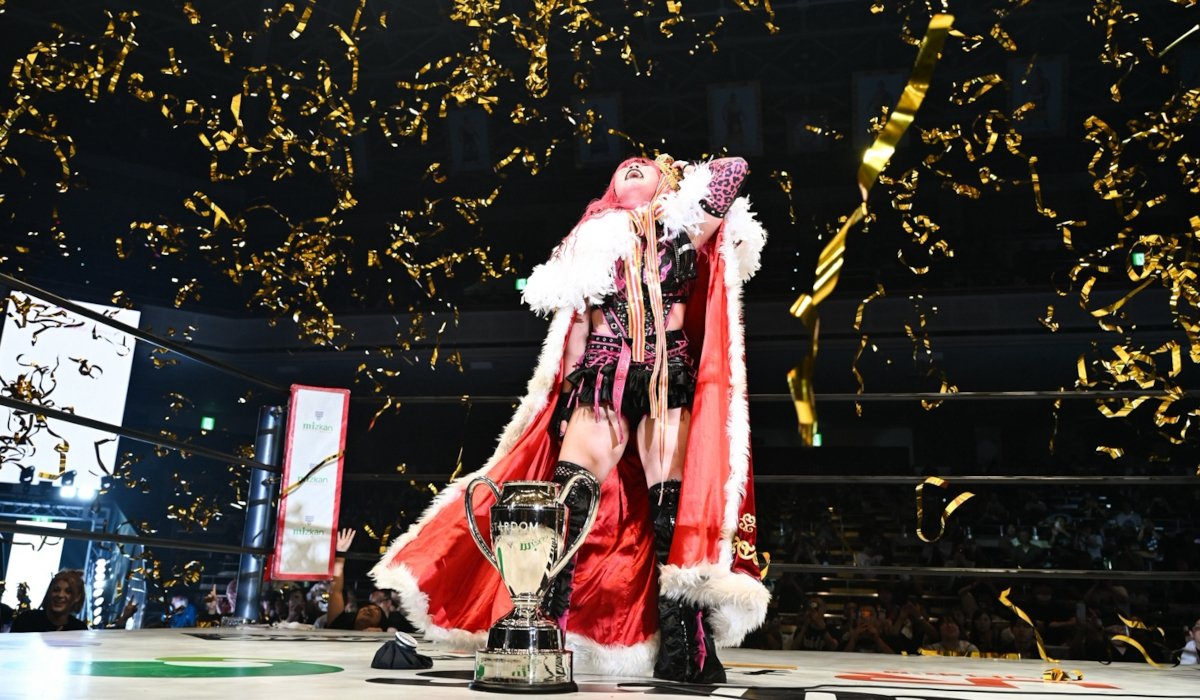
Chris Whitehead and John Carroll take us through the 2026 iterations of the STARDOM Five Star Grand Prix and TJPW Tokyo Princess Cup
A Tag Team You Should Know: Hyperactive
Chris Gannon sits down with Anita Vaughan and Safire Reed for an interesting interview about life in Japan, WWE tryouts and seminars.