
Features
November 2nd 2026
Features
November 2nd 2026

© WWE
WWE, Wrestling Colonialism, and Corruption: a deep dive into WWE’s history to discuss Crown Jewel
By Peter Edge and Hillary
In the past few weeks, much has been made about WWE’s “Crown Jewel” and whether or not it will occur in Saudi Arabia in November. The following is a history of WWE’s interactions with and colonial attitudes towards Saudi Arabia and its neighboring countries. My co-author and I posit that as part of the WWE’s attempts to create a global professional wrestling monopoly, they have leaned into negative stereotypes of the Middle East for their Western audience while cynically sportswashing and normalizing a regressive Saudi regime. This deep dive into the Arab/WWE relationship hopes to provide context on why WWE is acting above the regional conflict that Saudi Arabia currently finds itself in, both via the superior attitude to the people in the region itself, while also being beholden to the monied interests of the elite to push forward on providing content.
Part I: WWF seek new horizons in the Middle East
The story of how Vince McMahon and his World Wrestling Federation tried to sweep all before them in the USA and Canada (and succeeded) has been told multiple times, but it wasn’t just his home continent that Vince attempted to monopolize.
The WWF would put their vision of wrestling onto ITV in the UK in a rotation of shows on Saturday afternoon with Joint Promotions and All Star Wrestling, before wrestling and the World of Sport show it was part of was altogether cancelled and removed from the Saturday afternoon slot in 1988.
WWE was also popular in Australia and mainland Europe, and Vince also tried to plant his Fed flag in Japan but could never get the opening he needed, thanks to the market dominance of New Japan and All Japan, plus the customs of the country that see business incursions from American companies as unwelcome.
But an untalked about international excursion is the one the WWF made into Kuwait in the mid-1980s.
WWF programming would be widely syndicated on stations in the Middle East, with countries such as Saudi Arabia getting WWF content on the state-run network Saudi TV.
Other shows have been purported to have taken place in Saudi Arabia and Egypt with stories of the women’s tag titles changing hands in Cairo, but whether the The Glamour Girls pair of Leilani Kai and Judy Martin beat Desiree Petersen and Velvet McIntyre in Cairo on August 1st, 1985 is something that happened for real is very debatable, to be polite, considering that no evidence exists of a show in Cairo that night, with historians claiming that the title switch was a phantom one.
The focus for international expansion would be in Europe, and the Middle East wouldn’t see shows for a decade, but events in the region at the start of the 1990s would end up being the part of the story of the main event of “WrestleMania 7”.

© WWE
Part II: “WrestleMania 7” and the Baathist Connection
WWF had big ambitions for the seventh “WrestleMania”. During “WrestleMania VI” on April 1st, 1990, it was announced that the 93,607 capacity LA Memorial Coliseum would host the next year’s “Mania”. It was always going to be a big ask considering the Pontiac Silverdome that hosted “WrestleMania III” with a main event of Hulk Hogan vs. Andre the Giant sold out days before the show.
In the summer of 1990, Sgt. Slaughter, the No. 2 babyface in the WWF in 1984 who left after falling out with Vince McMahon over a side deal that Slaughter wanted to make with Hasbro and the G.I Joe toyline, returned to the Fed as the AWA was on death’s door with a priest ready to deliver the last rites to Verne Gagne’s promotion.
Slaughter came in as a heel, a role he excelled at in the early eighties as a drill instructor in the mould of Sgt. Joyce, a bullying drill instructor played by Lee Ermey in the film, The Boys in Company. But his role coming in was as someone who was miffed that the fans were cheering for Nikolai Volkoff, a Soviet Union native (in storyline) who had just turned babyface as US/Soviet relations were improving post-Berlin Wall coming down. But then real-life politics changed the direction of Slaughter.
Iraq would invade Kuwait on August 2nd, 1990, and Slaughter would (as the road to the Gulf War was starting) by the end of the month be appearing on television as an Iraqi sympathizer because he loved the brutal tactics of Iraqi dictator Saddam Hussein, while the U.S. and George H.W. Bush had become “soft” and “weak”.
In the approximately 5 months of this gimmick prior to Operation Desert Storm in January 1991 when the US entered Iraq, Sgt. Slaughter was lionising a leader who was actively committing war crimes in Kuwait. Hussein’s goal was not only the oil fields of Kuwait, which he maintained belonged rightfully to Iraq, but also to punish the Kuwaitis for daring to disagree with him. The Iraqi Army deployed to Kuwait and engaged in war crimes. Per Human Rights Watch reporting, “Scores of people were summarily executed in September and October [1990], including physicians, hospital volunteers and food-distribution personnel, some of them in front of their families. Scores more were killed in confrontations with Iraqi forces, or in detention. Iraq has yet to give an accounting of people killed in its custody – either to relatives or to neutral organizations.”
“Middle East Watch estimates that at least 600 were killed in the first three months following the invasion.”
A modern day comparison in terms of the types of aggression against civilians could be made to Russia’s actions and activities in Ukraine since the invasion in 2022 in Bucha or the evidence of mass graves in still occupied Mariupol in the spring of 2022. This gimmick is akin to when Rusev came back to WWE TV for his second run in the company and resumed his heel character from the mid-2010s and resumed being a Russian sympathiser talking up Putin and how the Ukrainians deserved the current war, or how Zelensky was weak and deserved to be shot.
Of note, this comparison is not far off, given that in February 2014, Russia began the seeds of today’s conflict by invading the Donbas and the Crimea and occupied both Ukrainian regions. In June of that year (2014), Rusev played his iconic pro Russian character. As with Kuwait a little more than 30 years earlier, the media had not yet keyed into the humanitarian issues and war crimes related to that occupation.
If you, like we did, shuddered at the comparison, knowing about the atrocities committed by Russia against Ukrainian civilians, if you think the idea of profiting off of Ukrainian oppression is wrong then you can see how Kuwaiti human rights abuses should have been perceived (but weren’t). There is a reason, heat or no, that the Rusev Russia gimmick would not fly today.
In terms of Sgt. Slaughter, his sole usage of this gimmick was a caricature of a Baathist sympathizer, played for nationalism and “us vs them” jingoism to the WWE audience. Credit where credit is due – it did create deep amounts of heat that ended in March 1991 when Hulk Hogan, as the stand-in for America (maybe prophetic given where we are today), took the belt from Slaughter at “Wrestlemania VII” on March 27, 1991. In art imitating life, at the same time this match occurred, Iraq was in the midst of Shia and Kurdish uprisings against the Saddam Hussein regime, which lasted from March 1 until April 5, of that year, when Saddam regained control of that country.
Slaughter and Hogan would continue to have matches post-“Mania”, months after Operation Desert Storm had ended, going round the country on the house show circuit with the feud ending at “SummerSlam” 1991 with Hogan and The Ultimate Warrior beating Sgt. Slaughter, General Adnan (Adnan Al-Kaissie, an Iraqi who had professional dealing with Saddam when he wrestled in his home country before leaving his homeland for good in 1980 after feeling his life was in danger) and Iranian-born Iron Sheik, working as Col. Mustafa in a match labelled “The Match Made in Hell”; and with nothing left for Slaughter to do in his current variant, he would turn babyface before the next PPV after “SummerSlam”, proclaiming in front of American monuments that he “wanted his country back”. He did get his country back, but on the provision that he was in a more limited role in the mid-card before being taken off television as a character in July 1992. This continuation is also notable as it placed the Iron Sheik as an Iraqi Baathist ally in WWE’s first attempt to homogenize the region for plot purposes. Iran and Iraq hated each other and had only just finished the Iran-Iraq War, which ended in an all but stalemate. Remember this as we will come back to it later.

© WWE
Part III: 9/11 and how not to react
On September 11th, 2001, two planes crashed into the Word Trade Center towers in New York City, and an additional plane was hijacked and flown into the Pentagon.
The video footage of American Airlines Flight 11 hitting the North Tower and American Airlines 175 hitting the South Tower of the World Trade Center still horrifies today. The velocity of the impact in real time, the fact that the second impact at 9:03am local time happens live on TV and it takes presenters a few moments to process what has happened. The Two Towers coming down later in the morning, all of it again on live television, are moments that live with you. To say it’s the most shocking series of events in modern history, certainly in the era that is now broadcast 24/7 on television is not a reach. The successful attacks changed the American psyche and all successive American geopolitical affairs. The attacks themselves were horrifying; those alive can tell you where they were and what they were doing that morning. 9/11 is the ultimate “Where were you?” moment for people who nowadays are above the age of around 32.
Airspace in the United States would be closed down for two days in the aftermath.
The world held its collective breath as we all processed in real time. The entertainment and sports world would take a break. UEFA’s decision to play the opening gameday of the Champions League drew widespread criticism, and UEFA listened because the Wednesday slot of games was postponed to another week.
The NFL decided to postpone week 2 of their regular season with NFL Commissioner Paul Tagliabue and NFLPA executive director Gene Upshaw deciding to pause play, declaring it “inappropriate to play games immediately after the national tragedy.” (Remember this phrase for later.)
MLB suspended play for a week. NASCAR moved the New Hampshire race slotted for September 16th to November and the 2001 Ryder Cup due to be played at The Belfry from September 28th to September 30th was moved to 2002. In all, the sports world felt that a moment of reflection was needed after the events in New York.
WWF, on the other hand?
WWF wrestlers were preparing for the “SmackDown” show taped in the Compaq Center in Houston that would be aired on UPN on 9/13.
That taping would be cancelled but by the end of the next day, it was clear that the 8-10pm slot on Thursday would have a live episode of “SmackDown”.
The show would take place at the Compaq Center thanks to lobbying to the Houston Mayor, and the WWF pre-emptively justified themselves with a press release quoting Linda McMahon saying the following:
“After much deliberation and discussion with local officials in Houston, the show must go on. We do this to support the call by President Bush and political leaders to get Americans back to their routine after the barbaric act of terrorism and for many Americans WWF Smackdown on Thursday nights is part of their regular routine. This week’s WWF Smackdown will part from our traditional format and be a special tribute to the spirit of the American people and democracy but which are shown brightly during this terrible tragedy.”
With leagues like the NFL, MLB and NASCAR hitting pause on their relentless schedules, WWF stuck out like a sore thumb in their mindset of “the show must go on,” which is Fedspeak for “we air our product by any means necessary”. This need to monetize and inability to take themselves off the table mirrors where we are finding ourselves now with “Crown Jewel”. Harmful actors in the Middle East may cause pain or destruction, but as with the caricatures of Arab or Middle Eastern men portrayed on WWF/WWE TV, the company is above them and will not bend for them, in time or TV formatting.
To further this point, wrestling newsletters would report that the WWF executives would advise wrestlers not to go home for their weekend unless they were sure that they could get to the “RAW” held in Nashville on September 17th, 2001. 80% of the roster drove from Houston to Nashville while the McMahon family and selected members of head office flew the company jet back to Stamford, CT for the weekend.
The 9/13 show would be match after match, with WWF roster members giving testimonials, talking about the events, giving their thoughts. Some were definitely more eloquent than others.
The show opened with a speech from Vince McMahon talking about the first entertainment industry to put shows on post-9/11 two days before (Pedantic Pete needs to say Broadway restarted productions the same day with shows starting at 7pm ET), in a speech that sounded more like a preacher than the owner of an NYSE company, in fact sounding like more like Mr. McMahon than Vince McMahon.
The testimonials for the most part were people emotionally talking about their thoughts on what had just happened two days earlier. John “Bradshaw” Layfield, in his APA era, had gone past the grief stage and was in the anger portion of his feelings, saying that the critics of the WWF running the show should “go to hell” and that the US would find the ass of those who were out there (referring to the architects of the terrorist attack) and that they would turn the country that was hiding him (Osama Bin Laden) into a “stinking parking lot”; that anger would turn into bad political insights, with Bradshaw saying that George W. Bush was “one of the greatest governors in the state of Texas” and “will become a great President”.
Stephanie McMahon’s very ill-advised testimonial in which she compares the September 11th, 2001 attacks to her father being on trial related to steroid distribution in 1994 was easily even more mad and problematic than Bradshaw’s contributions to the proceedings that it’s deserving of its own full scathing attack down the line here at the Social Suplex Newsletter.
While Bradshaw’s wish that Afghanistan was levelled to a parking lot did not come true (wonder if he also felt that way about Pakistan or Iran?), the USA’s first phase of the “War on Terror” saw the United States invade Afghanistan with the aim to dismantle Al-Queda – the group that claimed responsibility for the attacks on 9/11 – and capture Osama Bin Laden.
The second phase was Iraq, in which the US Government aims were to disarm Iraq of weapons of mass destruction (WMD), end Saddam Hussein’s support for terrorism and liberate the Iraqi people.
As the war in Iraq was far from being Mission Accomplished, WWE would put on shows at various locations in Iraq where US troops were based. These shows would take place from 2003-2009.

© WWE
Part IV: WWE’s Attempt at an Arab-American Character
A staple of what was now World Wrestling Entertainment (after the lawsuit from the World Wildlife Fund) was the booking trope of the USA against the world, and this would become promoted more aggressively in the “Ruthless Aggression” era of the company from 2002-2008.
The Un-Americans faction in WWE consisted of Christian, Test, Lance Storm and William Regal. They would use the heel heat tactic of coming to the ring with the American flag being upside down – which in flag code means a signal of “dire distress in instances of extreme danger to life or property”. Beyond its traditional maritime and military origins, in recent times the symbol has increasingly been adopted as a form of political protest to signify a nation in crisis.
In a furtherance to the attitudes we previously discussed with Sgt. Slaughter, WWE determined they wanted to play into Middle Eastern stereotypes once again when the artist that would eventually be known as Armando Alejandro Estrada played a character named Osama who was the bodyguard of Muhammad Hassan in 2004.
Speaking of Muhammad Hassan…
On November 1st, 2004, a vignette appeared on “RAW” featuring two men in a park; the man on the left side on-screen spoke calmly about how everyday life had changed for him after 9/11 and would ask fans to judge him by his talent rather than his heritage, and then the man on the right said the same thing in Farsi. The man on the left was Marc Copani, the man on the right was Shawn Daivari. Daivari was born in Minnesota. His parents were Iranian, and his mother and father emigrated from Iran in the 70s due to the political repression happening in the country. Copani was born in Syracuse, New York, to a family of Italian descent, but when WWE went to Jim Cornette (the then-head of Ohio Valley Wrestling, the development territory for WWE before NXT was a thing while Copani was in OVW wrestling as Mark Magnus) to find someone who could play an Arab-American on their shows, Cornette saw a tanned Italian-American and thought, that’s the one. (By the way, if you think “Holy Racism, Batman!” on that issue, Jim Cornette was the one who came up with the idea of Osama to be Hassan’s bodyguard.)
Unintentionally, this segment further illustrates the biases we previously touched on, placing a Persian man as the bodyguard of a character representing an Arab man. There’s entire doctorates written about the schism between the Sunni and Shia sects (Arabs are predominantly Sunni and Persians are predominantly Shia), so we will save you from that for today. Needless to say, these two cultures are NOT the same and have had very different histories and cultures and cannot be homogenized easily (Disney’s Aladdin notwithstanding).
Hassan would feud with The Undertaker and was drafted from “RAW” to “SmackDown”, with a mission in mind to make him the top heel in the company.
A lot of people woke up on Thursday, July 7th, in a jubilant mood. The day before, the city of London had won the bidding process to host the 2012 Summer Olympics.
All joy would be replaced by horror as suicide bombers who, in video tapes recorded beforehand describe members of Al-Queda as “today’s heroes”, would coordinate four attacks on public transport in London. A tube train on the Circle Lane between the Liverpool Street and Aldgate stations, and another on the same line that had just left Edgware Road, as well as a train that was between King Cross St. Pancreas and Russell Square were targeted, as was the Number 30 bus on its route from Marble Arch to Hackney Wick. It was a morning that shocked and caused fear. London came to a standstill like it hadn’t before post-World War II.
On that Thursday Night “SmackDown” on UPN, Undertaker squashed Osama – but in the post-match, Hassan came and prayed on the stage, summoning five masked men dressed in black and camouflage trousers with ski masks covering their face to attack ‘Taker.
Using clubs and piano wire to beat down The Undertaker, Hassan (like Sgt. Slaughter before him) capped off the assault by using his finisher the Camel Clutch, because all wrestlers from the Middle East or are supporters of Middle East rulers have to use the Camel Clutch as a finisher according to WWE law.
The Muhammad Hassan gimmick went from being borderline nuanced to the complete opposite. To quote Dave Meltzer, “….they totally switched gears on the Muhammad Hassan character from being an Arab-American complaining about unfair treatment in his own country to a full-blown leader of a terrorist group.”
It’s arguably the most tasteless segment of pro wrestling television, and that’s even before the events on July 7th. The fact that it made air on the same day that 52 people died is inexcusable and a reminder of WWE’s views on the Middle East and the people who live there.
In the UK, Sky Sports cut the segment from their broadcast the day after 7/7 and other countries made cuts to the segment, but WWE remained bull-headed in its reaction despite media criticism.
Kevin Dunn, the head executive producer of WWE, said in a comment to the New York Post that “we have to have protagonists and antagonists” and that “we just happen to reflect the politics of the world especially with these Arab-American characters”, and Dunn finished his verbal diarrhea by saying that “the angle should have been taken tongue-in-cheek because it’s portrayed on television like a comedic wrestling angle”; and then it has been claimed that WWE thought they could get away with showing the angle because they thought Americans wouldn’t care about world events. It should not be overlooked that there were no Arab-American characters who were portrayed as babyfaces. The only role that an Arab-American (or an Italian pretending to be Arab, in this case) could play was the over-simplified villain.
UPN’s reaction to the backlash was to hand down an edict that Hassan was no longer to appear on “SmackDown”. This was resolved via an angle on the next week’s “SmackDown” to explain. Hassan’s lawyer (played by a 20-year old Tomasso Ciampa) announced the Undertaker-Hassan match for the “Great American Bash” PPV. At the event, Hassan would be “killed off” when Undertaker squashed him in a 8-minute match and then post-match used his Last Ride Powerbomb on Hassan through the stage (and yes, the masked men made a cameo in the match).
History doesn’t always repeat itself, but it often rhymes. This defeat of the Arab-American villain has echoes in the previous patriotic end of the Baathist character that came before him. The timing was decades apart, but the only Arab characters, or Arab-sympathizing characters, had to be “killed” for the audience.
Copani would be released from WWE on September 21st, seeing no way back for himself after such a controversial angle that received so much backlash. He would instead go back to college and become a history teacher, progressing to be an assistant principal at a high school in the late 2010s.
That match on July 24th would be the final match Copani would ever work, until 13 years later when he wrestled for an indie company called The Dynasty under the Muhammad Hassan character, this time as a babyface facing Bin Hamin to beat him for the company’s Heavyweight Title. But any chance of a comeback wouldn’t materialise, as Hassan wanted to focus on his real life job as the now principal of a different high school.
It is a comfort that Copani is a success story despite being in the line of fire of a WWE idea that tried to exploit the aftermath of 9/11 and used the religion of Islam as a ‘heel heat’ tactic. Copani is better than the toxic environment of the World Wrestling Entertainment wrestling company; he is better than a lot of us to get out the other side and prosper as a person.

© WWE
Part V: We need to talk about Sportswashing
To understand the Saudi/WWE relationship, you need to understand Saudi Arabia and its relationship with sport.
Saudi Arabia has historically had two distinct problems preventing long term country investments. The first is that they rely on fossil fuels, a product that is not self-reproducing and will eventually run out. The second is that the country has a truly abysmal human rights record, which has made other countries and businesses wary of investing in them. In order to normalize relations, with the dual purpose of diversifying the country’s businesses and also building goodwill, sports and festivals were determined to show how the country had modernized.
The PIF (Public Investment Fund) was established in 1971 by Faisal bin Abdulaziz Al Saud, the King of Saudi Arabia.
Initially aimed at fostering companies vital to the Saudi economy, the PIF would later become instrumental in financing major sports ventures with its first major deal being with the William Formula One team in 1977, with Saudia Airlines’s sponsorship deal seeing the word ‘Saudia’ planted on the car that Alan Jones and Keke Rosberg would drive to win the 1980 and 1982 World Championships.
But it was the 2010s that saw the PIF expand. Their staff numbers increased by 10 times its size, from 50 in 2015 to 500 in 2018 as PIF was aligned with Saudi Vision 2030, which was founded by Mohammed bin Salman as he inherited the title of Crown Prince after the death of King Abdullah.
‘Riyadh Season’ came into fight fan vernacular in 2019, with the first edition of the festival headlined by the rematch between Anthony Joshua and Andy Ruiz Jr. for boxing’s WBA, IBF, WBO, and IBO World Heavyweight Titles.
Post-Covid, PIF’s push for a stronger hold on sports became more aggressive, with PIF buying Newcastle United and getting the rights to one of the then-22 slots on the 2021 Grand Prix calendar. The year after, LIV Golf became part of the sports discourse when they launched a rival series to the PGA Tour, signing up multiple major winners from the European Tour and then adding successful golfers from the US – Bryson DeChambeau, Patrick Reed and Brooks Koepka. The endeavour would last just four years, with the PIF no longer willing to do the investing needed to promote a worldwide series such as LIV, and in September 2026 LIV filed for Chapter 10 bankruptcy.
In non-sporting activity, Vision 2030 would put on the Riyadh Comedy Festival and the likes of Louis C.K., Jimmy Carr and Jack Whitehall unsurprisingly took the money whilst Wayne Brady, Omid Djalil disappointed me by going to Saudi Arabia for the gig. Pete Davidson showed his true colours as a fraud (OK, I have never liked him) by taking the PIF money, despite his father Scott dying when the North Tower collapsed at 10:28am on 9/11 while Scott was inside during the rescue operation after the tower was hit 102 minutes before.
Saudi Arabia is not the first country to sportswash. Muhammad Ali, was a very willing tool in Zaire’s leader Mobutu Sese Soko’s effort to distract the world from his stealing millions in government aid to enhance his personal wealth when Zaire’s capital Kinshasa hosted “The Rumble In The Jungle”. The fight between Ali and George Foreman as well as “The Thrilla in Manilla” is another example that saw Ali and Joe Frazier fight one of the most brutal fights in boxing history. It was held in Malaysia, where its President at the time, Ferdinand Marcos, was committing brutal human rights abuses against opponents to his regime.
Despite the above examples, Saudi Arabia has been the most aggressive country in modern times to use sport and entertainment to get people to look the other way. They have tried to ruin the Premier League by making Newcastle no longer a laughing stock (OK, I’m salty because it’s just my team Tottenham that get laughed at now – oh yeah, and Manchester United, I guess); they have tried to ruin golf by causing a civil war in the sport; they saved comedy by causing us to all boycott Pete Davidson and Jimmy Carr; and also, Saudi Arabia would try to ruin wrestling by giving WWE 80-100 million dollars to host events so it would help them become even more financially stable.
When WWE and the Saudi General Sports Authority came to a deal to present PPVs (or PLEs if you insist on talking Fedpilled) in Saudi Arabia, it was after five years of non-televised shows in the country. “The Greatest Royal Rumble” would be the first in a 10-year “strategic multi-platform partnership” between WWE and the Saudi General Sports Authority. The fact that this show would feature a Royal Rumble match was unique in the WWE canon.
The only times a Royal Rumble match has been seen outside the usual late January/early February on television was in 1998 & 1999, when the Attitude Era saw a couple of Rumbles such as the tag team Rumble in 1998 to crown challengers for the tag belts and a Corporate Rumble to decide who was the #30 slot in the 1999 Rumble. Then in 2004, we saw a 15 man Rumble to crown a No 1 Contender for Brock Lesnar’s WWE Title for “No Way Out”, which took place under Dave Lagana’s booking.
Hidden underneath this unique match choice was a far more notable one. No women were booked for this show. This isn’t really a surprise considering the attitude towards women in Saudi Arabia, where women could neither drive a car nor travel without a male companion until 2018. Women in general within the country live under a strict interpretation of waliya, “in Saudi Arabia, this traditionally meant that every woman had a wali, a male guardian who makes decisions on her behalf – typically her father, and then her husband after marriage, although guardians can be brothers, sons, uncles or even male judges. This has meant that women were essentially treated as minors, in legal terms, for their entire lives.” It’s important to note that part of Saudi’s need to diversify includes a higher GDP, and as part of the same Vision 2030 that promoted sportswashing, the Saudi government recognizes a need for women to be educated and work. The result has been multiple new initiatives and reforms, largely occurring in the last 8 years (since 2018).
Even by the standards set by the Attitude Era, the crowd for “Greatest Royal Rumble” and future events in Saudi – it was a total sausage fest.
Paul Levesque’s answer to a question about these attitudes in the build up to “Greatest Royal Rumble” was exactly what you expect:
“I understand that people are questioning it, but you have to understand that every culture is different and just because you don’t agree with a certain aspect of it, it doesn’t mean it’s not a relevant culture. You can’t dictate to a country or a religion about how they handle things, but, having said that, WWE is at the forefront of a women’s evolution in the world and what you can’t do is affect change anywhere by staying away from it.”
Braun Strowman would win the 50 man Royal Rumble, an amount of people that seemed a good idea when I was running my own wrestling promotion with the Hasbro figures that I had when I was a young lad, but when you grow up it just feels laborious to watch.
The next show, “Crown Jewel”, later in 2018, would see a one-night tournament, a booking device that Vince McMahon has been known to dislike after a one-night tournament at “WrestleMania IV” did poor numbers and “King of the Ring” was consistently the worst performing of the big 5 WWF PPV in buyrates (“Rumble”, “Mania”, “KOTR”, “SummerSlam”, “Survivor Series”) before the last standalone “King of the Ring” PPV in 2002.
The main event of “GRR” would see Shawn Michaels come out of retirement for this show, something he would do after years of refusing after his “final match” at “WrestleMania 26”.
That Saudi money can convince you to do anything (by the way, that match that saw Michaels come out of retirement, in which he and Triple H face Undertaker and Kane, stinks with a capital S).
That Saudi money would see officials from the Saudi side of the business arrangement ask for The Ultimate Warrior and Yokozuna to appear at the “Greatest Royal Rumble” match, which wasn’t going to happen for obvious reasons. These requests from higher officials (rumour has gone about that MBS asked for Yokozuna and WWE booked Hishofuji Hiroki, under the name Hiroki Sumi as a proxy for Yoko) would see a Royal Rumble match and a one night tournament under the World Cup name months after the FIFA World Cup. The Saudi shows also saw regular appearances from Mansoor, a wrestler born in Riyadh who had moved to the US at the age of 11 and had signed for WWE in April 2018, and he would only wrestle on the Saudi events – making his first appearance for the company weeks after signing his WWE developmental contract. In that first appearance, Mansoor plus three other Saudi recruits ran off Iranian descendants Shawn Daivari and his brother (then-205 live roster member, Ariya) after they did a ‘heel heat’ schtick against Saudi Arabia in the ring. Mansoor then won a 51-man battle royal and beat Cesaro (now Claudio Castagnoli in AEW) and Dolph Ziggler before he would appear on WWE television in 2021.
The notorious control freak Vince McMahon gave in to a lot of requests from the other half of this “partnership”. Money can do that.
The Saudi money also did something else. “Crown Jewel” would take place despite a major international scandal perpetrated by the Saudi Government.
“Crown Jewel” took place on November 2, 2018, a month after the Saudi Crown Prince, Muhammad Bin Salman (MBS) had Washington Post correspondent and American legal permanent resident, Jamal Khashoggi, assassinated in Istanbul, Turkey. This premeditated murder was brought about to quiet a respected journalist who criticized the Saudi government. The Washington Post did phenomenal work on the murder itself, and if you were previously unaware or want a refresher, you can find it here.
The 24/7 news cycle moved on from the murder of Khashoggi, and it would become business as usual when it came to the WWE/Saudi relationship, with two shows a year (with a hiatus in shows in the country for 19 months from March 2020 to October 2021 thanks to the COVID-19 pandemic). Women were allowed to wrestle in Saudi Arabia, with Natalya and Lacey Evans being on the 2019 “Crown Jewel” show and one of the now ‘Big Four’ WWE PPVs, “The Royal Rumble”, being hosted in Riyadh (just 30 people this time around) and next year, “WrestleMania 43” is supposed to take place in the same city.
The choice to normalize the Saudi actions and pretend that this heinous event did not occur is a bit of a theme throughout this piece. WWE looks away when their gimmicks invoke racism or inadvertently condone human rights abuses. They also look away and normalize countries and behaviors where the corporate upside includes large amounts of money. In an echo of 2001, and later 2004, the financial incentives for the company outweighed the moral ones.
Despite all of this the WWE/Saudi relationship nearly disintegrated in the autumn of 2019 at the “Crown Jewel” PPV.

© Brodie Lee Instagram
Part VI: The Hostage Crisis
OK, let’s get something straight. When we say hostage crisis, the wrestlers on the plane that was supposed to fly out of Saudi Arabia did not have guns to their heads like you see in movies about hostage taking. But, if you look at the meaning of the word hostage in the Collins Dictionary:
“A hostage is someone who has been captured by a person or organization and who may be killed or injured if people do not do what that person or organization demands.”
Take the words ‘killed’ and ‘injured’ out of the equation and you describe the events on the Atlas Air flight that was supposed to leave Riyadh on Halloween night 2019.
After a bad show that saw a Falls Count Anywhere match between WWE Champion Seth Rollins versus Bray Wyatt in which the match “could not be stopped for any reason” but ended after 21:50 and Wyatt pinning Rollins to win the title, reports came out that the flight back to the States was delayed due to “aircraft problems including mechanical issues” – with Atlas Air, the charter plane company that owned the aircraft, stating that repairs would be made to the plane.
But Hugo Savinovich, the former Spanish language announcer for WWE would state that wasn’t the case.
Savinovich reported, with Meltzer backing up the claims via sources among the WWE roster, that the Saudis owed WWE “a huge money amount” (later believed to be $60 million) and despite claims from WWE officials that the money was paid pre-show, the feed for the TV station MBC Action showing “Crown Jewel” in Saudi was delayed by 40 minutes.
Reports came out that Vince McMahon ordered Kevin Dunn to stop the television feed from showing the night’s events on MBC Action (a station owned by the Saudi government) leading to MBS, according to Hugo, retaliating by stopping the charter aircraft that had 200 wrestlers and employees on it from taking off.
The wrestlers on the plane were told by higher brass that it was a mechanical issue, with wrestlers being told that the plane needed to be refuelled (which is weird when this is a charter plane) that was preventing the plane from leaving the country. Then six hours later, it was that the pilots were “timed out”, meaning they could not fly even if the plane was fixed and so could not leave. The fact that military police were outside the plane throughout this period didn’t make the excuses given believable in the eyes of those on the Atlas Air aircraft. Flight attendants were also kept from knowing what was going on and the pilot, according to a wrestler on the plane, said, “Folks, I’m sorry, but we’re not sure what’s going on; it’s beyond our control and we’re not going to be able to leave right now. Please bear with us.”
What made morale among those 200 people worse was the fact that Vince McMahon plus 19 others that included Brock Lesnar, Paul Heyman, Hulk Hogan, Ric Flair and Tyson Fury (who was a special guest wrestler on the show) managed to leave the country without problems.
Eventually, a plane with the 200-strong contingent would finally leave the country and arrive back in the US on Saturday, two days after the “Crown Jewel” show.
For what it’s worth, WWE have always denied that it was anything but mechanical issues that delayed the plane from leaving, but the accounts from wrestlers on the aircraft of being told the plane needed to be refuelled – something that shouldn’t happen on a chartered flight – and the pilot’s reaction tells me that the Fed’s side of the story may not be on the up-and-up.
Faces were saved when on November 4th, the two parties in wrestling’s 21st century version of the match made in hell would announce an expansion of the partnership that they had through 2027, even though the deal made the year before for a strategic partnership between WWE and the General Sports Authority was until 2028.
The WWE’s insistence that nothing was amiss and everything was hunkydory was given a massive blow when investors filed a class action lawsuit against WWE that claimed WWE misled them regarding their dealings with Saudi Arabia, with the events on October 31st a main component in the filing which saw people on the in-ring performers’ side of the wrestling company and also on the broadcasting side give evidence on-record for the plaintiffs, which shows that the events above did happen.
In November 2020, a settlement of $39 million would be reached.

© WWE
Part VII: Are they actually going to Saudi Arabia?
The current ongoing fighting between Saudi Arabia and Ansar Allah (the Houthis) dates back to 2015, when Saudi Arabia formed a coalition to remove the rebel group from power. This back and forth has wreaked havoc on Yemen’s citizens, with very little changes in power in terms of what the Houthis control. By 2022, Saudi Arabia attempted to cease hostilities and move into a ceasefire with the rebel controlled areas of Yemen. There things largely remained, with the hostilities keeping to a quiet simmer (rather than additional outright violence), until the Houthis, who are trained and armed by Iran, began to strike Saudi Arabia’s airports and oil facilities in the summer of 2026.
In the past three months, 19 people have been killed and massive infrastructure has been destroyed. It is in this environment that WWE is sending its best (though maybe not brightest).
The US Department of State has placed Saudi Arabia on the third of its four tier threat levels: reconsider travel. This level recommends Americans avoid travel due to serious risks to safety and security; travelers should re-evaluate plans or take extra protective measures. All to say, people should not be travelling as tourists to Saudi Arabia for “Crown Jewel”. Americans in Saudi Arabia are additionally beginning to be evacuated. As of October 21, 2026, the US government has begun evacuating all non-essential US personnel and family members from the country due to the escalating danger. Also, pro wrestlers, notorious for being contractors, probably should stay out of Saudi Arabia lest the Houthis bomb their airport and trap them there as they are not employed by WWE; they should not mistake that the company will help them escape should anything go pear shaped.
Despite the travel warnings and bombings, WWE insists that Crown Jewel will go on. With who watching, who can know at this point, on November 7, in Riyadh. When the Houthis bombed Aramco headquarters last week, they only did so after warning Saudi citizens to leave the area.
WWE has a history of belittling and stereotyping Middle Eastern characters (or alternately, in the case of Sami Zayn, intentionally keeping their background out of their public facing character). With their conceit on who the heel is in their stories, it’s not hard to imagine that the company additionally takes that view on Middle Easterners who aren’t paying them gobs of cash. The company will do whatever they need to do to protect their finances, morals, safety, and decency be damned.
WWE may in fact feel so beholden to the Saudi royalty, due to aforementioned financial incentives, that they do not believe they can affirmatively cancel. Saudi Arabia meanwhile would view that cancellation, given its importance with Vision 2030, to be a major concession to their rivals in the larger geopolitical conflict with the Houthis. If WWE is waiting for permission to cancel, they will never get it.
WWE may be hoping that any attacks during the time they are in the country will come with the same courtesy shown to civilian Aramco employees. But even if those calculations are right, one correctly placed bombing, just one, could injure not only those WWE talents who perform, but also those fans who chance the danger to come see them. Given that the performance is for the country’s elite, those who can afford time and energy to invest in understanding pro wrestling, I am unsure that the Houthis would care to warn them. This appears to be Saudi Arabia’s perspective as well, as Saudi run sports events are being cancelled wholesale or delayed to next year.
Whether the refusal to cancel is due to WWE’s internal bigotry or refusal to acknowledge Ansar Allah as a competent threat, WWE’s financial bottom line, or both, the choice to perform in the country right now illustrates their disdain for the safety of both their talent and their fans, but it aligns with everything that came before it. The question is not if “Crown Jewel” is going to happen. If the past is prologue, WWE will go, and hopefully no one is harmed in the making of their show – audience, wrestlers, or staff.
This newsletter is free to access with the ambition of providing news, data and analysis to as many people as possible. All contributors are compensated for their content as we look to provide a home for both existing and emerging writers, photographers and artists.
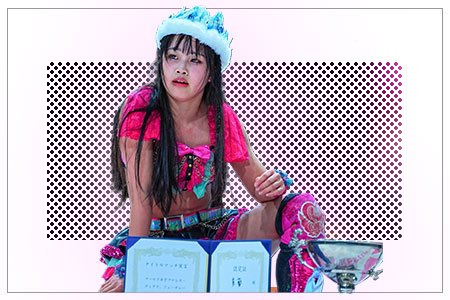
A Promotion You Should Know About: Diana
If you’ve never heard of Diana before, I do not blame you. They are a promotion that flies completely under the radar in English-speaking media that covers professional wrestling. We are here to change this.

Janel Grant Never Wanted You To Know Who She Was
by Chris Gannon

The Rise and Fall of the Roman Empire
8 Lessons I Learned As The Social Suplex’s WWE Correspondent
by David Hayter
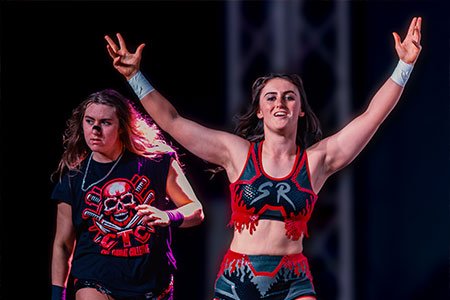
A Tag Team You Should Know: Hyperactive
Chris Gannon sits down with Anita Vaughan and Safire Reed for an interesting interview about life in Japan, WWE tryouts and seminars.