
Social Suplex Newsletter No. 2
4/18/2025
Retro
© Etsuo Hara
Recommendations From A History Man
Peter Edge introduces his regular column, where he will look back upon classic matches and what made them memorable.
So, I guess I passed the audition from two weeks ago, then (this joke will be funnier if this doesn’t get published).
Seriously though, thanks for the kind words I saw on the Social Suplex Discord relating to my first edition of Recommendations of a History Man (how many of you got that reference?)
This week, we are having more of a potpourri of reccies for you guys – and with Wrestlemania, a big UK show in the Dome (Doncaster Dome that is), Meiko Satomura’s Final Bye Bye and maybe more importantly 4/20 happening in the next fortnight, I thought I would recommend some gems relating to these four milestones coming up.
Mitsuharu Misawa/Toshiaki Kawada/Kenta Kobashi vs Jumbo Tsuruta/Masa Fuchi/Akira Taue – April 20, 1991
While you guys celebrate 4/20 by “chilling out”, I get high on the supply of Giant Baba and his booking by watching my favourite match of all time (did I just compare Baba to my weed guy?)
On the date of April 20, 1991, AJPW booked a fan appreciation event for Korakuen Hall. The main event was a trios match between members of the main two factions battling it out in the company’s main event scene.
Tsuruta-gun, led by Jumbo Tsuruta (who else?), was a bunch of old grumpy men who were looking to preserve the standards of All Japan Pro Wrestling in their mould (that sounds familiar). Super Generation Army were a bunch of young wrestlers (by puroresu standards) that were looking to break the glass ceiling and hit the ace tier in the All Japan hierarchy.
If you already looked at the embedded video with this, your first reaction is probably “52 minutes? F**k off!” I remember when I started writing for my first site, Pro Wrestling Musings, in 2021, and me and Craig William, the proprietor of the site, were talking about Kings Road era of AJPW and his delve through it for the site and what I could do to help. I got a DM back which was more or less the following:
“A one hour 6-man tag match. I’m not doing that”
Three months later he sent the following:
“That 6-man you recommended was awesome”
While the runtime is very daunting, don’t judge this book by its cover. It uses every minute of its just over 50 to produce, in my opinion, the GOAT match.
I could write a 250-page book about this match and all the beats that go into it. The callbacks, the foreshadowing and the setting up of future matches. It’s a match that appreciates its audience.
So what do you need to watch out for?
The opening bits of the match see Akira Taue who, having turned heel on his former teammates at SGA and has served his pound of flesh from Kawada and Misawa in the months after, takes his shot back as soon as he could. If Taue wasn’t such a treacherous P.O.S. for his betrayal of his friends, you would think “good for him” as he took out Kawada standing on the apron.
The Kawada retaliation and the mid-match pull apart brawl gains so much heat. Us Kings Road nerds see the callback to the moment that really lit the torch light that was this feud. You can tell from the interactions Kawada and Taue have that this is a rivalry based on just mutual distaste (which makes what happens two years later such a shock).
In this match I count 5 chapters in all:
- The beginning
- Tsuruta-gun beat down on SGA member #1
- Super Generation Army shining
- Tsuruta-gun beat down on SGA member #2
- The final stretch
The two chapters that see Tsuruta-gun dominate their opponents are varied enough to be interesting, with Kawada being worn down with strikes and Kobashi’s knee being targeted.
But it’s the Chapter 3 where this match just hits. Kobashi’s hot tag ends up being too hot and causes T-G to get a tag. Kawada dominates Tsuruta to the point that it sets up a World Title match between the pair later in the year, and the crowd is biting on every near-fall and displaying their displeasure with Tsuruta-gun members saving their partners’ skins.
The crowd is so hot for this that even Masa Fuchi, a man so grumpy that he makes Victor Meldrew seem like Jonas Salk, gets a pop when he clears house in that final stretch. The match is so engrossing to me that the finish kind of comes out of nowhere even though it’s 50 minutes into the match. *****
(Also, this match has the best uses of middle fingers in a match I’ve ever seen and that red cardigan on Giant Baba is absolutely gorgeous.)
Meiko Satomura vs Akira Hokuto – April 29, 2001
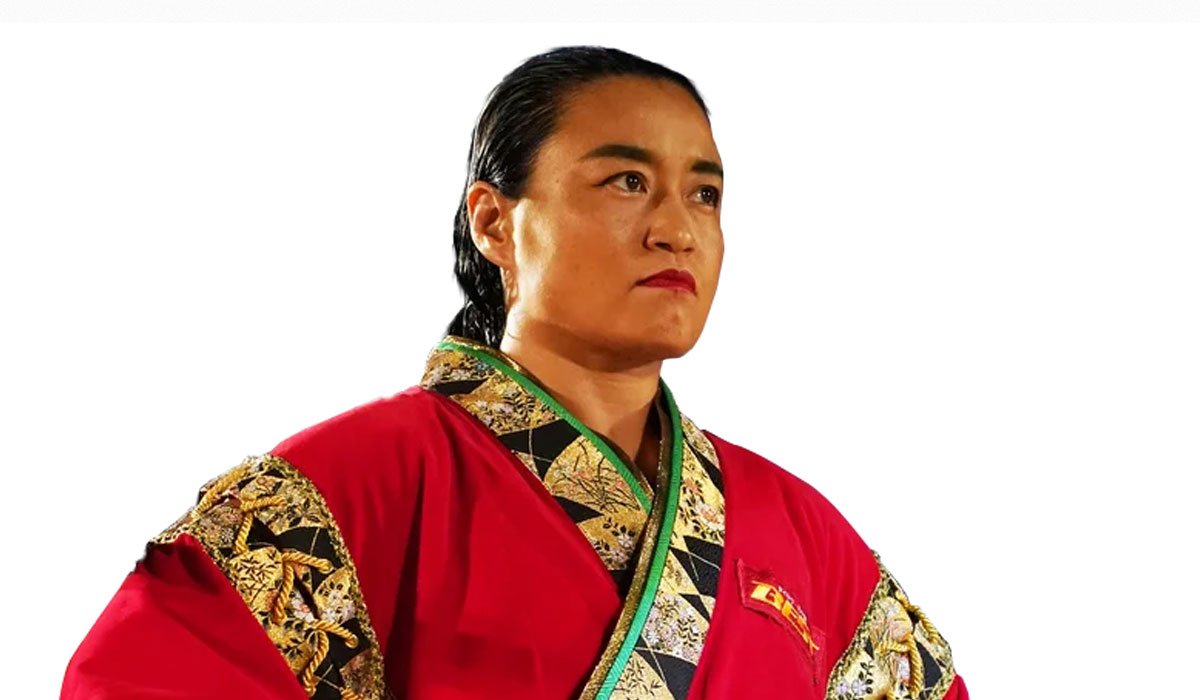
As Meiko Satomura has her Bye Bye moment on April 29, I think it’s a good time to look at her best match in her career.
Modern fans might know Meiko Satomura as the person who hit Roxanne Perez so hard Roxi thought she was in a 1995 Shawn Michaels angle afterwards, and from NXT UK where Meiko’s mentoring of Millie McKenzie went so well that Millie now goes round Pro Wrestling Eve hating on anyone over the age of 25. But Meiko will always be known to me as the Ace of Joshi from 2001 to the early 10’s, an Ace card she took on that night.
What I love about this match is the urgency – right from the bell, Meiko and Akira are just throwing bombs. Hokuto’s control segment once a sense of decorum comes to the ring is one of my favourites of all time, with Satomura’s selling contributing to it.
You get the feeling watching this that as a soccer fan, it’s akin to a soccer team that is destined for great things, but when faced with a top tier team, they just get overwhelmed in the opening minutes and they are clinging on to make sure the game doesn’t get away from them.
The impact moves are gnarly, so are some strikes. There are spots that are commonplace in 2025, but an audience in 2001 seeing them for the first time just goes nuts.
You just get the sense as the final moments happen that it’s not a case of someone winning this but who the survivor is as the blows rain in. It’s my MOTY for 2001 and it’s THE women’s match of the 00’s. *****
(Also, my all-time Joshi crush, Mayumi Ozaki, is at ringside. Nothing to complain about in this match whatsoever.)
PAC vs AJ Styles – 1PW 1st Anniversary Show
When Mercedes Mone won the Undisputed British Women’s Championship at the Tokyo Dome, many British wrestling fans started to speculate where & when the CEO would wrestle and defend her title at Rev Pro events.
Now, the chance for my wish of Mercedes to defend her titles and do the CEO dance in what was formerly the stockroom at the Shoe Zone in Coventry – which is now the HMV Empire concert hall (this is nothing to do with the fact that the “arena” is just a 45 minute bus ride from my house) – is looking more distant than the Coventry City football stadium is from the city centre. It actually turns out that of all the major landmarks in British wrestling, Mercedes is going to wrestle in the Doncaster Dome, the Augusta National of Northern England Wrestling.
I guess Mercedes was one us motley crew that bought 1PW DVDs in HMV.
One of the problems of trying to review 1PW is that the events held by the company feature more cancelled people than the 8 Passengers YouTube channel, but somehow I found a match from 1PW on YouTube that isn’t problematic.
AJ Styles was one of the biggest stars outside of WWE at this time; Pac was one of the rising stars of the BritWres scene. The idea of this match symbolised the idea of the promotion: dream matches for the UK fans with very little by the way of feuds, except for anything Steve Corino was doing (it’s almost as if Steve Corino was booking the promotion).
In the time-honored tradition of BritWres, this is filmed on a potato and you can barely hear the commentary, so you are really relying on the wrestlers to get you into this and AJ does that with THAT dropkick. Pac’s aerial prowess comes to the fore about eight and a half minutes in and from there it’s a showcase for PAC.
The match also includes the best version of one of AJ’s signature moves I’ve ever seen. The finishing stretch does kind of feel like it ends abruptly, but that might be due to how out of nowhere the finisher is hit – but in all, it’s a **** star match.
If you’re willing to deduct a quarter star or more because of that annoying kid that is mic’d better than the commentators, I completely understand.
Annoying kids from Doncaster are as par for the course on a visit to Donny as bumping into a wrestler outside the Asda over the road on event day and getting locked in the car park after the show.
Randy Savage vs Ricky Steamboat – Wrestlemania III
To give you guys a peak behind the curtain, the final match that is in the four reccies I’ll give every fortnight has been voted in by a selection of friends and in a vote against the Shawn Michaels/Razor Ramon Ladder Match at Mania X, the WrestleMania III IC Title Match won 10-0.
Does this mean that the HBK/Razor ladder match is worse than Southampton FC in the 2019-2021 period?
This match was trumpeted in WWF/E lore for many years as the greatest match in Mania and Fed history, and it is the greatest Mania match until the Bret Hart/Owen Hart WrestleMania X opener, and certainly the best singles match in the company’s history in my opinion until the Bret/Bulldog Summerslam ‘92 match…but how does it hold up on a watch in 2025?
It holds up decently. In an evolving industry, Savage/Steamboat is a product of its time. It looks like a really good match set in 1987. Talk of it being the “greatest match of all time” – as Jesse Ventura says diverting from his heel commentary schtick for a couple of seconds – when it ranks at 4th in my 1987 MOTY list tells of what was going on in the wrestling world at this time (also my rating of ****½ says it isn’t the perfect match some tell you it is).
What is great about it is the pace of this match – especially compared to the rest of the card. It’s a PS5 compared to the 8-bit generation console that was the working standard of WWF at this time. While the first 4:35 of this match has no pinfall attempts, the 10:00 that make up the rest of the match produces 19 near falls, averaging one every 31 seconds. But this is why this ages so much because the drama of those near falls is really not there compared to a match in the 5-star era of NJPW.
Part of the reason is the Pontiac Silverdome environment that this match takes place in – it feels obvious that the fans watching in the top tiers were realising what the events unfolding in the ring were way after those on ground level, as is obvious with two particular “2-counts”.
I would fully recommend this 15 minute match to people reading this who have begun their wrestling fandom in the last decade, just to compare one of 1987’s finest matches to the finest matches the last few years have to offer.
You just might have to tolerate the amount of ad breaks squeezed into the fifteen minute video, though, which I swear equaled the amount of two counts in this match.
By Peter Edge

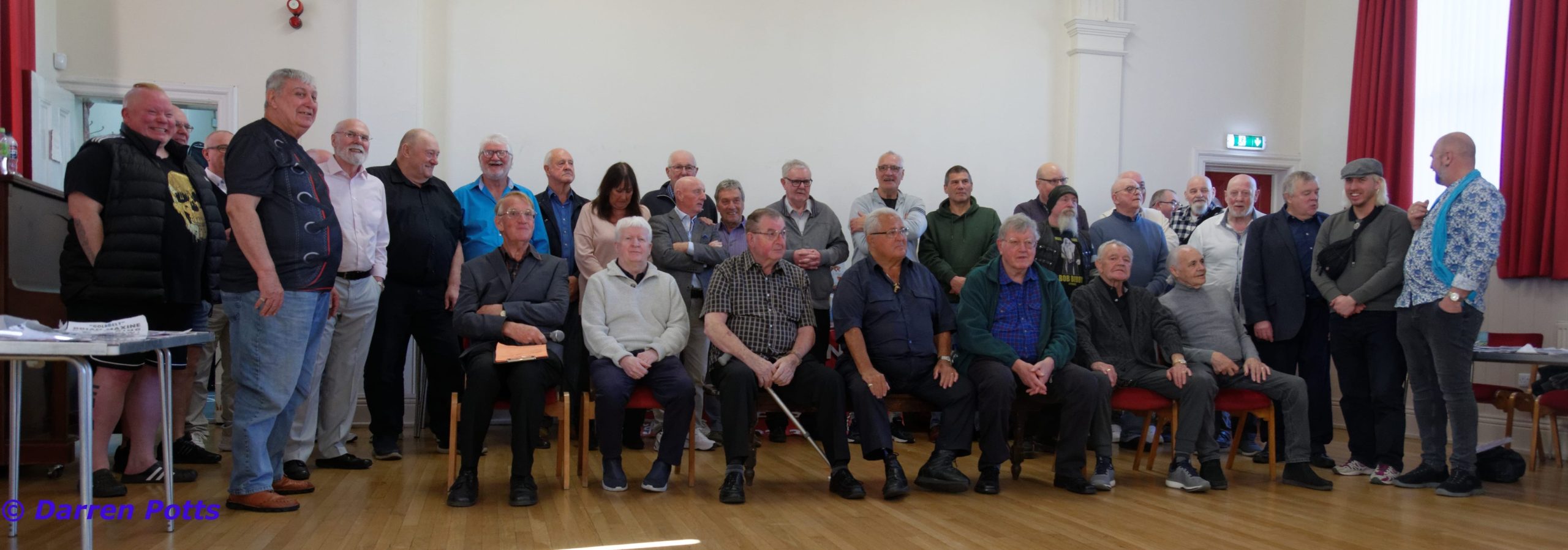
British and Irish wrestlers from across five decades gathered in Oulton, Leeds on April 6th, as the Leeds Wrestler Reunion enters it’s 16th year of celebrating the wrestlers, referees, announcers, trainers, promoters and support staff that have helped shape the industry in the UK.
© Darren Potts
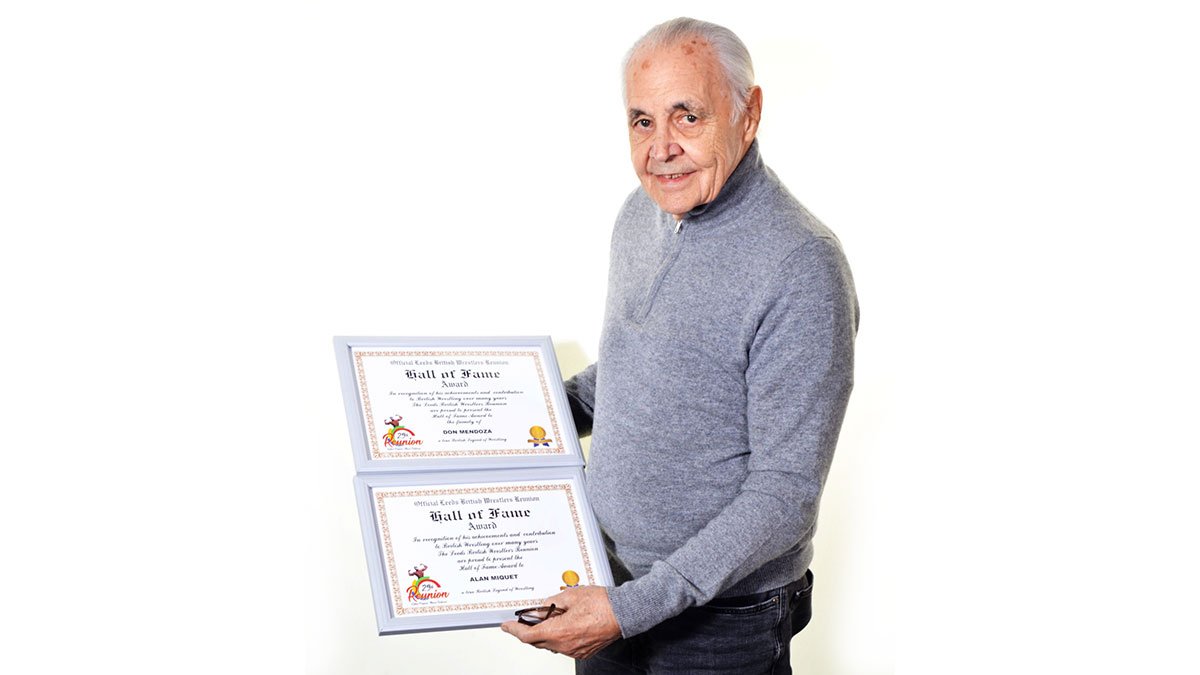
Guest of honour, on this occasion was Alan Miquet, Miquet debuted in 1957, following in the footsteps of his father, who wrestled as Don Mendoza. He would wrestle early on throughout Yorkshire before expanding nationally with companies such as Dale Martin Promotions, who booked him in an Albert Hall match against Jackie Pallo in 1960. It was a later match with Pallo in 1962 that gave him TV recognition, as the underdog managed to even up the falls at 1-1 before being pulled from the match due to an eye injury.
Alan, or Al, as he was billed, represented a new generation of wrestlers for the era. His speed, athleticism and lighter build was a change from what had come previously. It was a change of pace from the slower style favoured in the 1950s and one he shared with the likes of Johnny Saint and the Cortez Brothers, who also came through around that time.
Al Miquet was recognised as one of the top lightweights in the country by the mid 1960’s and had captured English Lightweight and British Lightweight gold by the end of the decade. His regular involvements with Jim Breaks were the highlight of the weight class during the period.
Alan’s career was in a strong place entering into 1970 before a car crash would dramatically change its course. It was thought that the injuries sustained in the incident would mean he would never wrestle again, but he eventually did find a way to get back into the ring, tagging with Jon Cortez in “The Jet Set” and reigniting his series with Jackie Pallo both inside and outside of Joint Promotions.
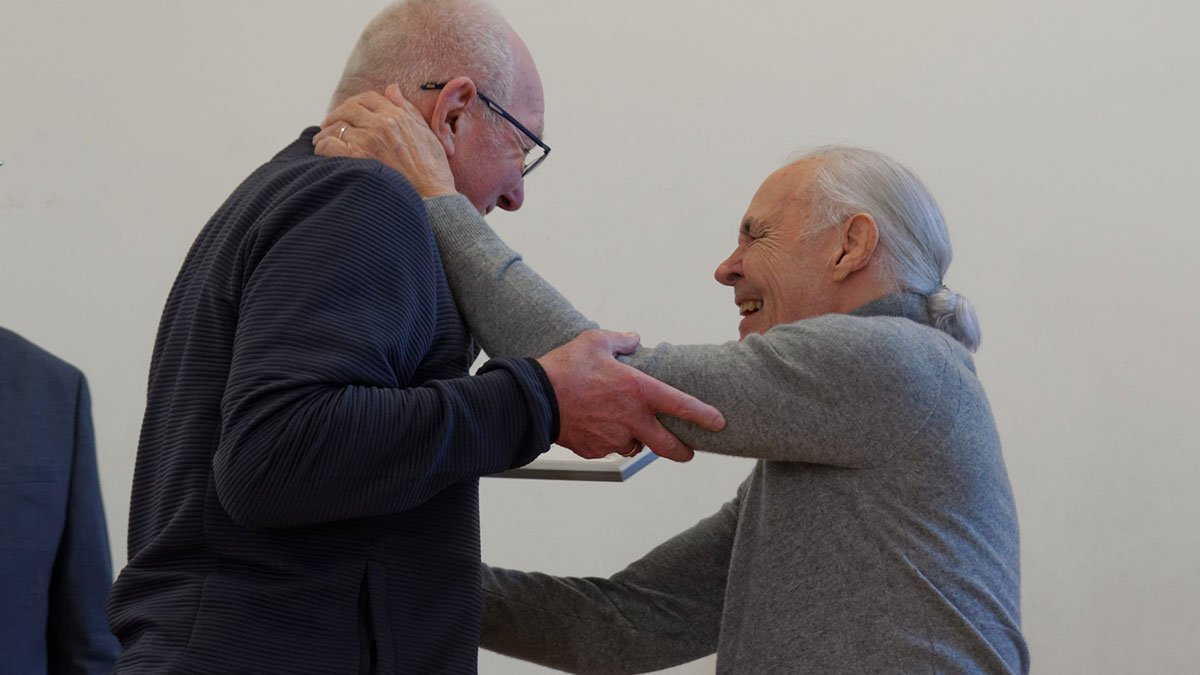
Alan Miquet was inducted into the Leeds Wrestler’s Reunion Hall of Fame, with the award presented by Tony St. Clair. His father, Don Mendoza, was also inducted alongside him.
Other Hall of Fame inductees included Jim Breaks, who had broken through in the lightweight class at a similar time to Miquet, and “Goldbelt” Brian Maxine, who was the longest reigning British Champion in history. Both awards were presented to the families of their passing in recent years.
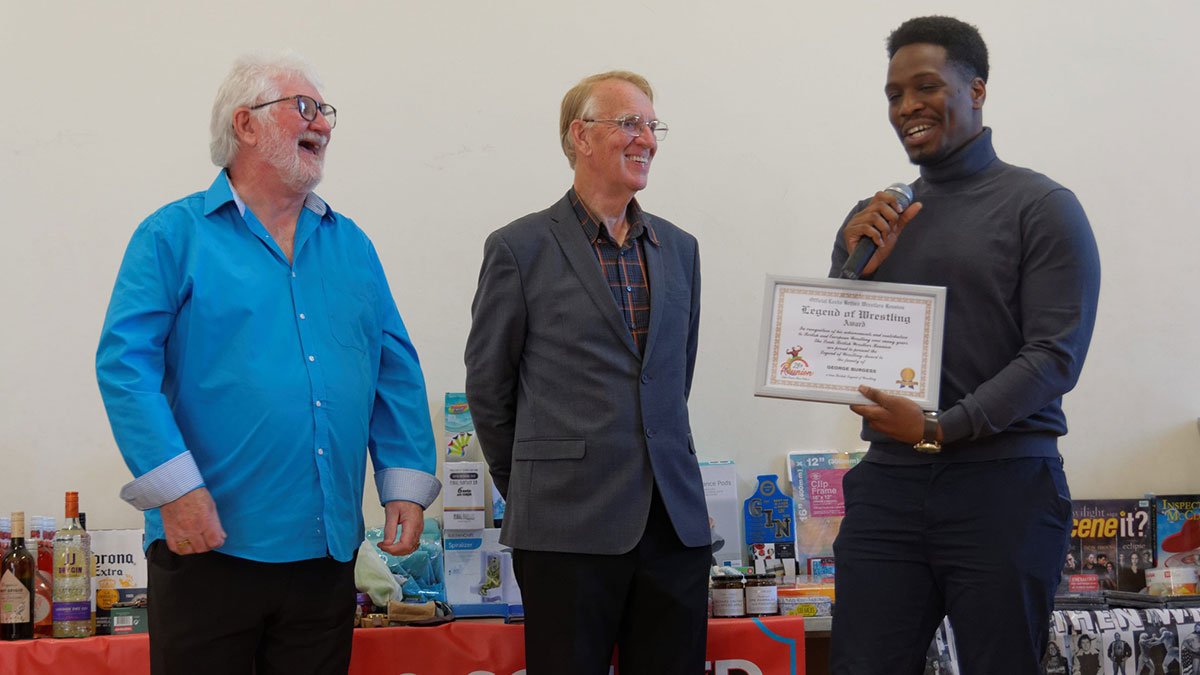
Also honoured was George Burgess, a Barbados born athlete who wrestled throughout the country as the “Jamaica Kid”. Burgess was seen as a barrier breaker for black wrestlers in the UK during his 30 year career. George passed away last October, and it was his sons on hand to receive his “Legends of Wrestling” Award on this day, presented by John Kenny.
Alan Thurbon was also presented with a “Services to Wrestling” Award to round out proceedings, which were led throughout the day by Gordon Pryor, one of the most recognizable voices in British wrestling.
The closed door event will return again in October.