
Social Suplex Newsletter No. 3
5/3/2025
Features
© STARDOM
48 Hours in Las Vegas: A Wrestlemania Week Road Diary
Chris Whitehead takes us along with him on a whistle stop tour of the independents and global promotions who made Las Vegas their home during Wrestlemania week.
Wednesday, April 16th 2025
8am, Los Angeles: I decided to do Mania Week (no longer just a weekend) in the depths of my sadness hangover from the twin combination of getting home from my Japan trip and then the city being on fire two days later. It seemed like a way to have something to look forward to. Here, today, on the cusp of the trip, I am coming off a late night of tabletop role playing (in this case, investigating the Cthulhu Mythos in 1920s Massachusetts) and I am already tired and behind the eight ball on sleep. I am not feeling excited about this trip and am asking myself the question – why am I going?
There is also the prevailing narrative that insists that Mania Week is either dead or dying and/or that the US Indies are dead or dying. WWE is doing their best to flood the week with their own events and, now in the age of WWEID, are also trying to co-opt the indie and overseas shows as well. AEW and ROH have retreated from the week and pulled talent from most of their indie bookings. These are not the halcyon days of 2016-2019. At this point, the draw for me is primarily down to the Japanese companies, who mostly only come this one time each year, and for any lucha matches.
In summation: I am starting out not hyped and tired, the bloom may be off the rose and I am travelling solo, and live wrestling is best enjoyed in company. Well, it’s too late to back out now.
Clap? Get into it?
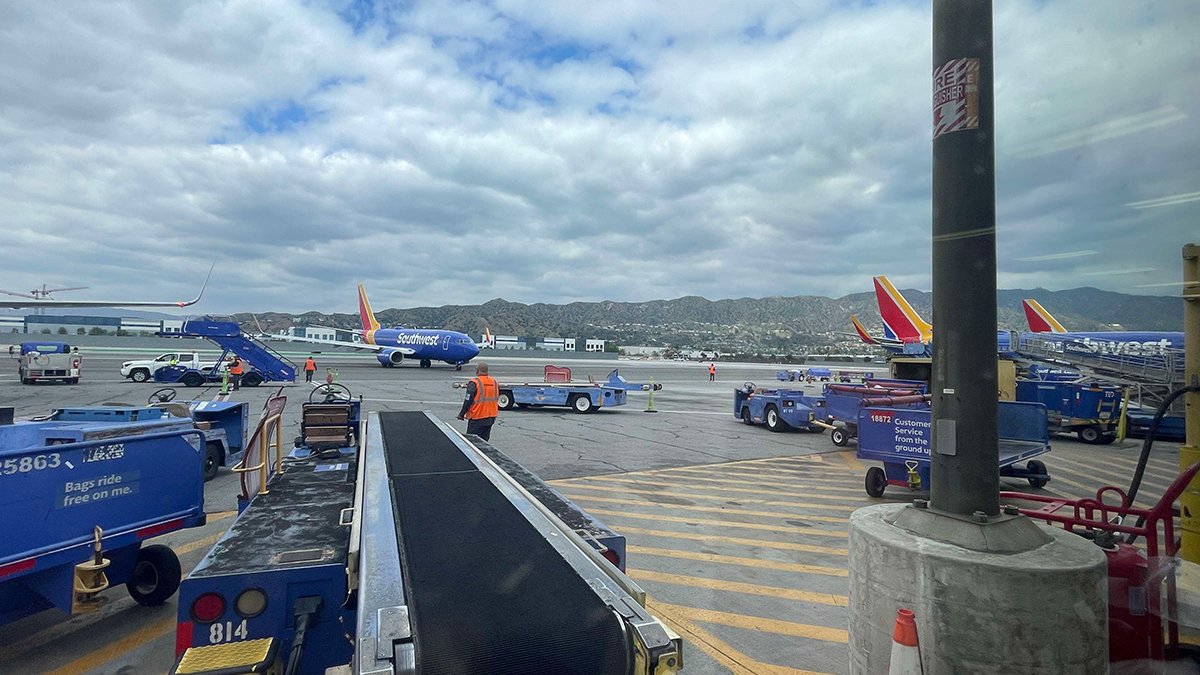
3pm, Burbank Airport: The Hollywood Burbank Airport (real ones still call it Bob Hope Airport) is less of an airport and more of a greyhound bus station with planes. It’s glorious in its simplicity and beloved by anyone that lives nearby. You can show up minutes before boarding starts and easily make your flight. You board the plane by walking out of the building, onto the tarmac and walking up a ramp or stairs to the front and back of the plane. It’s so great. They are, of course, ruining this and currently building a new terminal with jet bridges.
My flight was forty-five minutes of the bumpiest ride you can imagine, just constant pockets of air and wind, so much so that the seatbelt light was kept on the whole time. It’s like a rollercoaster ride but for 45 mins. Have I mentioned I don’t like roller coasters? Why am I doing this trip, exactly? I soothe my nerves with one of the best unknown classic records of all time, The Dentists 1985 debut album Some People Are on the Pitch They Think It’s All Over It Is Now, a hallmark of the 1980s Medway Scene from Kent, England. If you like jangly guitar pop, this is an all-timer, and I cannot recommend it highly enough.
5.30pm, Las Vegas, NV: I arrive at my hotel and throw AEW Dynamite on and am rewarded with two ‘notebook’ matches as Mone/Athena and Ospreay/Takeshita both turn out to be fantastic.
The Four Queens Hotel and Casino is neither as sketchy as I worried about nor as nice as I hoped. It is clean, which is all I can ask for. Most importantly, it is cheap, which is what matters the most, because my ethos for this trip is, in the iconic words of The Minutemen, to “Jam Econo.” Which means I need to find someone that is going to The Palms for the show tonight to save on the cab fare. I hit up the Voices of Wrestling discord, knowing many people there are in town, and ultimately land in the company of extremely nice man and longtime Texas wrestling promoter Justin Bissonnette (aka Biss) who, along with his friend Paul, is delightful company.
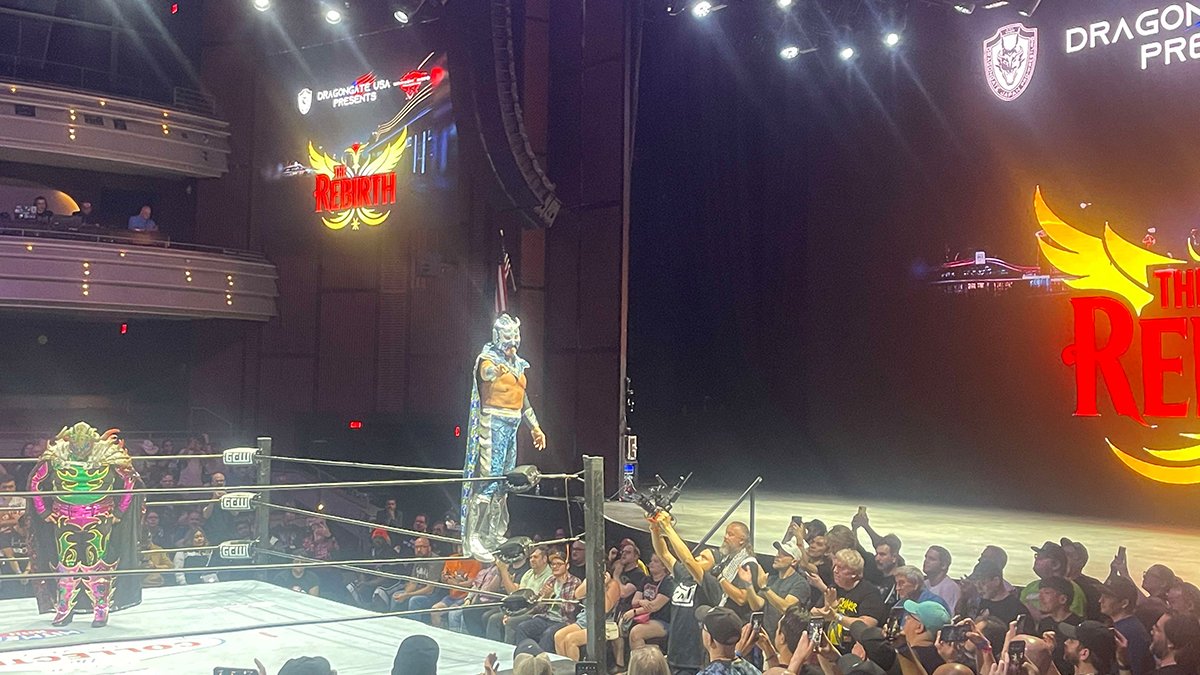
Show 1: Dragon Gate USA: The Rebirth – 9pm at The Pearl Theatre at the Palms
This was an extremely fun and good show and an excellent way to kick off my run of shows. Between the good company, including meeting many other online friends and acquaintances before the show, combined with the fun, easy to watch matches, I am starting to believe coming wasn’t a horrible idea after all.
I rarely watch any Dragongate, so getting to see some of their most hyped wrestlers is a treat, most of all Shun Skywalker, who makes a constant and low groaning noise throughout his matches, like a one-man white noise machine.I love it. There was a guy in our section who was supremely mad about it and it was glorious to see him get more and more mad. My hat is off to Shun.
This show did have kind of a weird crowd, no real surprise given the GCW connection. I mentioned this weird crowd in a group text and my friend Andrew deadpanned “isn’t that all wrestling shows?” and while he isn’t wrong, this show also had a guy in a Joey Ryan “King of Dongstyle” shirt in 2025 and a crowd that knew more about the bad GCW wrestlers than the good Dragongate wrestlers.. Case in point: the second most over person on this show, after Ultimo Dragon, was possibly the worst wrestler I saw all week, Jimmy Lloyd.
Show Rating: B
Best Match: Paradox vs Z-Brats six man tag
Merch Report: The Dragongate guys had shirts and 8x10s, plus photo ops (yes, Shun was groaning during the photos). Joe Drombowski, who did commentary, had an emporium of bootleg DVDs and vintage magazines that was the most interesting merch stand I saw on my trip.
Vibes Report: A successful start. Maybe this wasn’t such a bad idea. Dragongate is absolutely a promotion I need to spend more time with, if only for more Shun.
Thursday, April 17th, 2025
7am, Four Queens: I awaken somewhat unsure how I even got to sleep, as it turns out Freemont St is basically an all-night outdoor nightclub and I didn’t get to sleep until after 3am. This is also when I realize I didn’t leave any time in today’s schedule for lunch. I walk around the block to the AmeriBrunch Café and load up on waaaay too much breakfast food, in the hope it keeps me going until dinner time. Sadly, I am unable to find anyone to split a ride with me to my first show, so I make the long (30min) ride alone, which is fine as tiredness is slapping me in the face as the very nice Uber driver fortunately doesn’t force small talk on me.
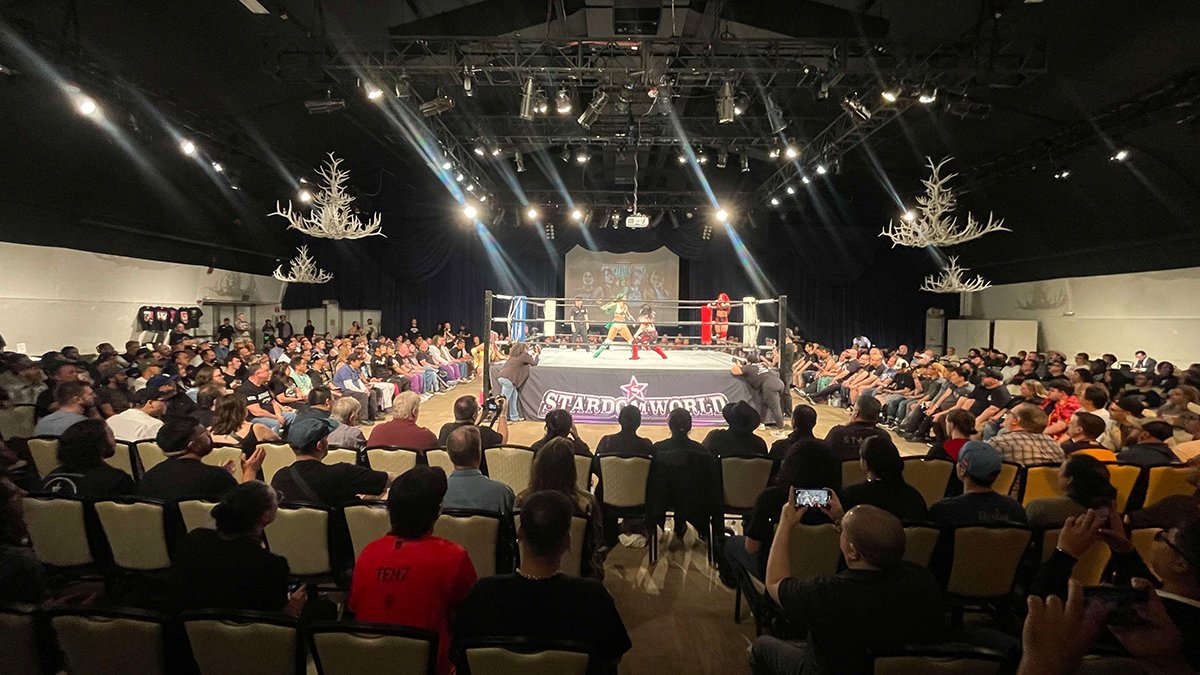
Show 2: Stardom American Dream 2025 in Sin City – 12pm, the Veil Pavilion at the Silverton Casino Lodge
The Silverton is waaaaay off strip and is neighbored by a massive Bass Pro store and a Cracker Barrel restaurant, so we are in the Deep South of the Strip, both geographically and spiritually. It seems like a nice enough place. This is the first of two Stardom shows this weekend and is being promoted by US micro indie Spark Joshi who are running their own show later in the day from the same venue.
As someone who considers Stardom their “home promotion” this crowd is theoretically “my people” and turns out to be my people in reality, as I run into some folks I met in Tokyo at the Stardom Show in Sumo Hall on 12/29/24, two of whom were sat next to me and who travelled to both Tokyo and Vegas from Germany. The world of joshi wrestling is global, but also a small world. It’s nice to see the familiar faces.
The show itself is very much a Stardom house show, which is no insult but also not the highest compliment. You come for the vibes and to catch whoever they are willing or able to bring with them from Japan. Eight days after this show, they are running maybe their biggest show ever, so the goal of these shows is to have fun and make sure no one gets hurt. It was a fun, if uneventful show headlined by a reasonably good main event between Maika and Thekla.
If I had my time over, I would probably have gone to the Pandemonium Pro show that was running at the same time, but I have no regrets from coming here. Any day that you get to see AZM wrestle is a good day.
Show Rating: C+
Best Match: Maika vs Thekla
Merch Report: If you like expensive merchandise, this was the show for you: a $200 tracksuit, a $150 Velour jacket plus standard fare like T-shirts, a hat, photos, etc. Unagi Sayaka also had her own merch, including a $70 baseball cap. Overall, this was the most professional looking and most well shopped merch store I saw all weekend. I bought a Stardom baseball hat for $40.
Vibes Report: A show for the hardcore Stardom faithful, but a fun time. Just a shame it was so far away from everything else but kudos to the venue for the most comfortable seats of the weekend and free water, a true Las Vegas rarity.
After the show, I used my loudest voice to ask “is anyone going to the Palms” in the rideshare area and found a willing ride in Chris from Cumbria (shout out to Northern England, the best part of that damp and rainy island) who was a very nice fella and with whom I endured the non-stop anxiety chatter of our Uber driver on the 20 min ride to the Palms.
Show 3: WrestleCon Mark Hitchcock Memorial Supershow 2025 – 3pm at The Pearl Theatre at the Palms
If ever there were a lesson in “don’t buy a ticket until the card is released” it was the 2025 Mark Hitchcock Memorial Show, the card for which was deeply underwhelming. I had long since committed to my ticket – a no-card-needed confidence buy based on my historical love of this show, having attended live in 2019 and 2023.
To me, the Mark Hitchcock Memorial Show has long been the beating heart of The Mania Week(end) Experience: the central square through which all journeys along the “path of glory”should pass through. As other people have said, the MHMS is a vibe check on the state of the indie wrestling industry every year. Here’s the problem: that beating heart appears to have developed heart disease because this show was, outside of the two lucha matches that opened the show, a train wreck combined with a car crash. It was a disaster.
Much like heart disease, it was also largely preventable. Whoever booked the non-lucha parts of this show might want to reflect on their choices. Yes, this is indie wrestling in 2025, which as noted earlier is beset on all sides by major league companies and I’m sure this is not an easy show to book as a result, especially with the high expectations the history of this show creates. The degree of difficulty is certainly higher than it was in the past, and I have some sympathy as a result, but my word this show left a bad taste in my mouth. Anyone could have told you the Butterbean/Suzuki match was not going to go well.
The ten-man lucha tag and the Ninja Mack/Mascara Dorada matches made the price of my ticket worthwhile, and as ever my hat is off to Rob Viper for his work on these shows. By the time you read this, everything that ever needs to be said about Mickie James, Maki Itoh, Butterbean and Minoru Suzuki has already been said, but sitting through those historically bad matches back-to-back sure did set me back to “why am I doing this trip?” again.
This was also the point at which I realized that in 2025, I am on an all-time run of witnessing bad matches, having been in the room for Shota Umino and Zack Sabre at the Tokyo Dome, for Mox and Cope at AEW Revolution and now for two matches people have said are in contention for the worst matches ever. By the time the year is out, I may end up having been in attendance for the top half of the Worst Match of The Year list. My apologies in advance if you see me at a show for the rest of the year because it probably means we are going to get a real bad match.
Show Rating: D+ (An A for the lucha matches and an F for the rest)
Best Match: Team Mala Fama vs Team Gravity, ten man tag.
Merch Report: I forgot to check the merch because I was annoyed and hungry after the show. I’m going to assume it sucked.
Vibes Report: Super Weak. On top of the show largely sucking, Mickie James’ anti-Dave Meltzer rant and the associated chant by the GCW faithful was weird and made weirder by a) Dave being there and b) I assume that Mark Hitchcock was a WON subscriber and likely also someone who knew Dave. I was glad I wasn’t heading back to the Palms for any more shows after this one. Three shows in, with three to go, one has been bad, one has been ok and one has been pretty good. I need more than that for this trip to not be a bust.
6.30pm: An intermission at the Glitter Gulch Tiki Bar
Once again finding my way into a shared Uber as I head back to the Fremont area. This time, I found not just a fan but also a podcaster, on his way to one of the many smaller shows at The Nerd bar. We had a therapeutic chat about the insanity of the Butterbean/Suzuki train wreck while our Uber driver lamented that due to the high ticket prices he was unable to take his son to Wrestlemania.
I head to the Glitter Gulch for a literal and figurative palate cleanser and to check off a box on a non-wrestling hobby, as I further my belief that happiness is a tiki drink and a friendly bartender. I now only have one Tiki Bar left in Vegas that I’ve never been to.
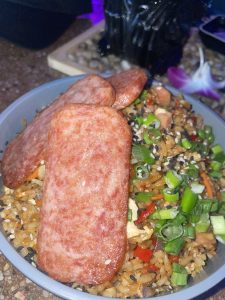
Two cocktails and one spam fried rice later, my palate is cleansed and my mood restored. I am, however, still very tired. I head back to the hotel and try but fail to get any sleep back and engage in what can only be described as a sleepless nap for an hour or so (eyes closed, body still, brain very much awake) before giving up and attempting to wake up by taking a shower and heading out on a hunt for coffee.
After obtaining coffee and heading toward the venue, I ran into Biss and Paul in the street and their company immediately gave me the energy boost I needed. We hung out in the line, chatting to each other and some more friends about our days and the shows we saw while we waited for the doors to open.
Show 4: Marvelous Women’s Pro Wrestling – 11pm at Meet Las Vegas
Part of the joy of Mania Week is taking the time to see something new. I had never watched a Marvelous show from top to bottom before and had little in the way of expectations.
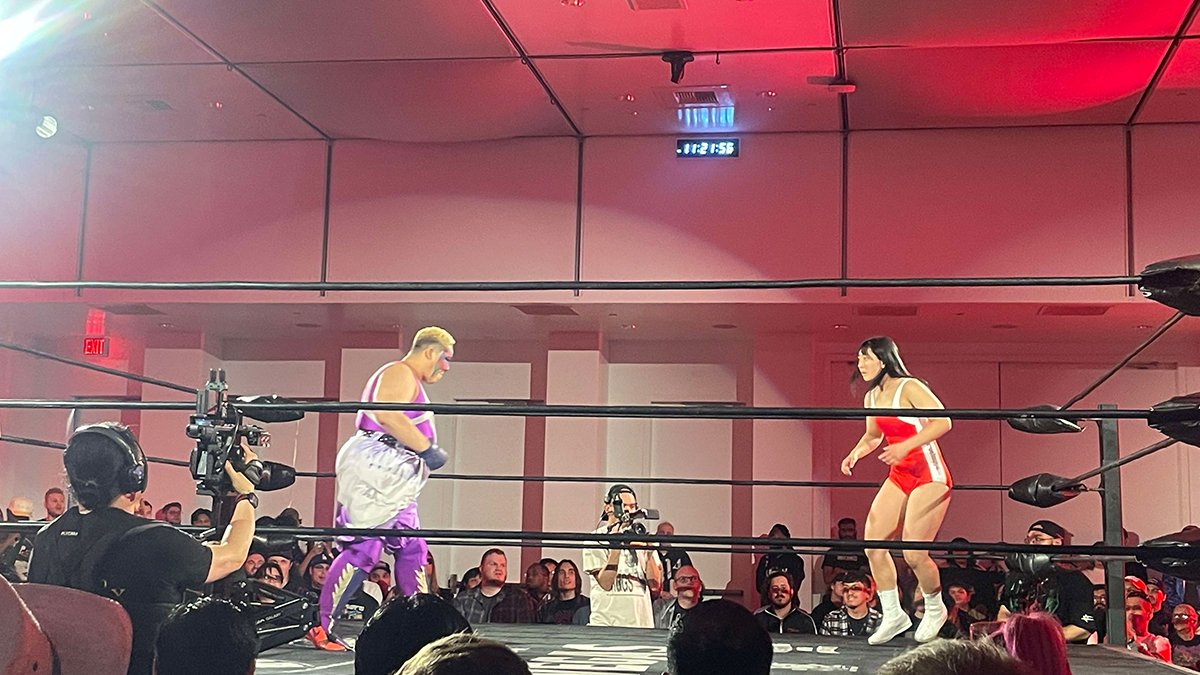
After a preshow match that over-delivered featuring local wrestlers who I assume attended their try out the day before the show, they did the traditional Japanese style presentation of bringing out all the wrestlers on the show to the ring to line up and wave and then the legendary CHIGUSA NAGAYO herself came out to greet us and kick the show off. Right then I knew that this show was probably going to rule. As Biss said later, this was the “effort show” of the week, as it was two hours of the hard hitting and intensity you would expect on a joshi show (and yes, even the men’s match delivered.)
The main event saw some of the highest intensity action of any show I went to, as Syuri and Takumi Iroha engaged in some intense grappling and striking. The aura of Syuri is unbelievable when witnessed in person and having been denied that chance at Sumo Hall for more than a minute due a freak injury, it was nice to make up for that here.
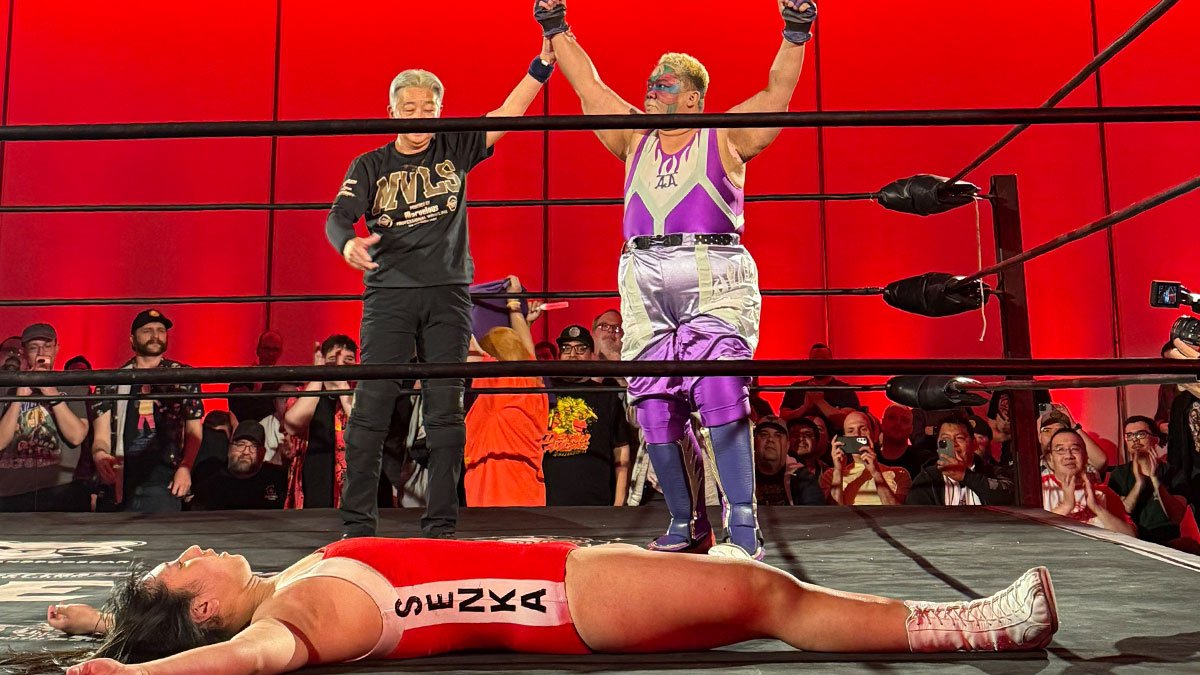
The real highlight of this show, and what will probably be my enduring memory of this whole trip, was an Aja Kong “notebook match” in 2025. Every second of the 5 minutes and 5 seconds of the rookie showcase for/ritual murder of Senka Akatsuki was great and the climactic moment of Senka refusing to be covered by Aja even for a one-count pin made the crowd go as wild as any moment I saw all week. It made me jump out of my chair, pogo and vibrate with joy in a way I didn’t even realize until I saw myself in the background while watching a clip of the match the next day. A perfect moment in pro wrestling.
Show Rating: B+
Best Match: Aja Kong vs Senka Akatsuki
Merch Report: No merch at this show, a real shame because I would love a Marvelous track jacket.
Vibes Report: Immaculate. A small show like this with a crew that came from Japan is why “the sickos” come to Mania Week. The Fighting Spirit of a rookie barely six months into her career taking on an all-time legend of the sport blew the roof off the place. This, my friends, is why we love pro wrestling. Clap! Get into it!
Friday, April 19th, 2025
6.45am: Once again, I am short of sleep. I am now very tired, but the thrill of Aja and Senka is alive in my veins. I will try to do what Senka showed me and keep fighting against my fatigue. I return to the AmeriBrunch cafe, and the same handsome man serves me for the second day in a row and wants the low down on yesterday’s wrestling shows, having remembered this is why I was in town.
Everyone I spoke to who was working in Vegas was at least somewhat intrigued by the influx of wrestling fans and interested to hear about the week’s events, especially when I relayed the idea of coming to town just to hit up the smaller shows and leaving before Wrestlemania. The bartender at Glitter Gulch the night before even told me that he loves when wrestling fans come to the bar because they don’t cause trouble and always tip well. Post breakfast, I lay low at the hotel for a while, pack my bag and get ready for my final lap around the Mania Week pool. I am tired but I am hyped. My concern that this trip wasn’t worth it has pretty much been allayed after the Marvelous show.
Show 5: Stardom American Dream 2025 in The Neon City – 12pm at Meet Las Vegas
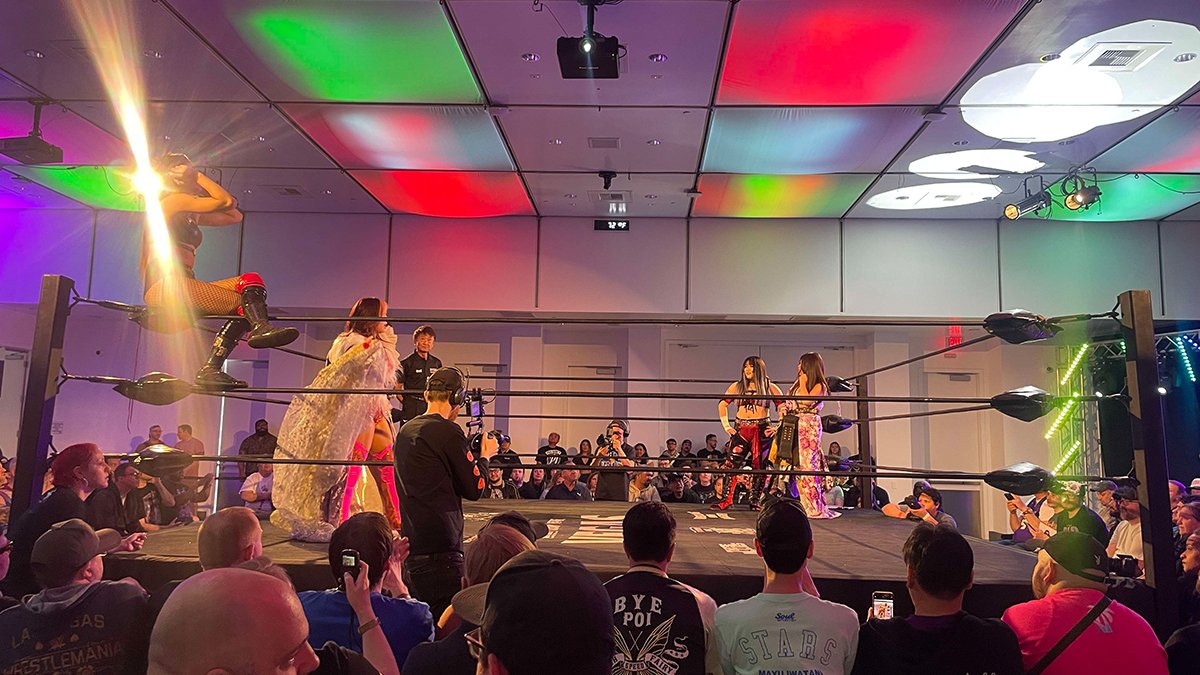
I hook up with Biss again and we marvel at the length of the line for this show. Stardom has a real following for these US shows as I see many familiar faces from the day before. Overall, this was a better show than the Thursday show and it was wrapped up in a tight 1h45m, which we need to normalize for more wrestling shows.
This show saw the return to Stardom of Megan Bayne who was last seen in the promotion on their show at last year’s Mania Week and who, of course, has since become a featured act on AEW TV. It is immediately clear that she looks like a real-deal, big-time American TV wrestler. The highlight of this show may have been the smile on Maika’s face during the ring announcements for the main event. Maika has a long tradition of tagging with tall women, for years with Himeka prior to her retirement in 2023, then winning the Stardom Tag League in 2023 with Bayne, and then another run to the finals of the 2024 Tag League with unit-mate Hanako. To see her beaming here, while standing between Megan and Hanako, was a delight. Find something to love in life as much as Maika loves tall women.
Show Rating: B-
Best Match: AZM & Johnnie Robbie vs Maya World & Starlight Kid
Merch Report: No merch at this show.
Vibes Report: Perhaps a less traditional Stardom show than Thursday given the presence of the two men on this card and the only singles match being Syuri and a local wrestler but it was still an easy and fun watch. Maya World and Johnnie Robbie were the best local wrestlers on the two Stardom shows and were able to hold their own in their match. Johnnie is probably ready for a tour in Japan, honestly. No one can earnestly tell you these shows were Stardom putting their best food forward but given the circumstances (visas, huge show a week later, etc.) I was satisfied with my experiences. Like I said, any day you get to see AZM wrestle is a good day, and I saw her wrestle every day on this trip.
2pm: An Intermission at the Las Vegas Brewing Company
With downtime from 1.45-4pm I need a peaceful spot, some food and a beer, so I take a longer than expected walk on a hotter than expected day to LVBC but am rewarded with cold beers and a good burger. I chat with famous wrestling podcaster Rich Kraetsch over a beer and we exchanged stories of shows we attended before heading to the company booked by famous wrestling podcasters: Deadlock Pro Wrestling. Funnily enough, Deadlock was a show I bought tickets to based on Rich’s boosting of their shows over the last year or so. Can Deadlock end my Mania Week speedrun on a high note?
Show 6: Deadlock Pro Wrestling – 4pm at Meet Las Vegas
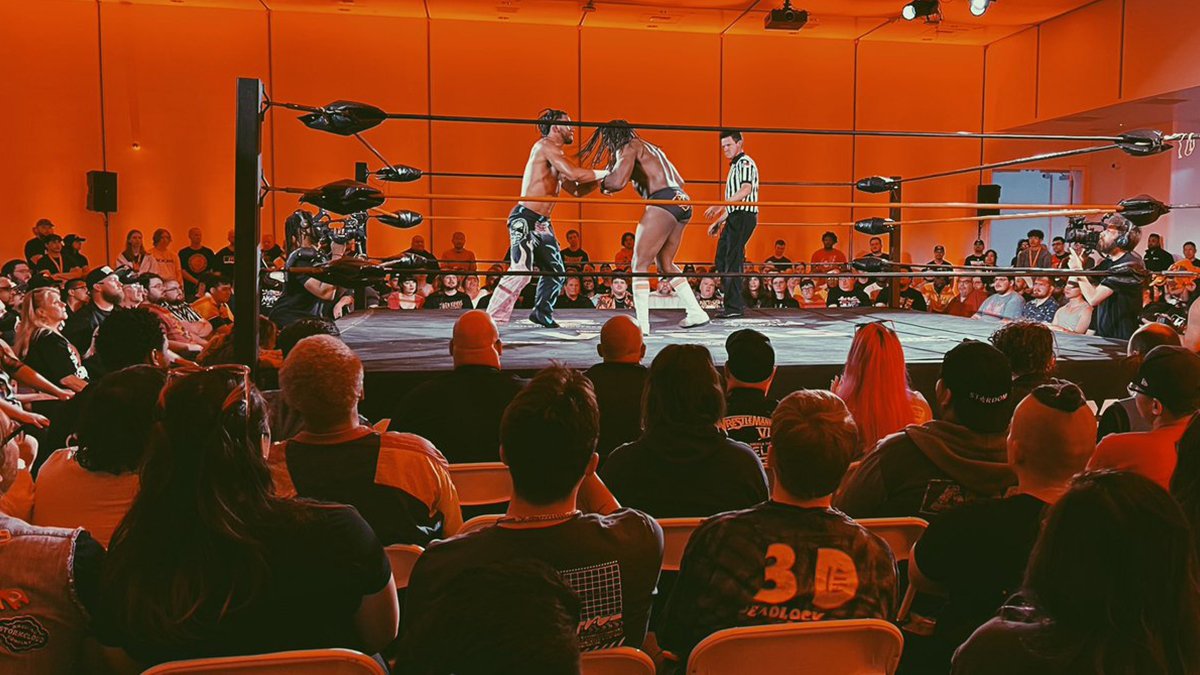
Deadlock has a lot of buzz as perhaps the premiere indie in the US right now. I had never seen a single second of any of their shows, but again, that’s what Mania Week is for. Their hype was well earned, as this was the show with the most overall consistently high-quality top to bottom series of matches that I saw, and outside of the Stardom shows it was also the most professional looking show that I attended.
It also had the biggest crowd of all the shows at MeetLV. It was a crowd made up of many dedicated followers of DPW as people were locked into the stories and the bookers/podcasters that run DPW had a long line of people asking for pictures during the intermission. Deadlock, along with their promotional partners West Coast Pro and Prestige, appear to be doing all they can to resurrect the pre-COVID US indie scene; by identifying good, under-utlilized wrestlers and pushing them, combined with judicial use of talent signed to AEW or England’s RevPro.
The twin highlights of this show were LaBron Kozone and Leon Slater, who told a great story while making both guys look great and the Tag Title Match between was two teams I was actually not all that excited to see: Violence Is Forever and Grizzled Young Veterans, who proceeded to engage in a wild, intense and bloody street fight that seemed to fit both teams more than a standard match would have. It allowed ViF to be tremendous underdogs unwilling to stay down no matter what was thrown at them. Kevin Ku was bleeding a LOT and got very high on the newly renamed “Toni Storm Scale” (but still only half as much as Toni in the Hollywood Ending match.) It also helped that this was the only bloody brawl I saw all week. Deadlock did, indeed, end my trip on a very high note.
Show Rating: A
Best Match: Violence is Forever vs Grizzled Young Veterans
Merch Report: No merch at this show but no shortage of their merch in the crowd so I assume they have a good webstore?
Vibes Report: This was a great way to end my week. I look forward to seeing more of their shows in the future. The “New Collective” of Prestige, West Coast Pro and Deadlock ran two days’ worth of shows at MeetLV and it was a real shot in the arm for Mania Week. I truly hope they get together and do it again. Maybe, just maybe, we can move the center of gravity away from GCW and their Collective which grows less and less interesting with each passing year.
9pm, Harry Reid International Airport: My shared ride to the airport gave me one final chance to chat with a random wrestling fan, David from Colorado who was having a great week and is perhaps the rarest of Americans: an American born rugby player. I hope he had fun at Joey Janela’s Spring Break, a show I heard mixed reviews for.
As I sit on the airplane, waiting to taxi and depart, I am truly and deeply, really fucking tired.
I speedran Mania Week with 6 shows across 48 hours, with only 8 total hours of sleep. I didn’t even mention that I was in Las Vegas two weeks earlier for four days, to see some great friends get married. That’s too much Vegas in too short a time for anyone. As tired as I am, I was still sad to miss my new friend Biss’s show at the Swan Dive (New Texas featuring Bryan Keith vs Leon Slater, get into it) but at the same time a man has to sleep eventually.
As we take to the skies, I crank up the volume on my music app and throw on Heavy Times – one of the best bands from Chicago this century – and am reminded that there’s really nothing like flying in to or out of Vegas at night. This city of neon and excess in the middle of the desert just shouldn’t exist and somehow it does, shining brightly in the night. Much like pro wrestling, it’s a glorious mess.
Friday, April 19th, 2025
8am: A little after waking up I am reminded of a line from Choked Up, one of the Heavy Times songs I listened to on the way home: “Stayed up too late / Woke up dehydrated and afraid of life”
I certainly did stay up too late all week. I may be dehydrated. But I am not afraid of life. Quite the opposite, my reserves of joy were refilled, and I couldn’t be happier I made the trip. My thanks to everyone that hung out, said hi, split a ride, lost their minds for the good (Senka!), were agog at the bizarre (Butterbean!) and generally made every show I went to memorable.
There’s nothing in this world quite like pro wrestling, and the people it introduces you to along the way. Wrestlemania Week is alive and well, you just have to find the right people, at the right show, at the right time.

© WWE
Is The Money In The Chase?
by Conor McFall
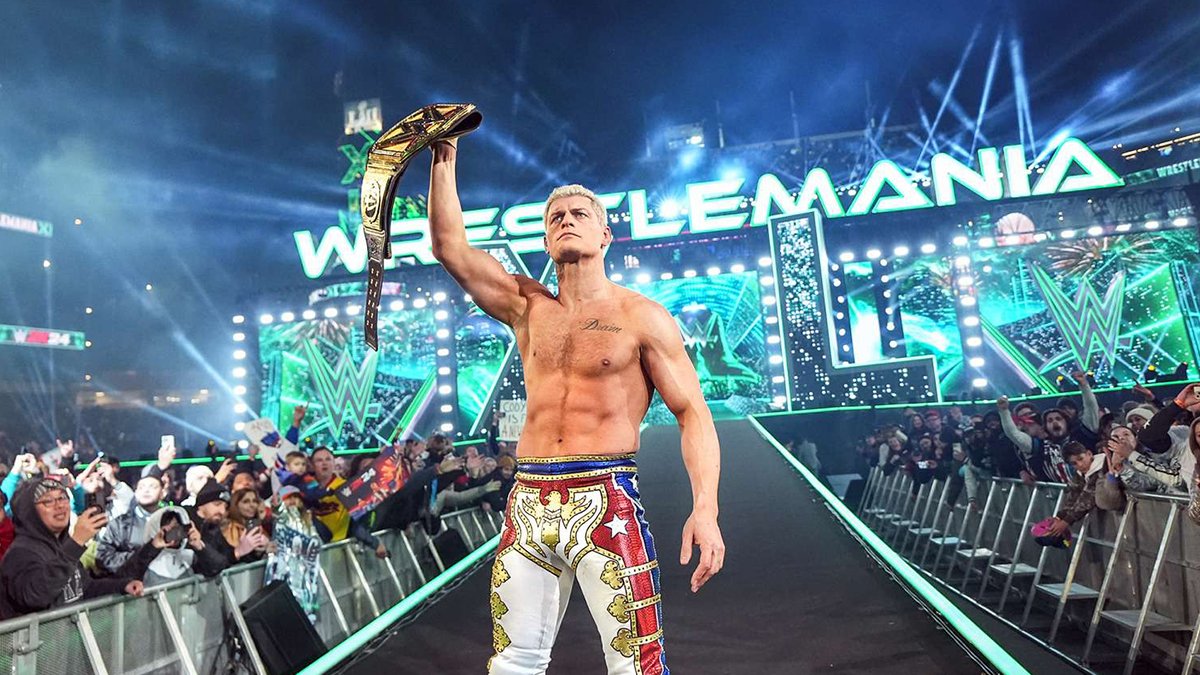
One of the most heavily used axioms in contemporary wrestling discourse is that “the money is in the chase”, meaning that companies are at their most successful from a business perspective when they have a babyface challenger who is chasing down the top heel, with fan anticipation building and building until the final moment of catharsis when their hero finally wins the championship. The three biggest promotions in wrestling have been defined in recent years by such stories – Cody Rhodes chasing down Roman Reigns, Hangman Adam Page overcoming his former ally Kenny Omega and Tetsuya Naito finally besting his career rival Kazuchika Okada – and each reached a business apex during these sagas.
Indeed, both WWE and New Japan sought to extend the chase periods for as long as possible, beating their babyface when everyone expected a crowning moment just so that they could wring another year or two out of that dynamic.
Cody likely knew from his own father’s experience how lucrative a storytelling device this could be – Dusty made a career out of being the chaser, often dropping the title back to the heel shortly after he won it. He knew that nothing he could do in an extended title reign would match the high of his big victory. This likely should have been the approach taken with Kofi Kingston, who finally won the top championship after a long career in the midcard in a classic match with Bryan Danielson at Wrestlemania 35. Instead, his reign limped on for six miserable months of diminishing returns before an ignominious 9 second defeat to Brock Lesnar erased any remaining goodwill accrued by his initial victory.
© WWE
The Money In The Ace
While it is true that in the examples above, it was clear that the money was indeed in the chase, I don’t think that applies to every situation. A long chase means extended heel domination at the top of the card as you have to appropriately build fan anticipation for a title change before pulling the trigger for maximum effect. But if we consider the absolute business peaks in American wrestling, these are frequently defined by dominant babyfaces.
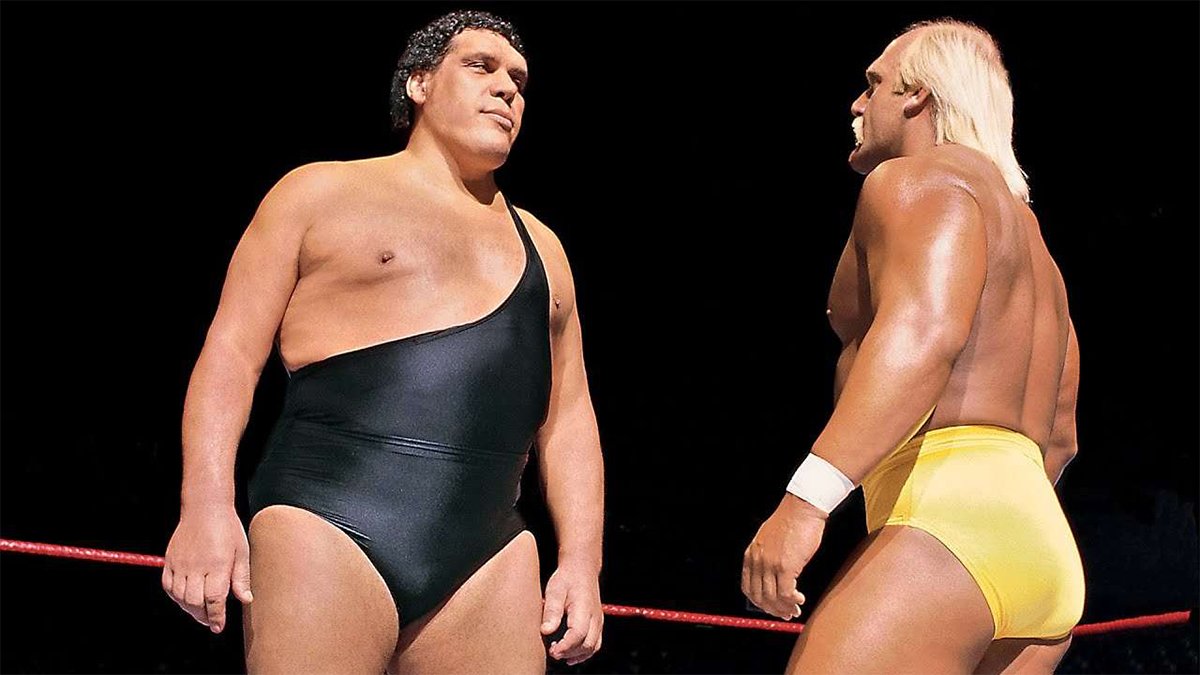
Bruno Sammartino had two multi-year championship reigns as the top babyface in Vince J. McMahon’s WWWF, dominating the 1960s and 70s in America’s largest promotion, facing off against monster heels in formulaic programmes usually blown off in Madison Square Garden.
McMahon’s son would adapt this formula in the 1980s with Hulk Hogan as his champion, again overcoming a steady stream of heel challengers as the WWF expanded outside of territorial boundaries to dominate nationally during Hogan’s initial four year title reign. With the transition away from house shows to television and PPV being the main drivers of the business in the 1990s, title reigns did not tend to last as long as bookers would switch the belt more frequently to pop a rating or a buy rate.
Nevertheless, WWF would continue to be a babyface dominated promotion – while attempting to repeat the Hogan model with Diesel was a false start, Steve Austin would become the biggest star in the industry by the end of the decade, breaking Hogan-era gate records across the country. While he did not have the long, dominant title reigns of previous eras, he by and large overcame his chief antagonist Vince McMahon in increasingly Road Runner-esque scenarios.
© WWE
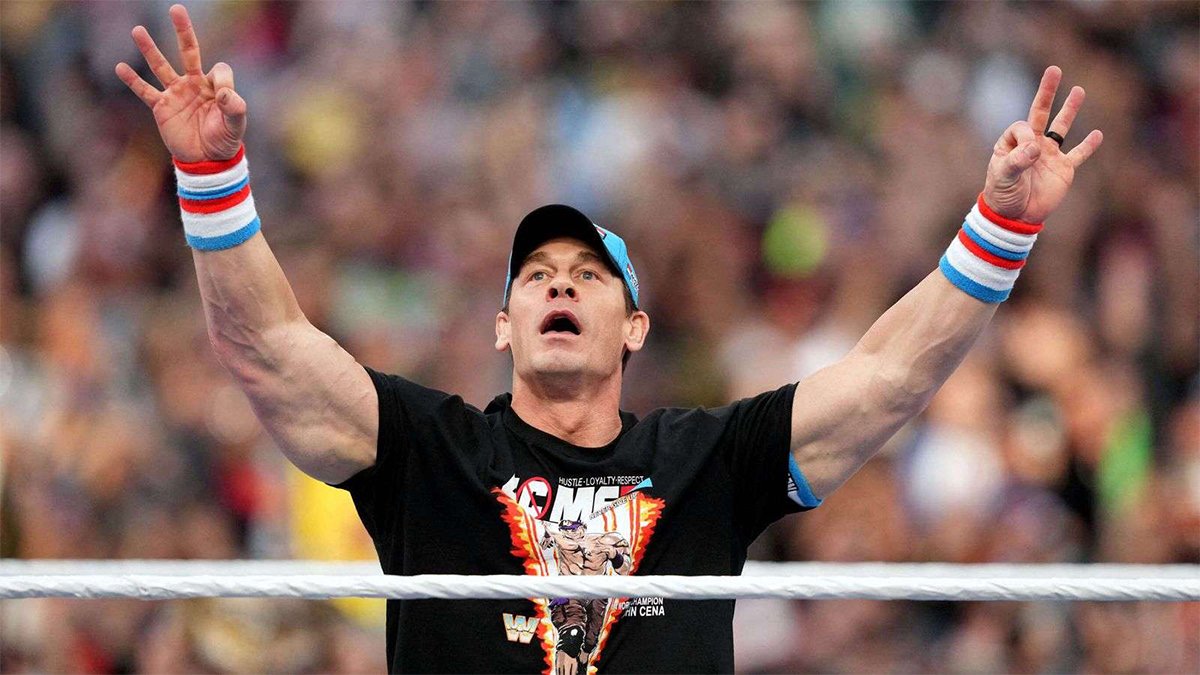
After business nadirs following the end of the Austin era, WWE stabilised their business with the crowning of a new top babyface in 2005, John Cena, who would dominate the top of the cards and overcome his heel opposition as the biggest star in wrestling for a decade plus.
While this is all centred on one promotion and is not necessarily reflective of the entire business, it is worth setting this out in contrast to how heel dominated the top of the cards in American wrestling have been in the last decade. In the five year history of All Elite Wrestling, I approximate that over three and a half of these have had a heel world champion on top.
© WWE
Missing the Peak
The purpose of having a heel champion is to draw on top against babyface challengers that the fans are desperate to see get the title. In the territory era, this was typically defined by the NWA champion coming into a region to face off against a beloved local star and usually eek out a close fought victory, giving the fans the impression that their hero was so close that they’ll surely get him next time. In the modern era, a heel champion will usually be the dominant presence on television and frequently beats down the babyfaces, usually in line with a faction, to generate as much heat as possible before the chosen face eventually rallies against them to overcome. The problem is, in modern wrestling, too many companies have neglected that last and most important part.
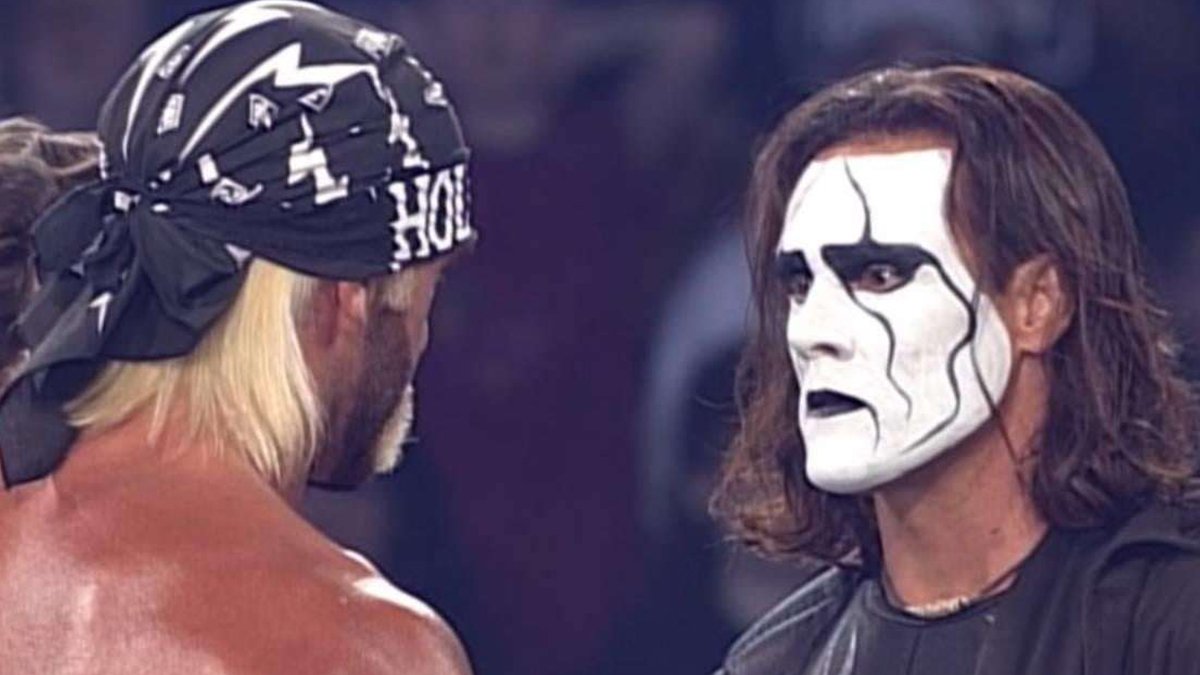
If we look at the most famous example of this, the NWO, it did drive business for a long time as fans either supported the cool heels or rallied behind Sting as WCW’s saviour. As we know, what should have been Sting’s crowning moment at Starrcade 1997 ended up being a disaster and his limp subsequent title reign took a back seat to NWO infighting angles. Eventually the faction would simply peter out without the babyfaces ever truly getting to vanquish them.
In the decade prior, the Four Horsemen rode high atop Jim Crockett Promotions with Ric Flair finding banana skin ways to hang on to the title. Fans eventually got tired of having the rug pulled out from under them with endless Dusty Finishes and business fell away dramatically.
Triple H has the ignominious distinction of tanking WWE business on top with heel faction domination not just once but twice, with Evolution from 2002-05 and The Authority in the mid-2010s taking delight in squeezing the juice out of any babyface opposition rather than setting them up to succeed, though at least Evolution launched the careers of Randy Orton and Dave Batista as top acts in WWE.
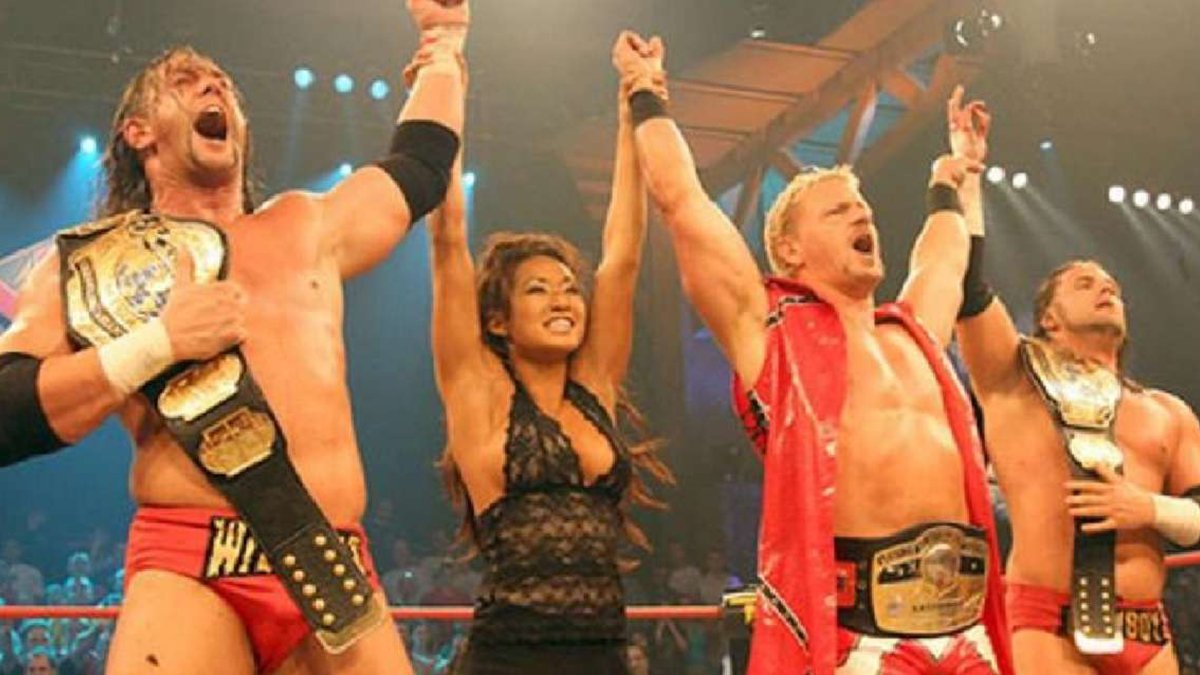
© TNA Wrestling
Quite ludicrously, TNA’s entire history in the Dixie Carter era consisted of heel factions dominating the company and undermining the babyfaces as the various hacks in charge of the booking sought to replicate the NWO again and again. Jeff Jarrett would have multiple factions helping him keep the world title through the years, coming off as a cheap cosplay of what Triple H was doing in WWE at the same time. While heel champions and factions are supposed to eventually tee up the next babyface superstar, they just as often are led by powerful and egotistical wrestlers who don’t have any particular interest in letting someone else have that spot.
Overbearing heel heat angles always end up driving fans away if they don’t have babyfaces to get behind who they trust will eventually overcome. This was the case in all of the above examples, as well as in the nadir of latter era Vince McMahon booking where the deeply mediocre Baron Corbin got constant heat on the babyfaces to record low audiences.
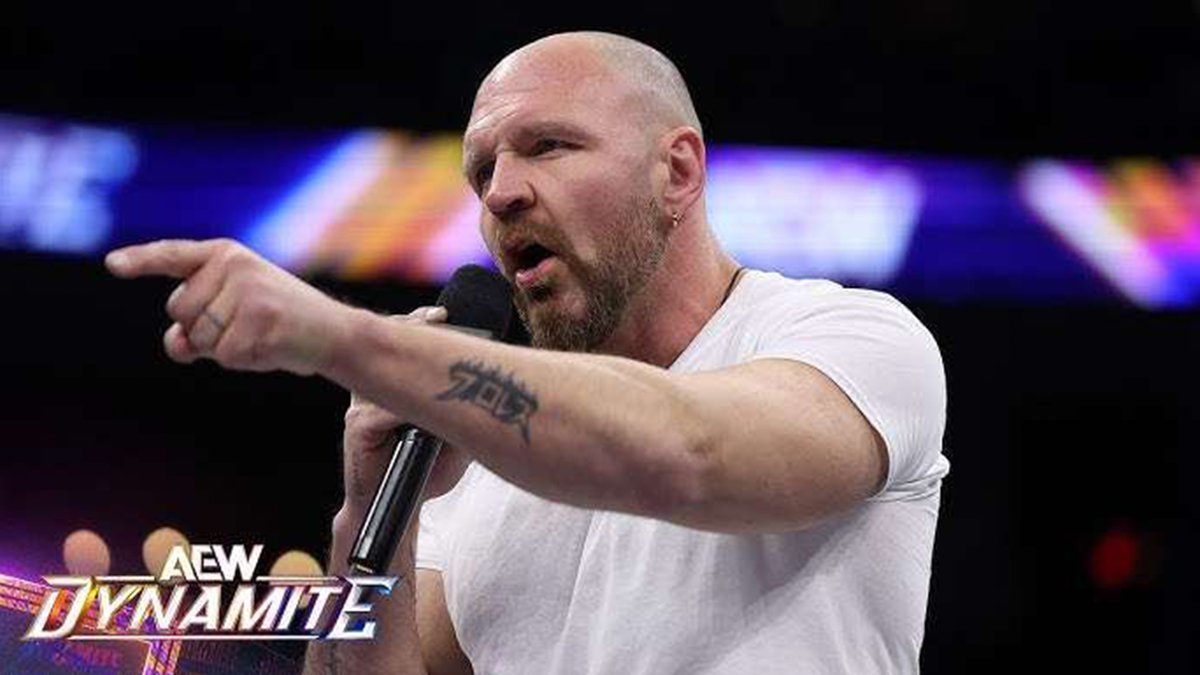
© All Elite Wrestling
The Current State Of The Play
So where are we now? Jon Moxley’s current AEW Championship reign as leader of The Death Riders has been negatively compared to the above factions. It has been debated whether this reign has been poor for business or not, as television ratings have remained steady during this run but ticket advances on upcoming shows do not seem to be up compared to previous shows. The biggest issue with the angle is the promise, that it would elevate AEW original stars, has not matched the reality of feuds with Adam Copeland and Samoa Joe. Tickets for the Dynasty PPV did grow impressively when Swerve Strickland was announced as Moxley’s challenger. One could see that as a sign that the heel heat is paying off as fans rally behind the popular babyface, but as Moxley retained the title with a run-in heavy finish, it remains to be seen if there continues to be juice in his challengers or if fans, as they have done in previous instances, get fed up.
It had been reported at the outset of the storyline that Darby Allin would be the babyface this storyline was designed to elevate, but as he has been absent from television throughout 2025, there hasn’t been much of a babyface chase for fans to sink their teeth into.
The “money in the chase” adage works with the right characters and when there is a clear direction, not when it is just heel heat with no obvious end point.
Ultimately, the most important element of these storylines working is for the fans to have trust in the booker and the company that the delayed satisfaction would eventually be provided. New Japan fans had that trust in Gedo when Naito lost at Wrestle Kingdom 12 and that trust was paid off.
WWE fans had that trust in Paul Levesque when Cody lost his first challenge against Roman Reigns, albeit they were ready to turn on the company when it seemed as if The Rock was going to steal that away one year later.
Tony Khan and AEW, while they are on a strong run of shows, do not currently have that trust after two major heel angles with MJF and The Elite were poorly received. That The Death Riders run has been poorly received is partly as an after effect of that, as much as it is to do with the evident weaknesses of the storyline itself.
In my opinion, American wrestling has been way too heel dominated for too long, as bookers have delayed fan satisfaction for as long as possible and egotistical stars have lobbied to keep themselves on top. If the promise of a babyface champion is not delivered satisfactorily, fans run out of patience and the heat ends up being on the company.
If we look at what is happening in Japan right now, the babyface reign of Hirooki Goto has been the feel good story in all of wrestling and has delivered at the box office as fans get to see a long suffering hero finally get his flowers. For AEW, a similar moment of fan service is long overdue and could help be the next step to grow business again in a period where shows have begun to regain their consistency and quality. Enough of heel heat. Enough of endless chases. It’s time for a hero to reach the top of the mountain and stay there.
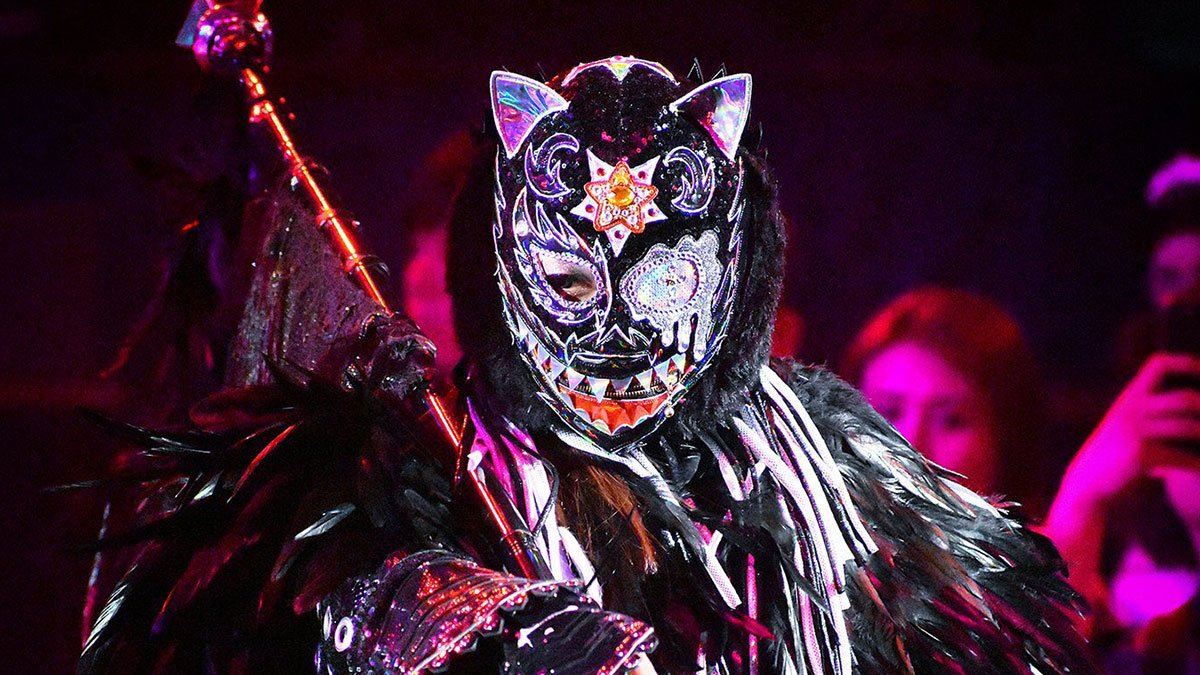
© STARDOM
The Fall of Saya Kamitani and The Rise of the Phenex Queen
David Hayter provides us with an insight into Saya Kamitani and her journey up to Stardom’s “All Star Grand Queendom” to form the counter piece to Tim Hunter’s exploration of Tam Nakano’s career in our previous issue.
Looks can be deceiving.
Take Saya Kamitani, the elegant and aloof World of Stardom Champion: a perma-smug heel, oozing charisma and self-confidence, fresh from headlining All Star Grand Queendom, the biggest show in Stardom’s history, where she retired her forever rival Tam Nakano. The aesthetically immaculate Phenex Queen is the very picture of certainty, but scratch beneath the surface and you will find foundations built on sand. Not an effortless, all-conquering main eventer, but an awkward and uncertain young woman who found her most natural and organic persona by overcoming adversity, rejecting her true self and embracing an entirely artificial identity.
Despite being handpicked to headline at an early age, Saya Kamitani’s story is not one of preordained success, but one of rejection, backlash, bullying, and disastrous bad luck. And yet, when it seemed her career had reached its nadir, she rose from the ashes by turning a crisis of confidence into a glorious rebirth as a heel.
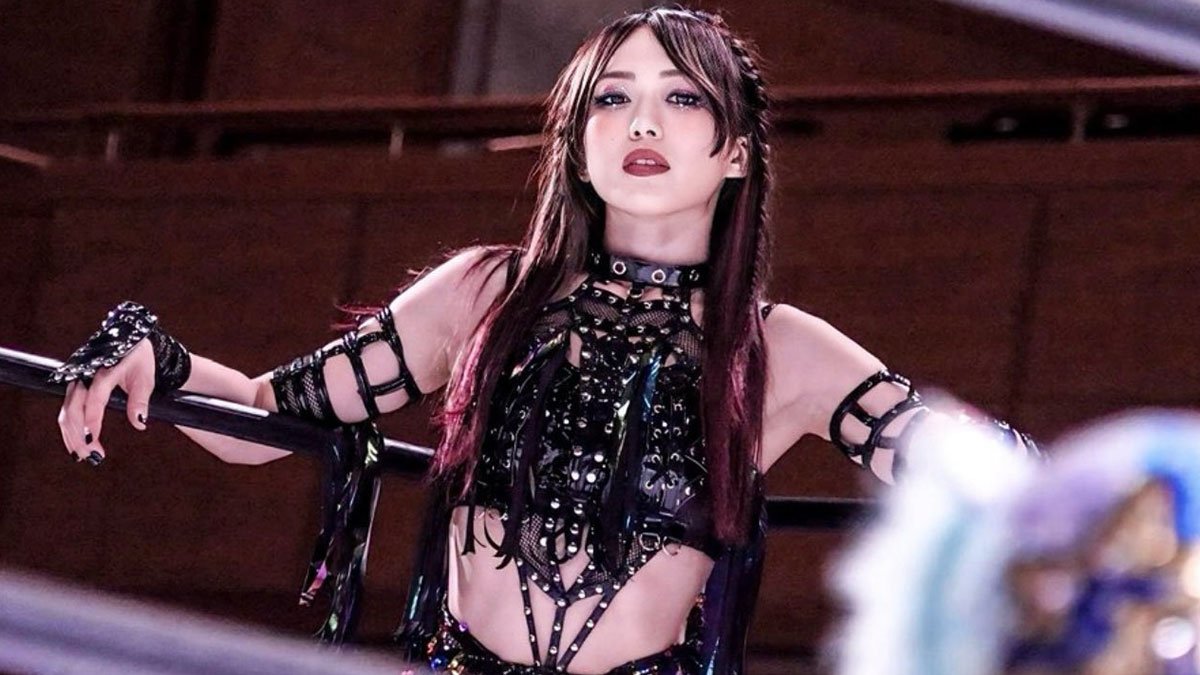
© STARDOM
The Strange Case of Saya Kamitani
It’s about time we introduced you to the real Saya Kamitani. This article will no doubt come complete with photographs of Saya looking fabulous. Take any still image and you might reasonably assume that she’s destined for the big time. You’ll see a tall, beautiful woman, likely striking a vogue-worthy pose, no doubt dressed in an implausibly stylish and intricately designed outfit — she might even be holding a flag; she is very literally Stardom’s standard bearer. But watch Saya Kamitani move and you’ll see something entirely different: a spindly, spidery creature, who is all arms and legs.
Her limbs are long and they famously flail. As a result, nobody moves quite like Saya Kamitani. When she kips up, her body folds and then rapidly unspools like a slinky; when she hits her signature top rope springboard, she sits in a broad, ungainly frog-like squat on the top rope before soaring through the air, and, infamously, in her youth, she’d sell by running around the ring waving her arms in the air like a wacky arm-flailing inflatable tube man, or Olive Oyl waiting to be rescued by Popeye.
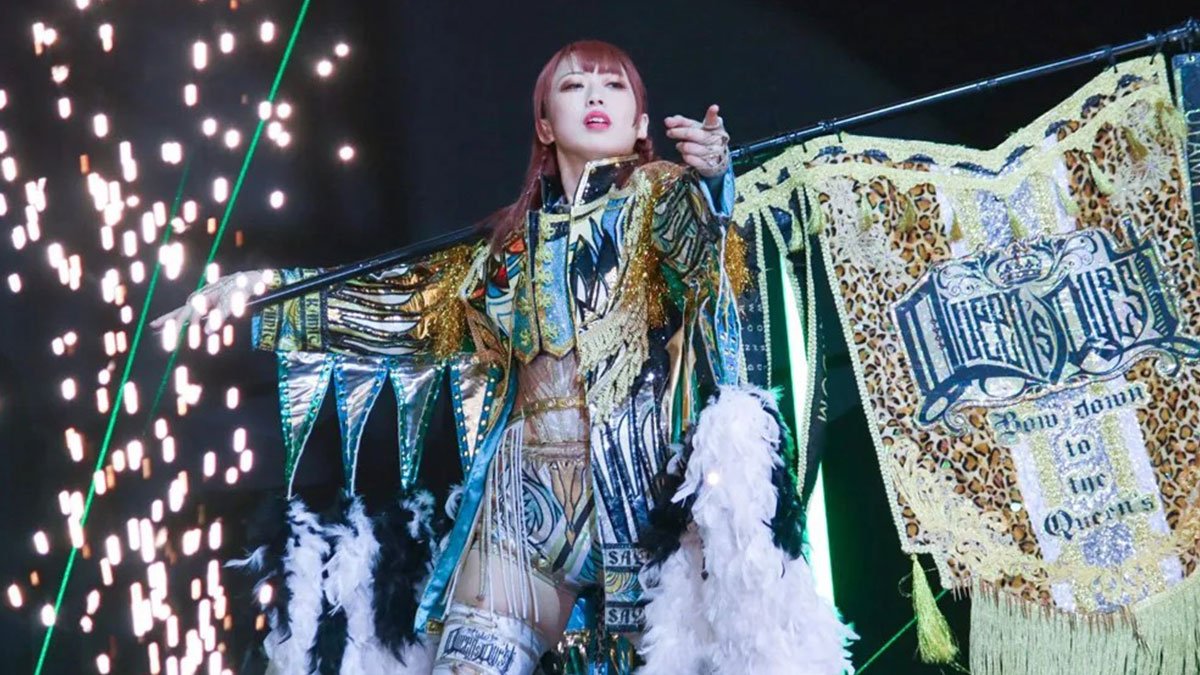
© STARDOM
As a young babyface, Saya represented a strange dichotomy. She was a flexible flyer whose wrong-shapedness made her every move and movement distinct: a true one-of-one and a dazzling, if inconsistent, in-ring performer. She was also noticeably awkward, possessing an uncomfortable and uncertain energy that seeped out through the screen. Her selling was strange and unnatural, her poses were stilted and her promos felt nervous. Even when her moves landed perfectly, there was a sense of danger, as though she was teetering on the edge of losing control. She had both a unique physical charisma and a tentative smallness to her character simultaneously.
Stardom head honcho Rossy Ogawa had no doubt Saya was destined for greatness. The former dancer and rejected idol would debut in 2018, join Queen’s Quest in 2020, and, by 2021, have won Stardom’s Cinderella Tournament, defeating Himeka and then Maika in a single night. This was not only the moment Rossy strapped the rocket to Saya, but it was also the beginning of a career-defining rivalry with Tam Nakano that culminated last weekend with both women’s careers on the line. Saya would chase Tam throughout 2021, eventually winning the Wonder of Stardom title at Dream Queendom, leading to a clear passing of the torch moment, as Tam graciously knelt and strapped the belt around Saya’s waist.
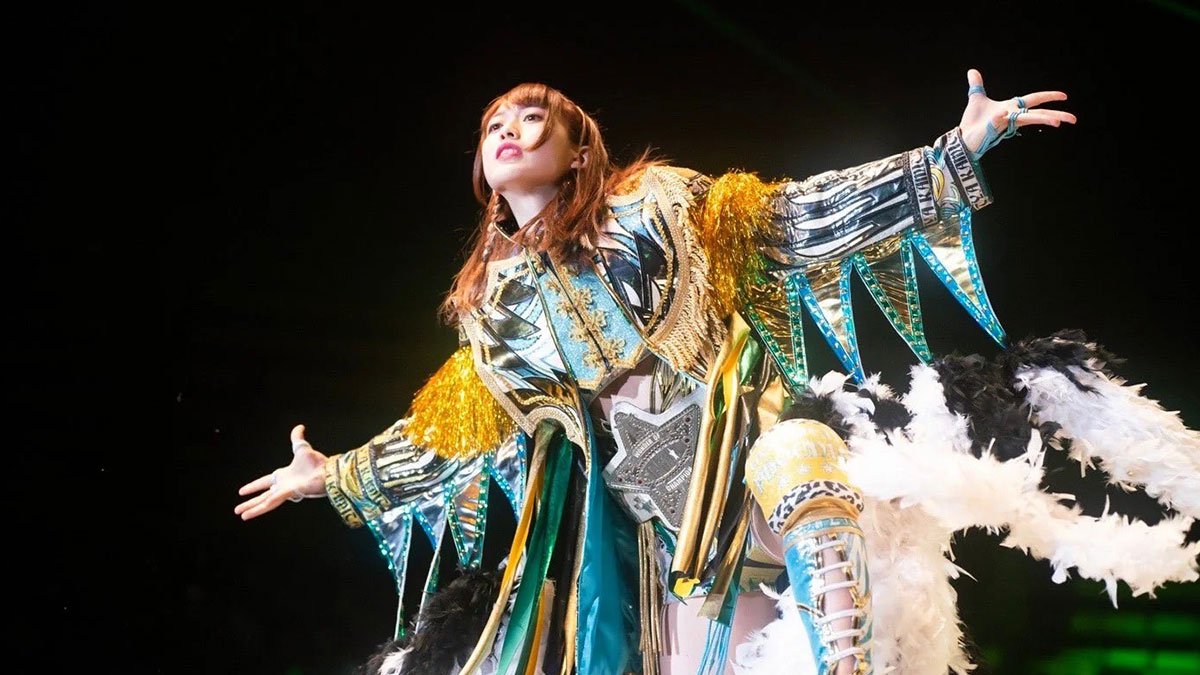
© STARDOM
The Rejected Record-Setting Wonder of Stardom Champion
Then something strange happened. Stardom’s business continued to go from strength to strength as Saya started a triumphant and record-setting reign as Wonder of Stardom champion. In an era when Syuri was having technically sublime but jeopardy-free main event matches as the reigning World champion, Saya was routinely stealing the show with dazzling, dramatic title defences.
Saya was a credible champion, but one who could be believably beaten. Her matches were fast-paced, high-flying and story-rich, but despite being a babyface, no one actually seemed to want to see her win. The fans, be they Japanese in attendance or commenting online around the world, always chose to get behind her opponent. They chose Natsupoi, they chose Himeka, they chose Starlight Kid, they overwhelmingly chose Hazuki in a fabulous match of the year-contending clash at Yoyogi National Gymnasium, and they even chose Mina Shirakawa over Saya.
Make no mistake, Saya was never booed; she was not hated or even disliked, but she was the babyface champion who was absolutely no one’s favourite. Despite routinely stealing the show with her matches, her ring work was continuously critiqued, her mannerisms were mocked, and, as she helped to lead Stardom to new heights alongside Syuri, Utami, Tam and Giulia, the fans always wanted her run to end. And then disaster struck.
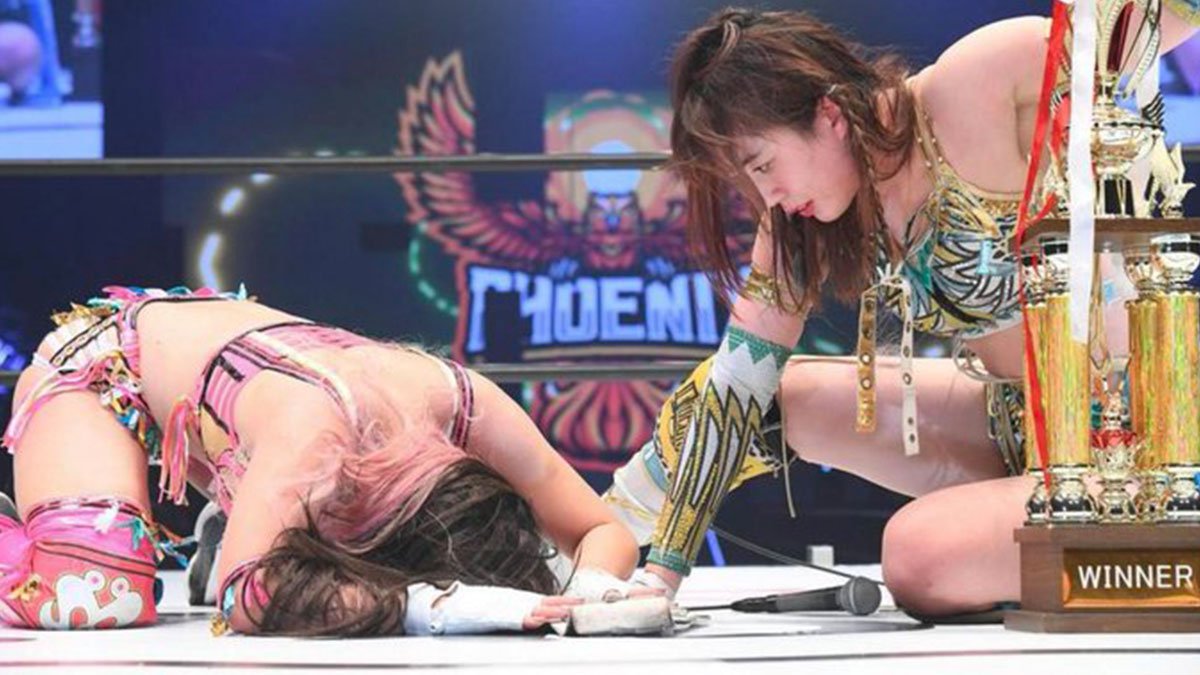
© STARDOM
Sliding Doors: Injuries Inflicted, Injuries Endured and the Path Not Taken
On the evening of 3 November 2022, Saya Kamitani was working a miracle. She was having a shockingly excellent match with Mina Shirakawa of all people. You know Mina, right? The third wheel of Cosmic Angels, not half the wrestler of Tam Nakano and nowhere near as eccentric as that crazy Unagi Sayaka. Mina was the slowly improving midcarder of the group, desperate to prove herself as a serious worker. Well, believe it or not, Saya and Shirakawa were busy stealing the show. Mina was showing incredible fire and Saya was bumping for her like a madwoman, everything was clicking. Then, at the height of the drama, Saya headed up top for her Phoenix Splash — and she lands it — well, sort of. To be honest, it doesn’t look great. Saya knows it and, like Manami Toyota before her, she decides to do it again. Mina’s out for the count, so why not win in style?
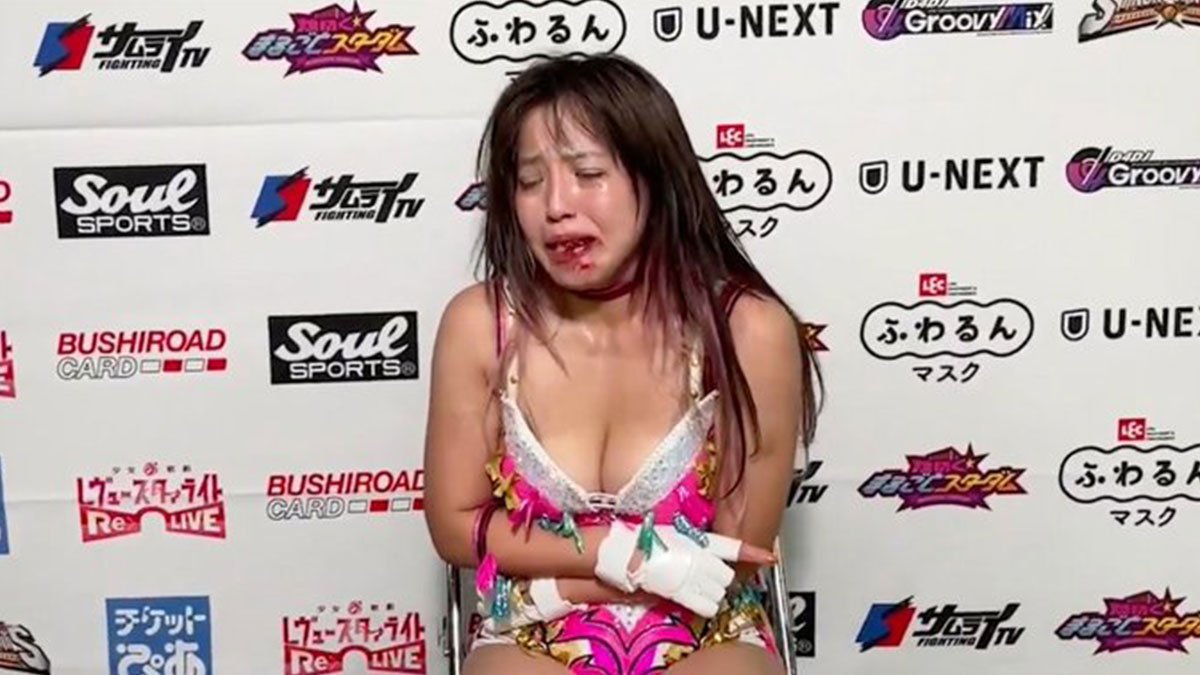
© STARDOM
Then it happens: she flips, she twists, she swings back into position and then — bam! Saya’s knee smashes into Mina’s jaw, busting her open and smashing her teeth into all sorts of horrifying, misshapen directions. This misfire is the moment that set Mina Shirakawa on a path to international superstardom and a future AEW contract; but while Mina is backstage bravely cutting a teary and blood-soaked promo, Saya is crashing out and beginning to lose confidence in herself.
Her reign as champion marches on, but the Phoenix Splash is retired. Within a year, Saya Kamitani would have ditched the more straightforward 450 Splash as well. In fact, the dazzling flyer Rossy was determined to showcase on every NJPW Tokyo Dome show he could, would pretty much stop flipping and twisting off the top rope altogether by the end of 2023.
Rossy’s plans had to change. The story was simply too good to be believed. The Venus Mina Shirakawa would return from injury with perfect teeth at All Star Grand Queendom 2023 to put an end to Saya’s record-setting Wonder of Stardom title reign in a brilliant, tear-jerking triumph of a match. Saya’s time as champion was at an end, but her struggles were just beginning.
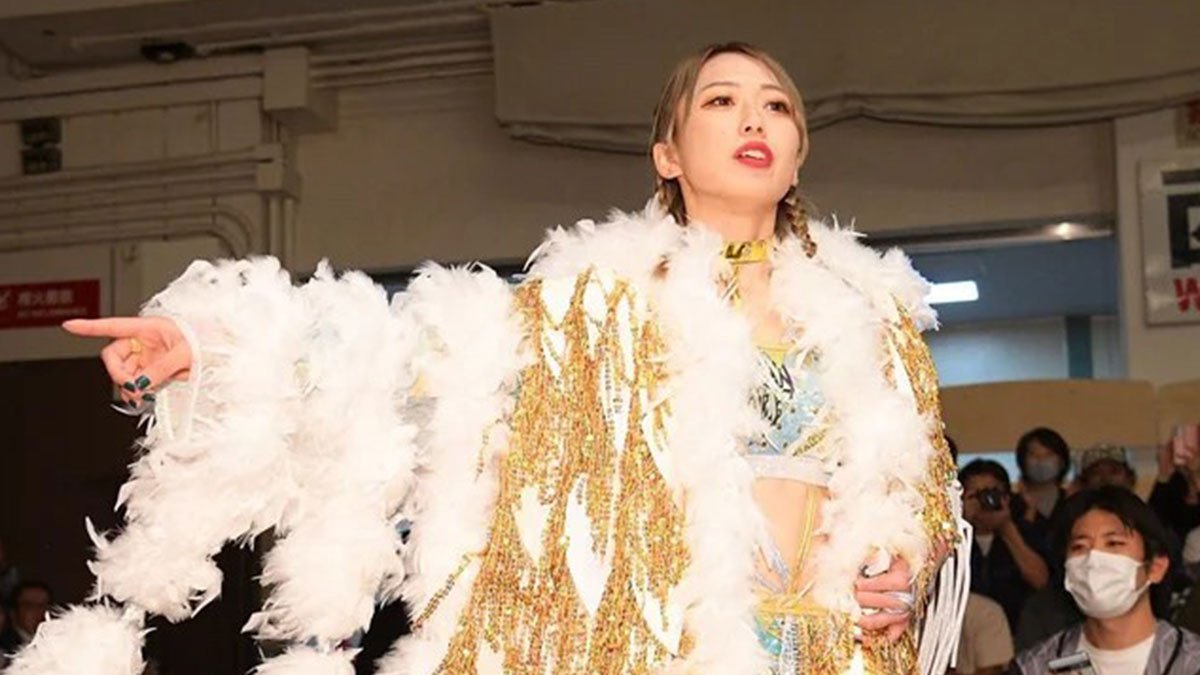
© STARDOM
Things Fall Apart
If Saya was in a strange place as a flyer who wouldn’t fly, and as a defeated champion that the fans were fed up of watching wear gold, then no one had told Rossy. He had big plans for Saya. While she was busy losing her title to Mina, her arch-rival Tam Nakano had just won the World of Stardom championship from her own personal nemesis Giulia in a wild main event. It was just too perfect: the stage was set for Saya Kamitani to sweep the field at the Five Star Grand Prix and prepare for a world championship showdown with Tam once more. Dave Meltzer confirmed as much, reporting that Saya was the planned winner. There was just one problem — well, two, actually.
Firstly, while it made all the storytelling sense in the world on paper, the Stardom fanbase simply wasn’t ready to watch Saya go over all their favourites for a third, and possibly fourth, straight year. Her Wonder of Stardom title reign was fantastic, but it was exhausting by the end and no one really wanted another helping. Secondly, disaster struck yet again. On the opening night of the Grand Prix, when facing World Champion Tam Nakano, Saya climbed to the top of the lighting rig and dove haphazardly to the floor, dislocating her elbow, ending her tournament and ruining Rossy’s best laid plans.
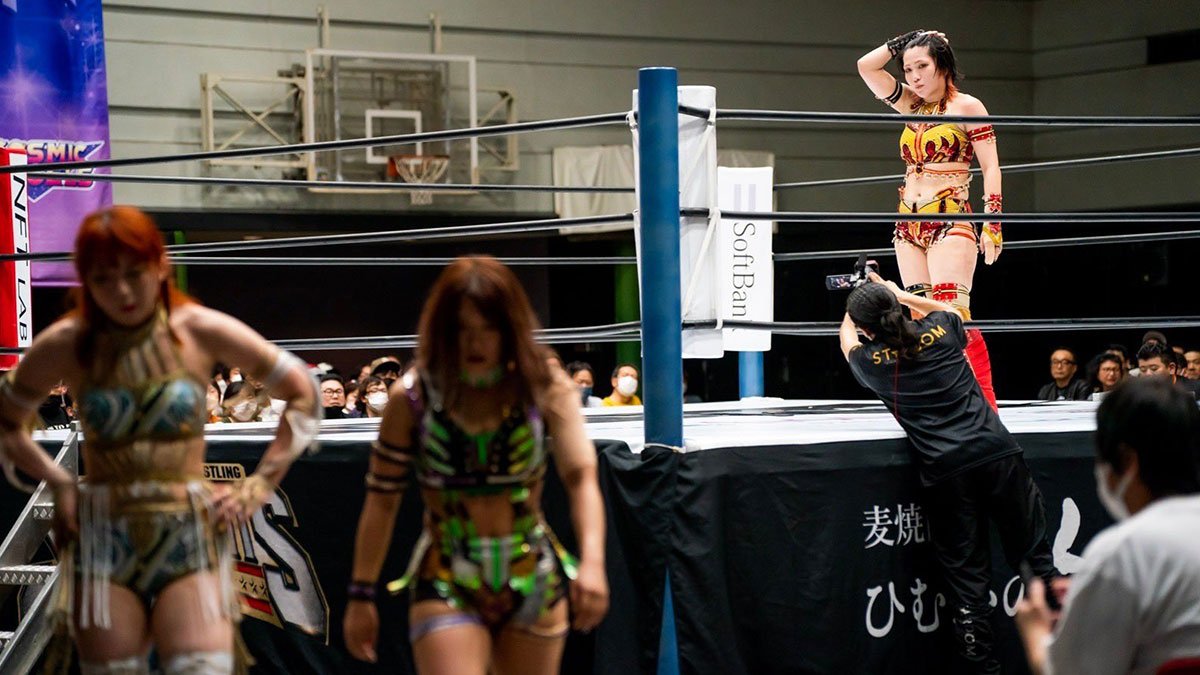
© STARDOM
Stardom and Saya Kamitani entered a tailspin. Business went way down. Booking plans fell apart. The company’s momentum dissipated. Returning from injury at roughly the same time, Saya Kamitani and Utami Hayashashita were briefly Stardom’s saviours when they reprised their AphroditE tag team, helping to turn some terrible houses at Korakuen Hall into merely bad ones. But despite some flashes of brilliance, Stardom was coming apart at the seams. Rossy would leave alongside Utami to form Marigold. Without her patron, Saya floundered; pushed down the card to have an unremarkable run as High Speed champion, struggling to keep up with faster smaller women in matches that only served to showcase her weaknesses and physical awkwardness.
New booker Taro Okada, rather than making Saya the strong leader of Queen’s Quest in Utami’s absence, would quickly disband the unit in a memorable angle that left Saya as the sole member of the group. She would roam the undercard of Stardom shows as a lanky and lonely figure, carrying the standard for a unit that no longer existed; a remnant of the old Stardom without a sense of anything resembling direction.
Then it happened. Saya was attending a signing and a “fan” began barracking her with personal insults. Saya tried to laugh it off, but soon realised he wasn’t joking. This despicable individual told her that he had come to, “make her cry”. Saya described the confrontation as “sad and scary”, but it gave her an idea – she would wear her tear drops with pride and make the world cry.
© STARDOM
The Shrug: A Phenex Queen Rises
It turns out the problem was Saya Kamitani all along. She needed to stop being herself. She needed to be someone else, someone completely different. Instead of being serious, stately, insular and awkward, she needed to be ridiculous, camp and confident. She needed to change everything about herself, and that’s exactly what she did.
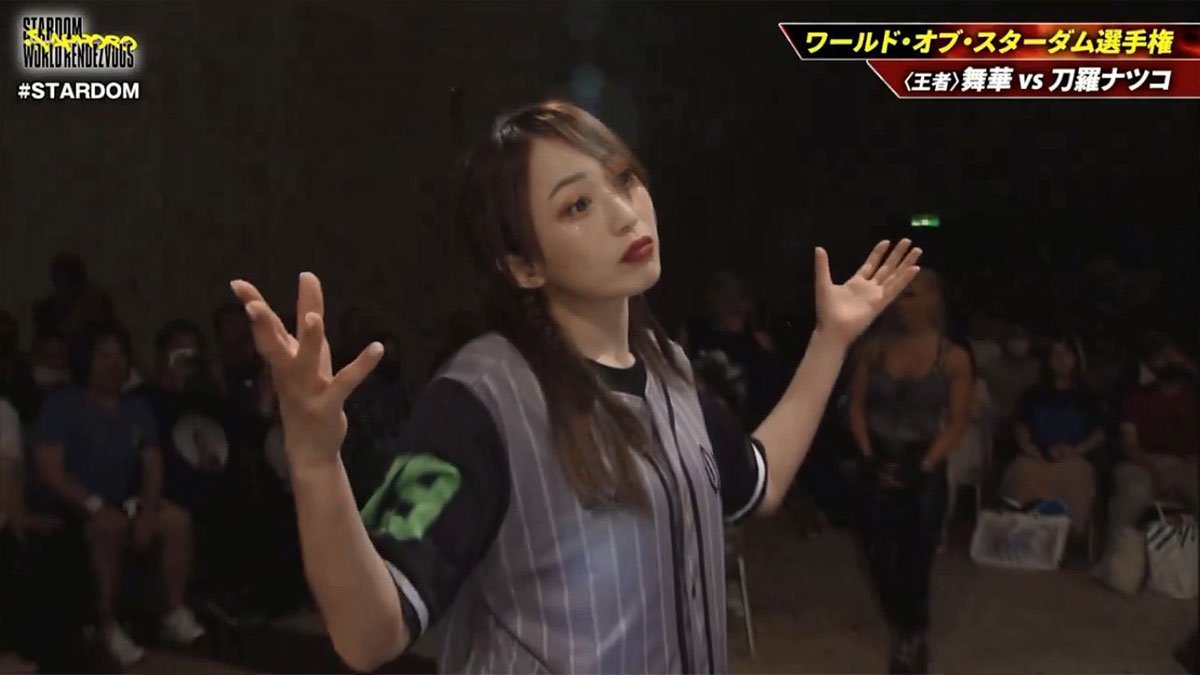
If I explained the circumstances of Saya Kamitani’s heel turn on 28 July 2024 it would sound preposterous. Suffice to say, a typically nonsensical series of twists and turns culminated in Maika losing her World of Stardom Championship to Natsuko Tora when Saya Kamitani betrayed her friend to form a new unit called H.A.T.E. But it wasn’t Saya’s actions that mattered, it was her expression.
The second she turned heel she looked over at Maika and shrugged. Her face relaxed into a condescending “what the fuck do I care” expression and everything changed. In that moment, for perhaps the first time in Saya’s career, she looked organic, natural and totally at ease with herself. It was as if, with that one heelish gesture, the weight of the world had been lifted from her shoulders and she could breathe.
© STARDOM
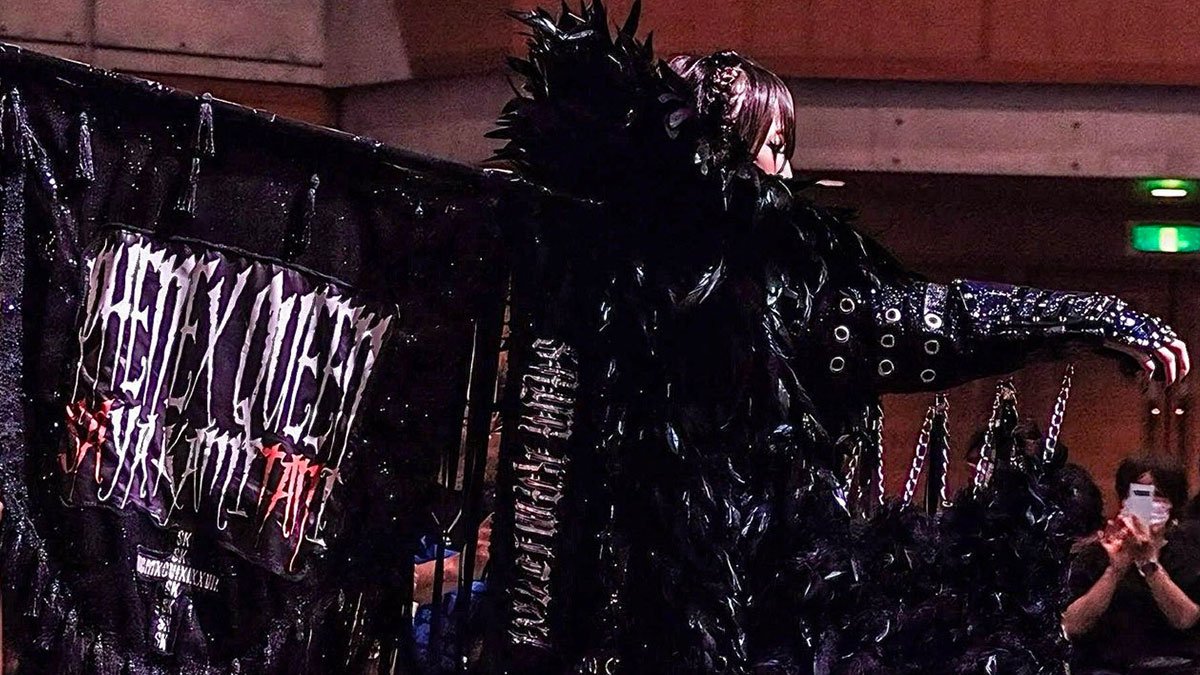
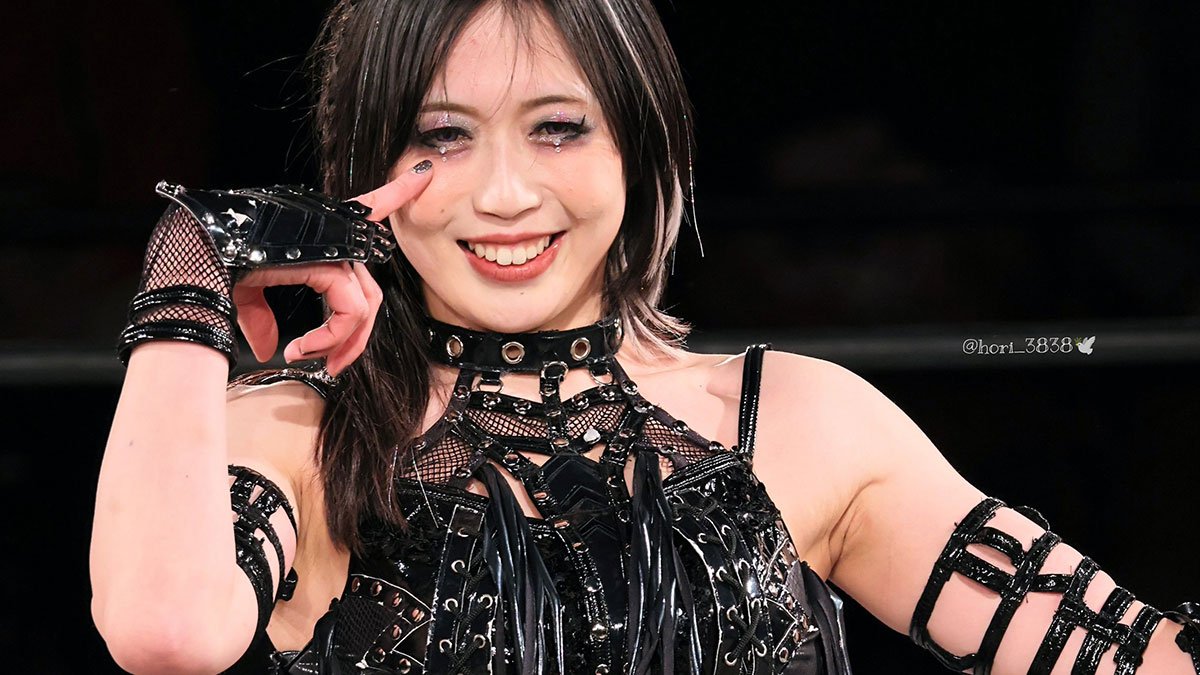
But it didn’t stop there. In her next series of appearances Saya Kamitani introduced the world to the Phenex Queen. It wasn’t simply that she debuted one of the greatest looks in wrestling history, sporting a gorgeous black feathered cloak, teardrop makeup and a host of goading mannerisms, but everything about this new Saya Kamitani made sense. All her weaknesses evaporated. Her strange, ungainly movements were replaced by dramatic and dastardly languid gestures. Her arms swirled like Ursula’s tentacles as she sashayed across the ring. Where once she had no idea what to do with her limbs, now her every movement existed in character to serve a purpose. She sprawls and scurries across the canvas like Shelob before winding her wicked limbs to deliver the most brilliantly heelish stomps in wrestling. Whenever a spot goes even slightly awry she now lands in a perfect pose to humiliate and mock her opponent. She’s always in control; she always knows exactly what to do and how to do it.
Best of all, her ultimate weakness, that sense of insecurity and awkwardness, is now her greatest asset, because it’s still there, swimming underneath the surface of her character. But rather than making her a weak or unworthy babyface, it provides that little chink in a villainous heel’s armour that lets the audience know that beneath the Phenex Queen’s bravado, a coward is lurking. She’s a fully realised three-dimensional character, a total poser and Stardom’s biggest star simultaneously.
© STARDOM
I thought long and hard about how best to describe the new Saya Kamitani, this Phenex Queen, and there is only one description that felt right: she’s a drag queen. There is Saya the person, and then there is this other fabulous, ridiculous, made-for-the-stage character that inhabits her body. There are elements of the real Saya lurking deep within, but the Phenex Queen is something else. It’s a separate self, a false identity that somehow feels truer and more organic on screen than the real Saya.
This isn’t simply a fanciful projection. Earlier this year, Saya Kamitani went on a Japanese reality TV show to compete as an athlete hoping to prove that pro wrestlers are real competitors. During the show, and en route to reaching the final, Saya discussed her passions and, as she has many times before, she was moved to tears talking about her love for wrestling and her desire to make people love this art form that she cherishes. She was earnest, authentic and a little too serious for a light-hearted programme, but the hosts loved her for it. They turned to the camera and asked: why on earth is this lovely, humble, heartfelt woman cast as Stardom’s biggest villain?
The answer is simple: because the real Saya Kamitani no longer exists in Stardom, she failed and was rejected. Only the riotously camp, totally believable, yet not remotely real Phenex Queen remains.
By David Hayter
Father Time
Seán O’ Brien looks back on the career of Hirooki Goto and his long path to the IWGP World Heavyweight Championship
I had a dream. My father, who had passed away and was sleeping, had his eyes open and we were able to talk. It was only for a few minutes, but we had a conversation and I was able to show him my title deed and Grand Prix trophy. It was a dream, but I’m glad I was able to show him. In my dream, my father was laughing…but when I woke up, I was crying.”
© New Japan World
Hirooki Goto, the twelfth IWGP World Heavyweight Champion, has the exact kind of story that only the world of professional wrestling can weave, even if it was never meant to be on the cards.
While certainly respected, many fans in the west have never looked at Goto in the same light they have his peers.
In many ways, Hirooki Goto is the living embodiment of Japanese wrestling’s “fighting spirit” more so than the household names to have come from New Japan. Goto’s career has seemingly mirrored his style inside the cerulean blue squared circle for nearly twenty years, delivering strong hits while receiving equally crushing blows. From a young lion destined for success in his early career, to unprecedented high profile failures and relegation, Goto’s path to redemption and Japan’s top prize has been one of the most emotional rollercoasters professional wrestling has ever seen. More so, it’s a story that deserves to be recognized and celebrated.
© NJPW
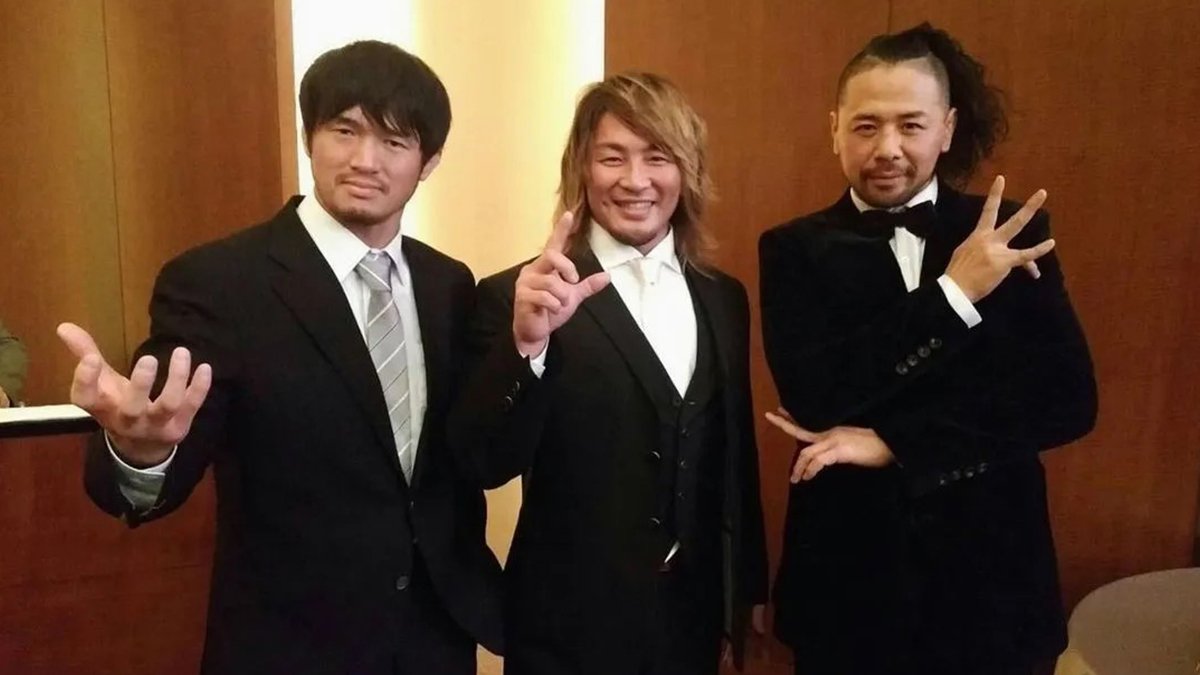
In his younger highschool days, Hirooki Goto struck up a friendship with a young man named Katsuyori Shibata. The two would become intrinsically linked as in time, they would spend many years in their future across the ring from each other, as rivals or teammates. However, from the offset, it seemed that Goto’s story was forever destined to be one where he was overlooked. In 2004, New Japan Pro Wrestling christened Katsuyori Shibata, Hiroshi Tanahashi and Shinsuke Nakamura “The New Three Musketeers”, a huge endorsement from NJPW proclaiming these men as the present and future of the company moving forward. While the recognition for Shibata was happening quickly at only 23 years of age, Goto found himself struggling to get much notice in the Junior Heavyweight division at the exact same time, at the exact same age. Despite natural ability, Goto was already behind his peers in terms of experience and recognition, a trend that would chase and follow him for years to follow.
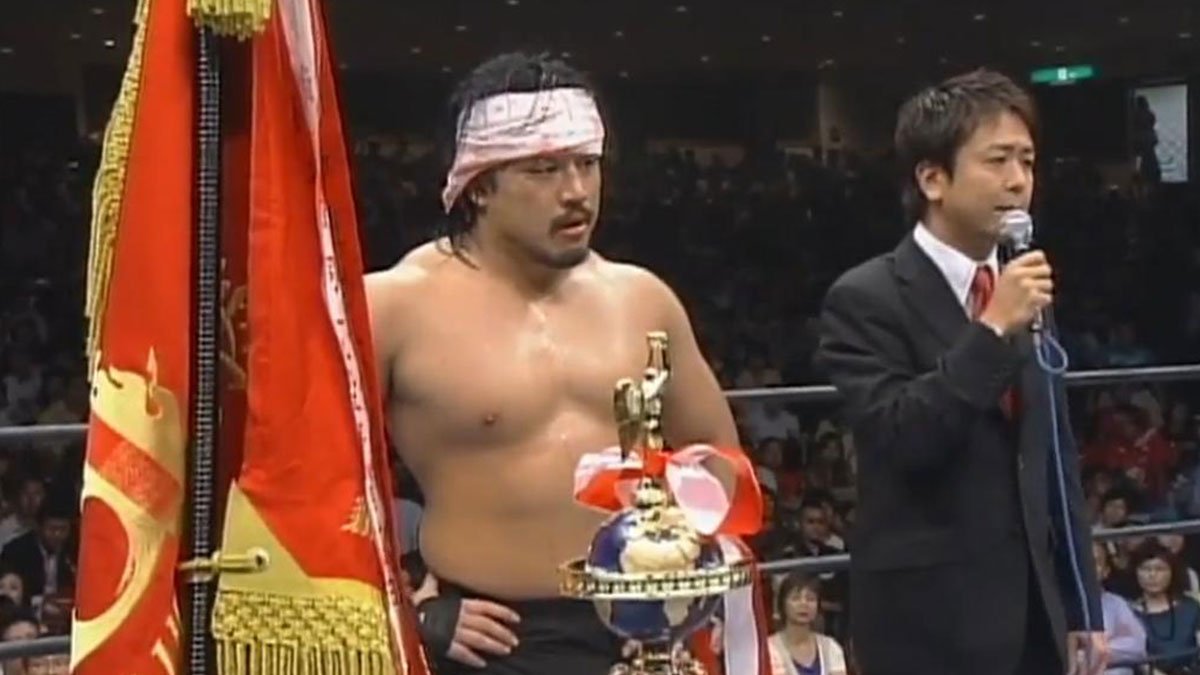
Goto would have some accolades, winning the NJPW Young Lion Cup (a tournament designed to crown the best rookie wrestler), and go on to capture the IWGP Jr Tag Team titles, but it wasn’t until his return from his excursion overseas that he gained real momentum. By 2008, Goto was, physically, very much the heavyweight wrestler that he is today. The experience he gained in Mexico combined with the size increase led him to competing against The Great Muta in the Tokyo Dome that very year.
Near the end of 2008, he would go on to win the G1 Climax, the most prestigious of wrestling tournaments, and while that didn’t come with a heavyweight title run, he would capture another tournament win with the New Japan Cup shortly after in 2009. Within a short span of time, Goto had made a real impact on the landscape of New Japan and all signs were pointing towards the company rallying behind him. A marquee match with wrestling royalty at the biggest show of the year, a shock victory in the biggest tournament of the year and following it up with yet another trophy to add to the collection – what could possibly go wrong?
The problem for Hirooki Goto was that for all his talent, he simply wasn’t the guy the company wanted or needed to build up as a top star, a problem that feels like it plagues New Japan every other decade. While Goto had made massive improvements, this was an era dominated by those same peers the company had endorsed 5 years earlier. Hiroshi Tanahashi and Shinsuke Nakamura were everything that NJPW needed in a main event scene.
Recognized as a good wrestler but not the man you build the company around, Hirooki Goto would find himself in this position where he would be built up through winning major tournaments, challenging for the heavyweight title, losing, and then needing to be built back up in the hopes that next time; he’d take the gold.
© NJPW
Between 2008 and 2012, Goto would win the G1 Climax once and capture the New Japan Cup three times, the latter being a feat that still has not been replicated to this day. The more time passed, the less likely it would seem that Goto would be able to call himself champion, especially when the meteoric rise of Kazuchika Okada began and all but wiped away any hope of Goto climbing to the top of the ranks. By the end of New Japan’s 40th Anniversary show, having failed to defeat Okada for the IWGP Heavyweight Championship, Goto would find his accolades meaning less and less. Despite all his tournament success, by 2012 he had challenged for the top prize 6 times and came up short each and every time. For all he had been able to achieve, it was clear he was not going to be the top person in the company. In many ways, that should have been it for Goto’s story. A perennial bridesmaid for IWGP gold, but his ability to shoulder high profile loss after high profile loss resonated with fans and many didn’t give up. The fanbase knew that here stood a wrestler who could shoulder the responsibility.
The years that followed were middling and full of some things to celebrate, with plenty of things that could simply never be forgotten. While he’d finally hold singles gold with the IWGP Intercontinental Championship in 2012 & 2015, for each flame lit under Goto, it was snuffed out in crueler fashion. In 2014, he would fail to win the world title for a 7th time and in 2016, the biggest ultimatum of all would follow.
Coming into The New Beginning in Osaka 2016, nobody had ever challenged for the IWGP Heavyweight title more times than Goto and failed to capture the title. Eight times he had worked his way to the big match and failed in his seven previous attempts, and the champion Okada made sure that this was acknowledged, having defeated Goto in Osaka two years prior at the same event. Video packages played in the build to this match showing the rigorous training Goto was going through to build his mental and physical state.
© NJPW
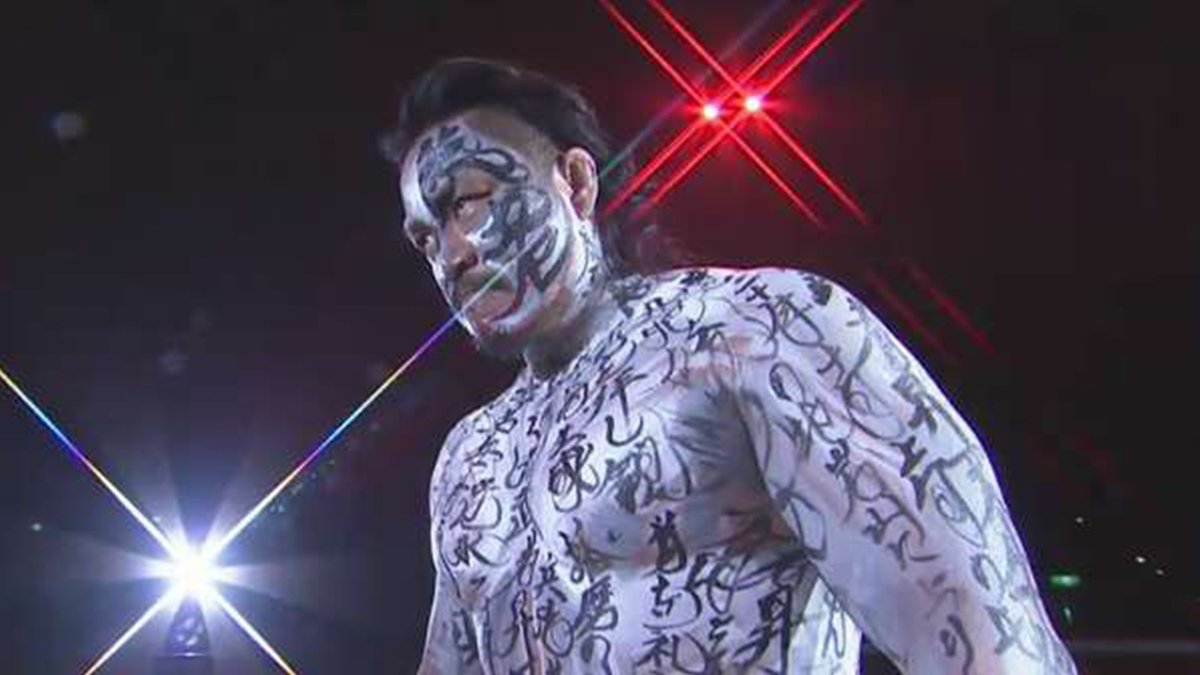
When he stepped out to the ring, he revealed to the live crowd that he had painted his body in characters symbolising the Bushido fighting spirit. As the crowd rallied behind Goto to finally overcome the impossible task, thinking his journey was finally over, Okada gained the upper hand and retained the title. Hirooki Goto, the man who had failed more times than anyone, had failed once again. His training, his manifestation of fighting spirit, all for naught.
What followed was even more of a pill to swallow for those who had supported him. Rather than turn on the champion, Goto simply got in line and joined Okada’s CHAOS faction, essentially declaring to the world that he had made his peace and would not become the IWGP Heavyweight Champion. The dream of Hirooki Goto at the pinnacle of NJPW was dead.
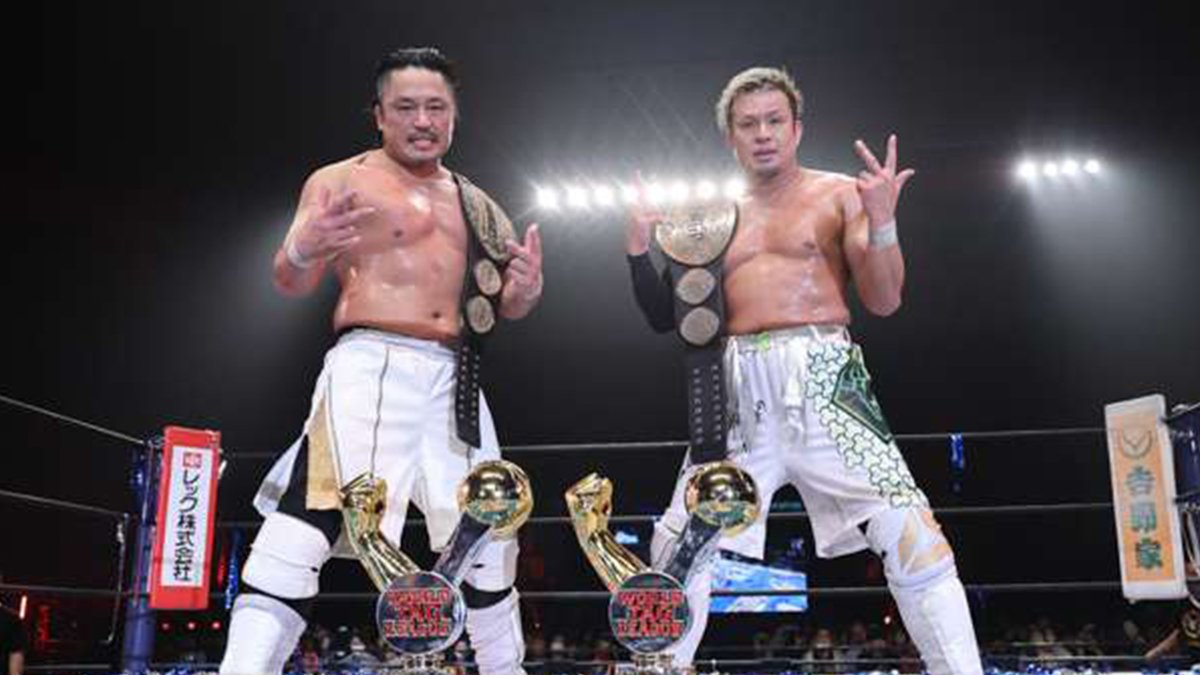
From here on out, there was a change in Goto both inside and outside the ring. With the responsibility of ever having to put the company on his back removed from him, Goto was able to find new found success establishing others in NJPW through the NEVER Openweight Championship and the IWGP Tag Team Championships. He would help the likes of Taichi, Kota Ibushi and Shingo Takagi be seen as threats within the landscape in NJPW and in the case of the latter two, ensure they were both ready for the IWGP Heavyweight championship through their battles. During the pandemic, Goto would find himself jumping between tournaments and multi-man tag matches before becoming a lifeboat for a struggling Yoshi-Hashi, where the two would form the tag team known as Bishamon.
© NJPW
They would quickly find success and go on to win three consecutive World Tag League tournaments and four IWGP Tag Team Championships. Inside the ring, Goto’s role was now clearly set on developing others around him which suited him well. Outside the ring, this was mirrored in him becoming a father to his children and life seemed to have balanced itself out neatly for him. While the 8 years since his failure to capture the gold had resulted in Goto becoming the ideal utility player for NJPW, life would take a turn in February of 2024 when Goto’s father would pass away.
Fans of NJPW felt a strong sympathetic bond towards Goto following this and his decision to dedicate matches in that March’s New Japan Cup only strengthened that feeling between him and the crowds. In a twist of fate, Goto’s opponent David Finlay had to withdraw from their quarterfinal tournament clash, meaning Goto would advance to the semi finals and put him in a position nobody expected him to be in, just two wins away from challenging for the IWGP World Heavyweight Championship.
Suddenly, in a position that he hadn’t found himself in for 8 long years, completely unplanned, the fans rallied behind Goto and showed that they still believed. He would advance to the final of that year’s New Japan Cup for the first time in 8 years but come face to face with a man the company had christened one of the “Reiwa Three Musketeers”, the next generation of wrestlers the company had deemed worthy of carrying the company. Just as Goto had missed his chance to be one of the New Musketeers in his early career, a new set in the Reiwa Musketeers was emerging before him and signaling his time had passed. Despite facing and losing to a well loved rising star in Yota Tsuji, for large portions of the tournament final the crowd were desperate for Goto to win the tournament and have the moment denied to him more times than anyone else.
New Japan recognized the moment and finally realised what they had in front of them all along. This couldn’t have happened at a better time as Kazuchika Okada had left NJPW, Hiroshi Tanahashi had plans to announce his retirement and Tetsuya Naito’s body was in a state of decline. By sheer happenstance, NJPW realised that their old guard was about to be gone and they found their fans rallying behind the man who they had no rational reason to believe in. This wave of support continued through the summer and into that year’s G1 Climax.
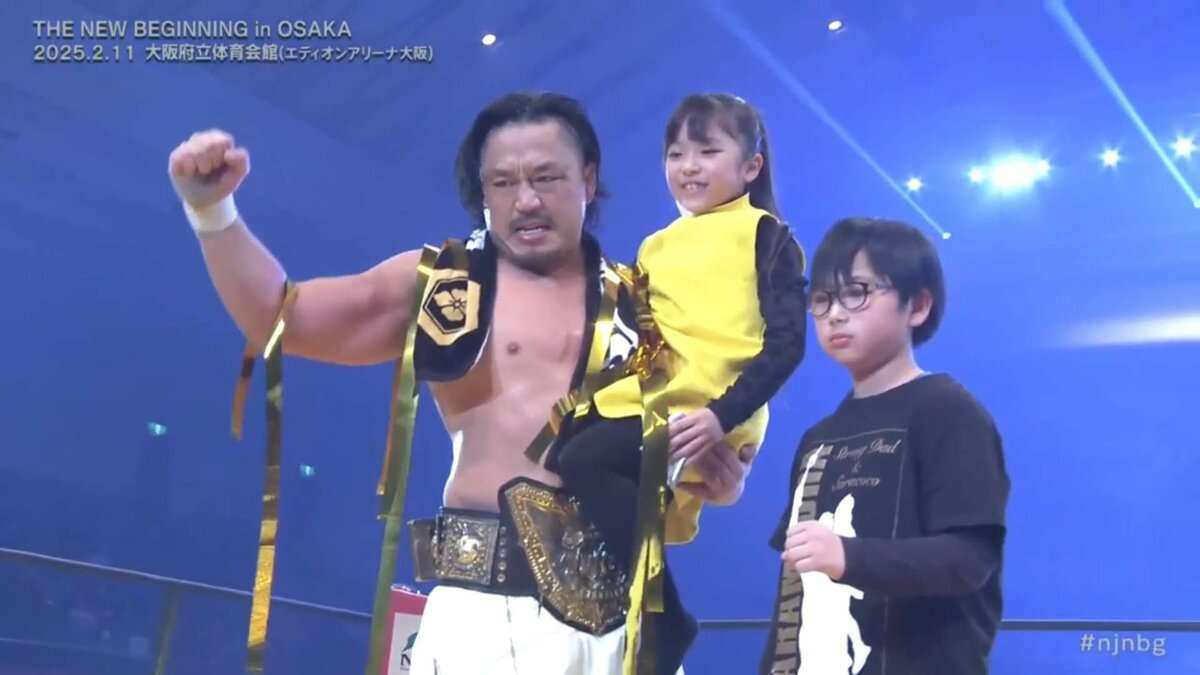
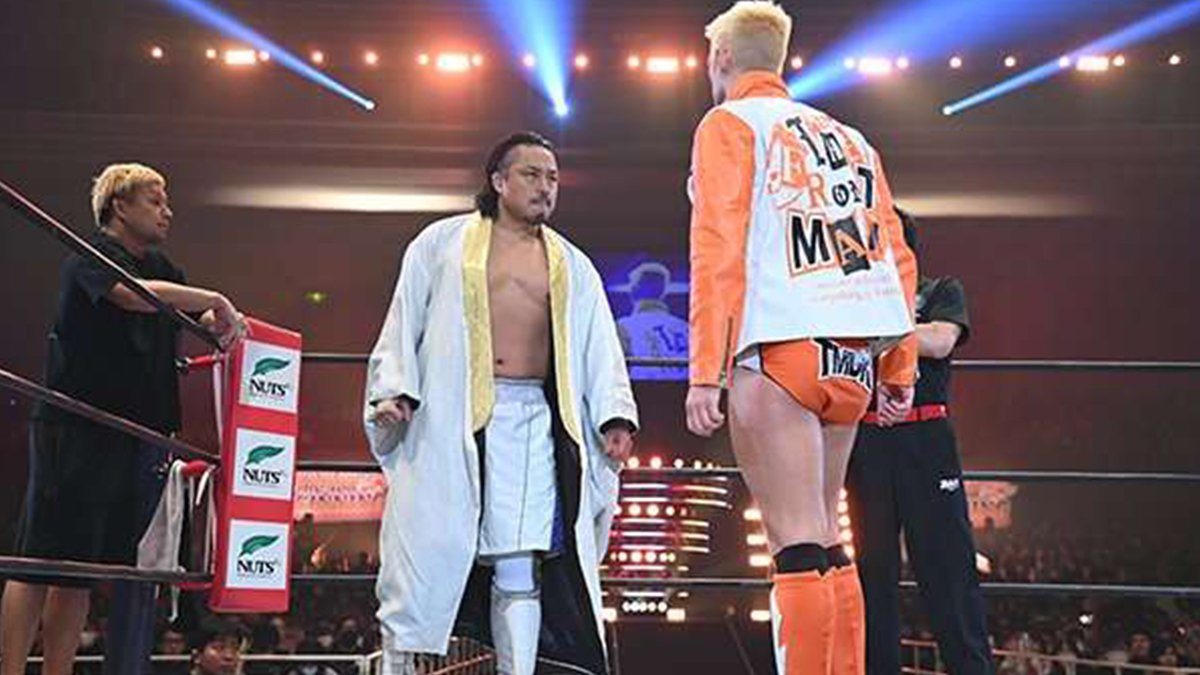
In spite of Goto having an unremarkable tournament, crowds across Japan would show their support for Goto, attempting to will him to victory – only now the higher ups in the company noticed. At the Tokyo Dome in January 2025, the annual New Japan Rambo (a battle royale) was announced with the winner being granted a shot at the IWGP World Heavyweight championship. To the shock of many and to the joy of those in attendance, Hirooki Goto would emerge the winner and it was confirmed that he would challenge for the richest prize in New Japan for a ninth time. The time and place? “The New Beginning” in Osaka, the same event and venue where he had abandoned his pursuit 9 years prior.
© NJPW
While much of his 2024 had been dedicated to the passing of his father and sharing dreams he had in which they spoke, Goto’s approach to his big title match was different. Shifting focus, he chose not to dedicate to those that had passed but instead dedicate his match to his future, his children. Too young to have seen him fail in the past, far too young to even see when he had succeeded in major tournaments, Goto looked to them for his strength and inspiration to climb the impossible mountain that had always stood before him. The champion, Zack Sabre Jr, would be no easy obstacle to overcome, having beaten Tetsuya Naito for the title and racking up 4 defences thus far, 2 of which came over former IWGP Heavyweight champions.
On the night, the crowd were behind Goto like never before. As his entrance music hit, it slowed with an extended mix. What played on the broadcast and to the live crowd was a showcase of some of Goto’s most famous failures to win the top prize. If you were to imagine this message of disappointment behind any wrestler, you might expect them to come out to a flat reaction, but Hirooki Goto has always worn his defeats on his sleeve. As he said so plainly in his build to this match up, it wasn’t that he had lost 8 times that mattered, it was that he had gotten back up 8 times. Even with all his failings in the past, despite having no right to believe the result would be any different on his ninth attempt, virtually every voice in Osaka that night cried out for Goto to finally finish what he had started 18 years ago. What followed was that magic feeling you can only get in professional wrestling where an entire building of people are rallying behind the challenger to dethrone the champion.
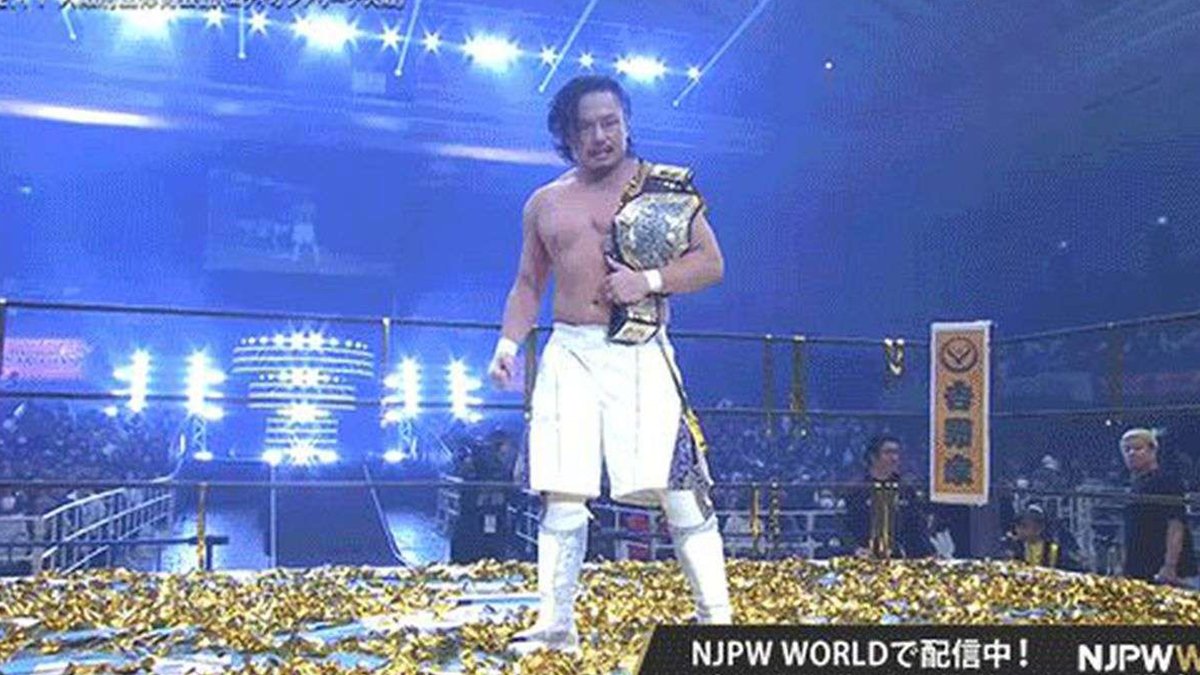
After 20 grueling minutes, somehow it happened. Goto delivered his GTR move twice to Zack Sabre Jr and as he went for the cover, the five and a half thousand in attendance counted the 3 count at the top of their voices along with the referee.
Hirooki Goto had done it and he had finally become IWGP World Heavyweight Champion.
Collapsing in tears and calling for his children to join him in the ring, Goto finally celebrated climbing that impossible mountain alongside his family. The Goto Revolution could finally begin in its truest form.
© NJPW
This journey of constant defeat and redemption across three decades of NJPW is something the likes of which we simply will never see again. This title reign is obviously something of immense personal importance to the man himself but has now also has grown into something much larger than him too. The Goto Revolution, as he calls it, is almost symbolic of the New Japan spirit itself right now. Since 2019, 6 wrestlers who have held the company’s top prize have left the roster with Hiroshi Tanahashi set to be number 7 in January 2026 when he retires. With so many key departures from the active roster, Goto now finds himself in the position of having to become the old guard and shoulder the responsibility of being the company’s champion all at once.
While future stars are clearly emerging quickly within New Japan, Goto is bearing the brunt of ensuring there is a space for them to occupy in the future. Unpredictably, he has become the man to fold multiple groups into the Hontai faction of New Japan, uniting generations of babyfaces under the Lionmark. As we approach the summer of 2025, he has already had somewhat of an upset in retaining the title against New Japan Cup winner David Finlay and seems set to continue this revolution for the foreseeable future.
Dominion in Osaka this coming June will be the perhaps the biggest test for Goto, where either his run as champion will be solidified and continue dominantly, or he will crown a new champion to carry the company through the rest of the year, either seem fitting for the city that has been rich with history throughout Goto’s career.
Regardless of what the future holds for him, the impact of his career and title win will be felt within the landscape of Japanese wrestling for some time.
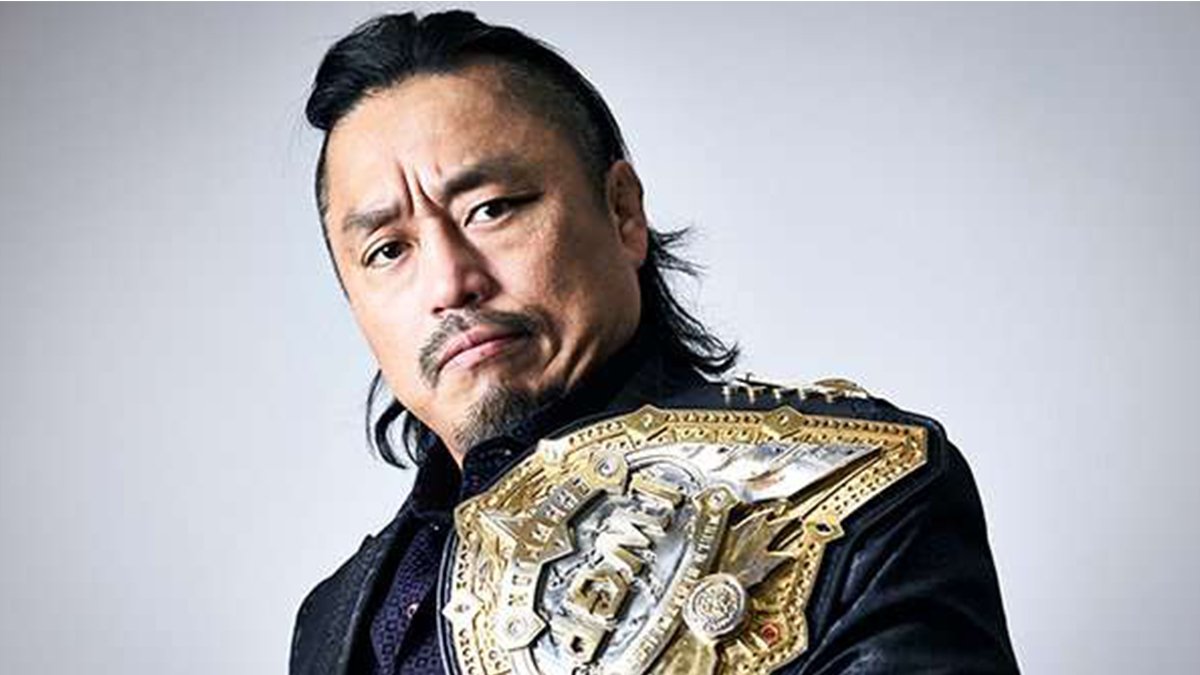
© NJPW
In uncertain times, his coronation has been a beacon of light and has bought time for those who will carry the company for the next 5-10 years to grow into their roles confidently. His ability to carry on through the adversity and loss through his career has only endeared him more to fans and finally, with his time in the sun, fans can acknowledge him for the talent he is today. His story shows that the struggle is worth it to finish out your dreams, and at long last, the G in IWGP finally stands for Goto.
Recommendations Of A History Man
Peter Edge is back for round 3 of his history tour, as we begin with a topical trip back to 1994.
Wrestlemania 41
The first night of this year’s Wrestlemania was a mostly subdued affair, with a crowd that lacked energy, noise and motion for most of the proceedings. For a lot of the matches, it reflected issues in the builds that the performers were unable to turn around in the ring.
Naito
It is hard not to overemphasize how much this week feels like a truly momentous one for New Japan Pro Wrestling as the top draw for most of the last decade and the most popular wrestler in the company…
RevPro High Stakes
“High Stakes” was Revolution Pro Wrestling’s second show at the Doncaster Dome in South Yorkshire
Check out these other articles from this week!
Recommendations Of A History Man
Peter Edge is back for round 3 of his history tour, as we begin with a topical trip back to 1994.
Naito
It is hard not to overemphasize how much this week feels like a truly momentous one for New Japan Pro Wrestling as the top draw for most of the last decade and the most popular wrestler in the company…
Wrestlemania 41
The first night of this year’s Wrestlemania was a mostly subdued affair, with a crowd that lacked energy, noise and motion for most of the proceedings. For a lot of the matches, it reflected issues in the builds that the performers were unable to turn around in the ring.
RevPro High Stakes
“High Stakes” was Revolution Pro Wrestling’s second show at the Doncaster Dome in South Yorkshire