
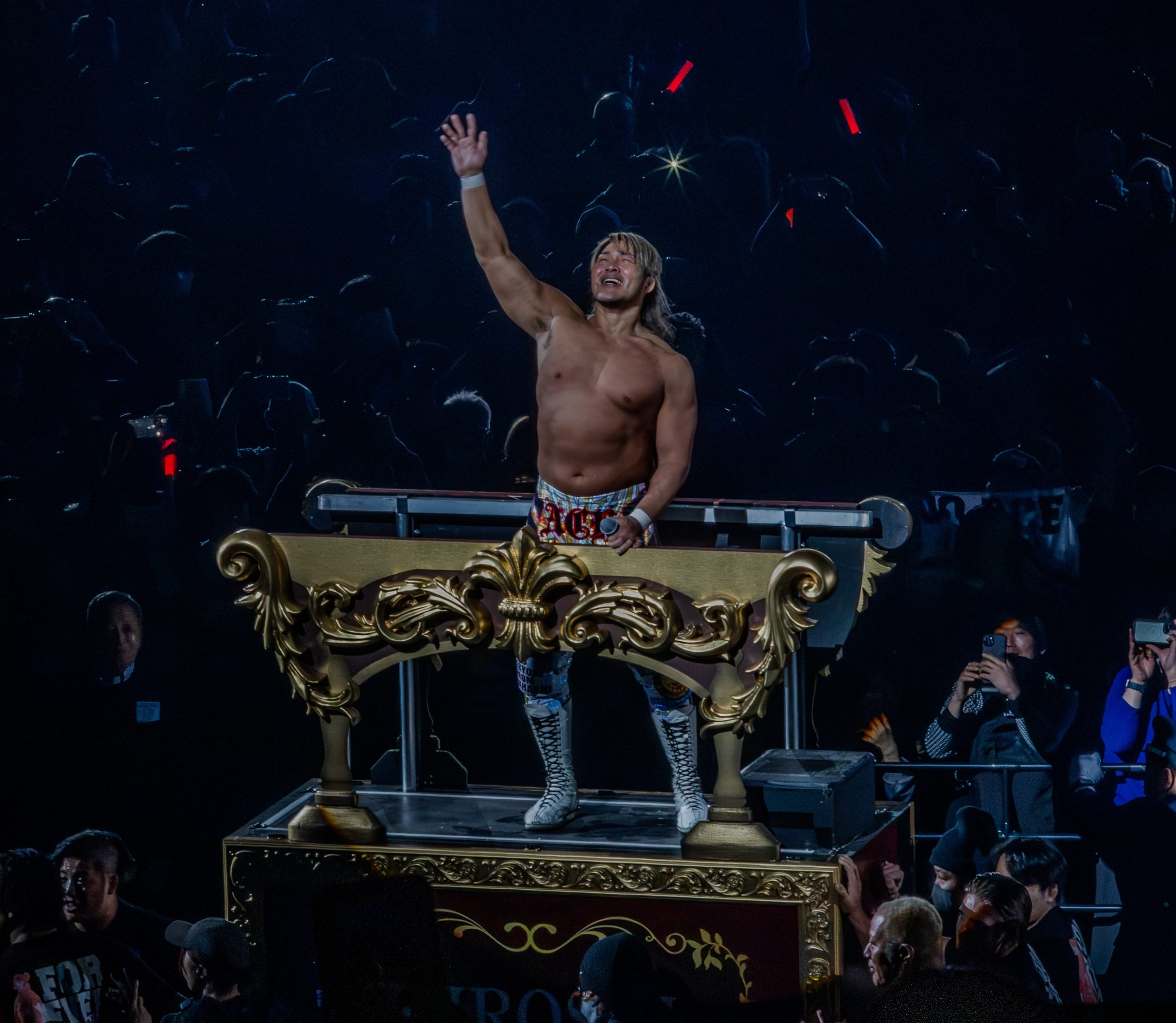
Hiroshi Tanahashi
Social Suplex Newsletter No.13
February 20th 2026
Career Retrospective
Compiled by Conor McFall, who was also responsible for this excellent idea
header image credit Chris Gannon
January saw the spectacular final match of one of the all time greats, the legendary Ace of the Universe, Hiroshi Tanahashi. To mark the occasion, we invited our contributors to share a selection of their favourite matches from this most illustrious of wrestling careers. We did not consult each other prior to making our selections, so it is a happy coincidence that the choices tend towards the deeper cuts, as opposed to the obvious tentpole classics of Tanahashi’s resume.
I imagine that most of our audience knows about the legendary Okada rivalry and the broad strokes from the golden era of New Japan. Some more recent fans could possibly only know him as the broken down old guy who can barely move his legs. (Our contributors even made some choices from that era!)
We have covered almost the full range of Tanahashi’s career, across eighteen years – from the early, precocious upstart Tanahashi to the Undisputed Ace IWGP Heavyweight Champion, to the fading star trying to will one more great performance out of himself. We’ve got workrate classics, throwback technical clinics and even some blood. Hell, we’ve even got the ultimate babyface have a few turns at working heel!
If you’ve never seen these matches, I recommend reading the below and then seeking them all out. They really build the full picture of one of the greatest of all time and the type of career we may never see again. Go Ace!
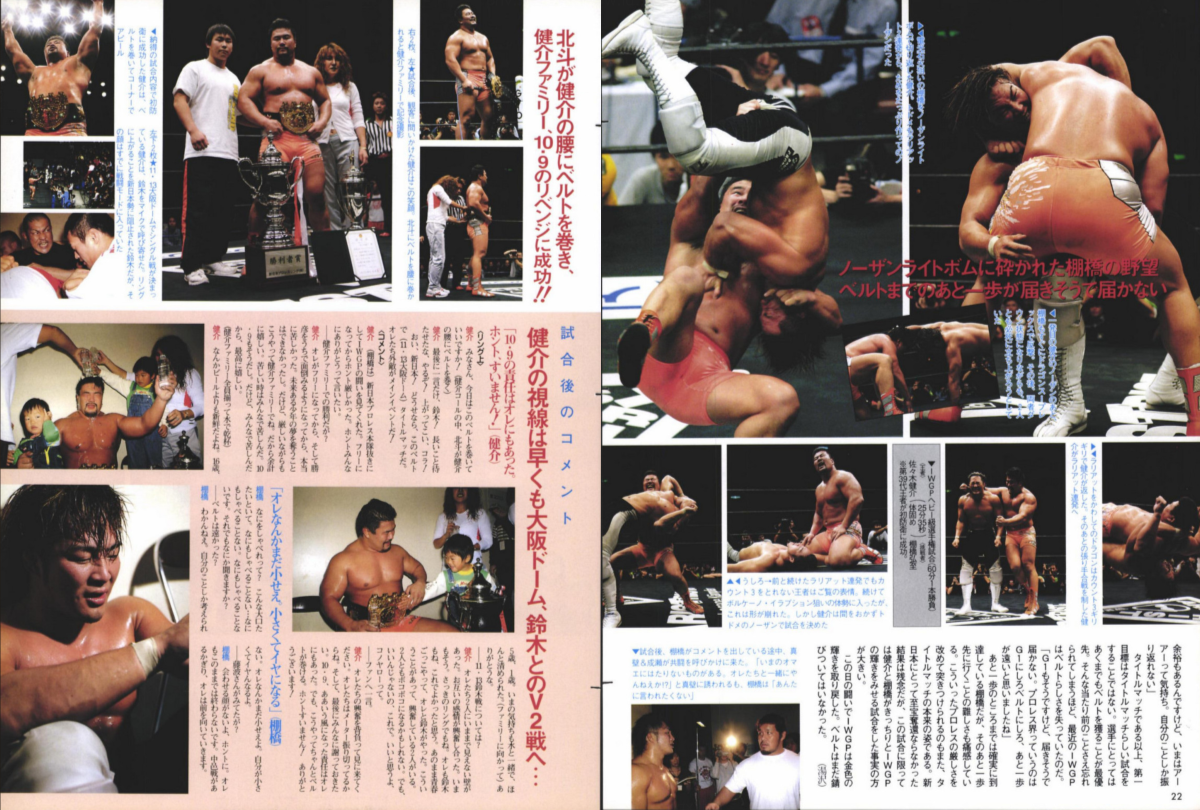
© BBM
#1. vs Kensuke Sasaki; Masahiro Chono’s 20th Anniversary (NJPW)
November 3rd, 2004
Ryogoku Kokugikan, Tokyo
By David Hayter
There are certain matches that prove to be eerily enticing harbingers of what is yet to come.
When a younger, sterner and visibly tense Hiroshi Tanahashi stood across from the imposingly thick and coolly assured Kensuke Sasaki – whether by accident or by design – the two men fully embodied restless youth and cynical experience. Sasaki would spend the early portion of the match disdainfully chopping the young pretender with such heavy hands that Tanahashi’s entire upper body wrenched back as if he were about to snap in half at the waist. Sasaki wasn’t cruel or vicious; he was just quietly and confidently demonstrating that, when push comes to shove, the younger generation were soft playboys, not cut out for the fight.
But something strange was happening: Tanahashi was taking his beating like a man and, slowly but surely, he was coming back harder and faster. Sasaki would continue to cut him off, but over time it was the veteran who looked tired, flustered and perhaps a little lost. Tanahashi would survive a count-out scare and return to the ring a house of fire. He was still a Fujinami and Muto tribute act at this point, but his wild suicide dive, ultra-tight Dragon Sleeper and his (frankly terrifying) dragon suplex had the crowd roaring him on. Notably, among a 10,000-strong crowd that had seemed pleased to watch Sasaki dish out a beating at the outset, every single woman in attendance (bar Akira Hokuto) was now screaming with delight every time Tanahashi showed even an inkling of fighting spirit.
The match wasn’t perfect; there were notable misfires and the odd sloppy strike, but that was part of the joy of seeing this not-quite-ready Tanahashi forcing himself into the limelight. The storytelling peaked when Sasaki and Tanahashi traded blows and, suddenly, Sasaki’s legendary chops lacked mustard; his young opponent was no longer being forced back, he was coming forward with forearm after forearm. The action was now back-and-forth and it was either man’s match to win. My personal favourite moment would come when Sasaki blocked a small package and turned it into a brutal brainbuster for the nearest of near falls. From that point on it was academic: the story had been perfectly told and the fans were screaming and shrieking with every pin or submission attempt. Sasaki would win with a Northern Lights Bomb (after first losing his grip and trying again), but that hardly mattered — this match made it abundantly clear: Hiroshi Tanahashi was the future not only of New Japan Pro Wrestling, but of the entire wrestling industry.
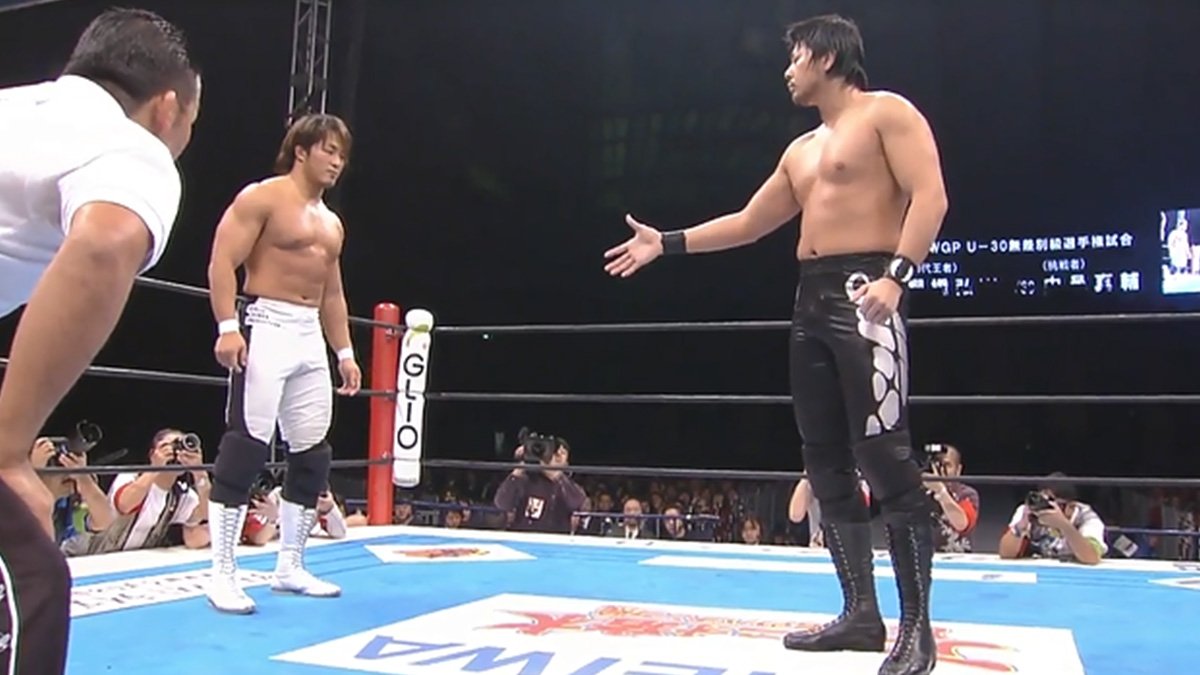
© NJPW
#2. vs Shinsuke Nakamura; NJPW Toukon Festival – Wrestling World 2005
January 4th, 2005
Tokyo Dome, Tokyo
By David Hayter
There’s a certain joy to be found in going back to the very start of something truly great.
In 2005, NJPW was struggling to recover from the disastrous Vale Tudo era and, in a sign of just how little direction and star power the promotion had, the main event of the Tokyo Dome was put up to a wide-open fan vote. As a result, the proud pro wrestling star – the very antithesis of Antonio Inoki’s worked MMA fever dream – Hiroshi Tanahashi won the vote. The young Ace and the over-pushed (but excellent) Inoki disciple Shinsuke Nakamura would headline for the Under-30 Championship.
Watching the match back is fascinating, not only because both men’s potential is abundantly clear, but because it’s genuinely refreshing to see two all-time greats showing so much uncertainty and naivety. The match starts shockingly fast with killer snap dragon suplexes as both men would seek to cram in as much of what they could do as possible. Tana would hit a standing corkscrew splash (which, on English-language commentary added during the pandemic, shocks Walker Stewart) while Nakamura unleashed a series of slick flying armbar counters. The crowd is chilly, clearly unprepared for these youngsters to headline, while the wrestlers themselves are very much learning on the job. When it comes time to tease a Scorpion Deathlock there’s brief confusion. Tana wants to make it a big dramatic moment by slowly working to force his opponent onto his stomach, but Nakamura, eager to get with it, just flips over far too fast.
Still, despite its unevenness and lack of gravitas, it proved a dynamic first chapter in one of the greatest rivalries in wrestling history and today it stands as an incredible fork-in-the-road reference point that signposted NJPW’s path to redemption: Nakamura and Tanahashi were exactly what the promotion needed and the fans knew it. They weren’t ready yet, but by God, when it mattered, they would be.
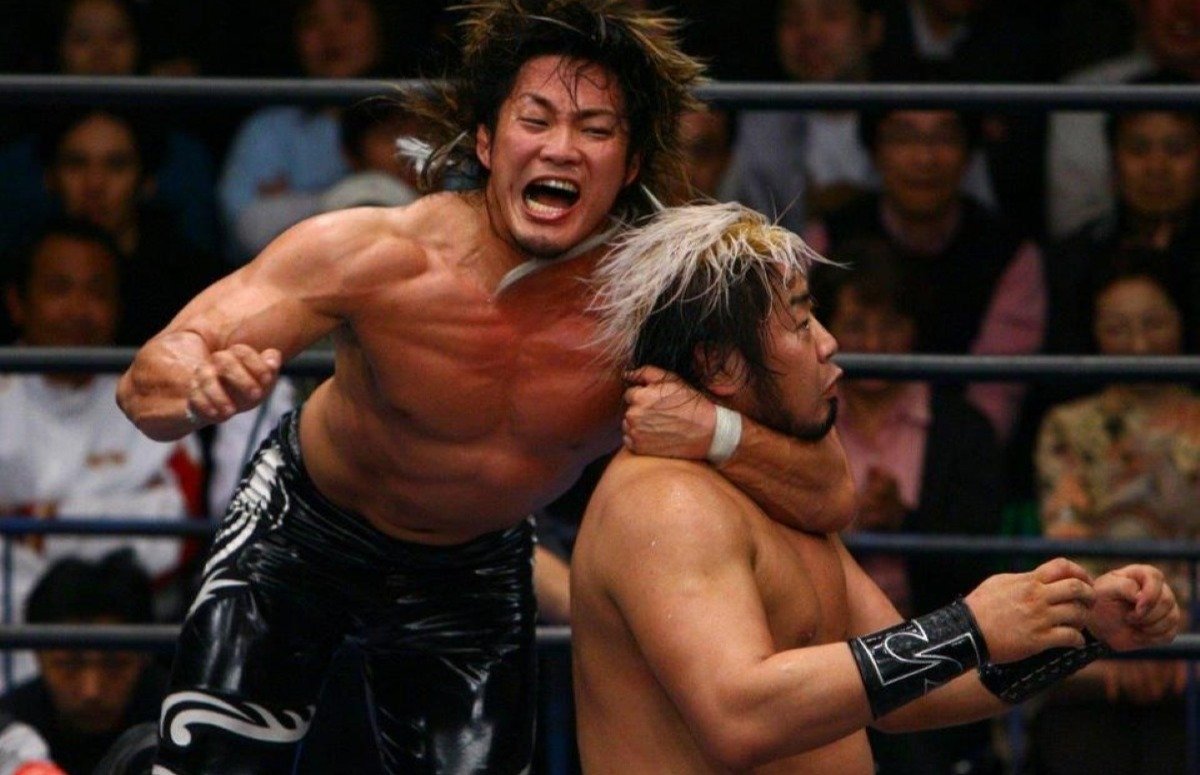
#3. vs Suwama; AJPW Champion Carnival 2008, Day 5
April 9th 2008
Korakuen Hall, Tokyo
By Peter Edge
Hiroshi Tanahashi is the greatest babyface in wrestling history but for one week in April, he was the hottest heel in wrestling.
The annual Champion Carnival, the prestigious All Japan Pro Wrestling tournament that was one of the hottest tickets in town in the 90’s when the Four Pillars built the company to the best in the world, had a dire year at the box office. So AJPW went to their rival promotion – with whom their frosty relationship had thawed in the years after Giant Baba, the AJPW founder, had died and Antonio Inoki, the NJPW founder had become persona non grata – and asked to have one of their guys on loan for the Champion Carnival.
Hiroshi Tanahashi, the man earmarked to be the ace of NJPW, entered the 10 man field (in a tournament with two blocks of five, to last five consecutive nights) with a swagger in his step. Hiroshi Tanahashi thought he was better than everyone else in every arena he stepped in that week and by the time the final came, Tanahashi – the Block A winner – was reviled by the majority of the fans in Korakuen Hall.
In the opposite corner was Suwama, the man looking like someone AJPW wanted to give a rocket pack push to. This was the final chance for someone to stop the invader taking AJPW’s precious Champion Carnival. Throughout the 30 minute match, Tana is the perfect P.O.S.
He slaps Suwama in the opening minute at a break on the ropes. He almost slaps the referee for daring to admonish him, doing the finger on lips gesture like a parent admonishing their child and then putting his hands over his ears like a child who refuses to take any responsibility for his actions. It’s a Tanahashi match, so the knee of the opponent has to be worked on after a dragon screw but the groan of the crowd when he hits that move is akin to when the away team grasps control of a football match.
Tanahashi is the perfect away team wrestler, playing to every boo of the patrons. Those who want to cheer Hiroshi, including a woman who sat behind the commentators, who really wanted us to know she was cheering Tanahashi, are drowned out every time they try to chant the name of Tanahashi by “Suwama, Suwama”.
The final stretch has a great babyface crawling to the rope in a submission spot but after a Saito suplex changes the momentum. Tanahashi is trying to escape every powerbomb attempt from Suwama, with one particular escape seeing Tana inches away from doing some very bad damage to his neck as he tries to reverse it to a sunset flip. When the powerbomb hits and the 1-2-3 happens, the crowd pop is super loud. The Champion Carnival stays at home and doesn’t go to the Lion Mark.
Suwama wouldn’t have anywhere near the same success as All Japan’s Ace as Tanahashi would as the Ace of New Japan. As for why, that’s a story for another time, but on this night, it feels like a star is born and a lot of that is because of the man in the other corner, a man so synonymous as the face of another company but who was also so very good at putting another wrestler on top of their own mountain, even if it was a “frenemy” companies mountain.
© BBM
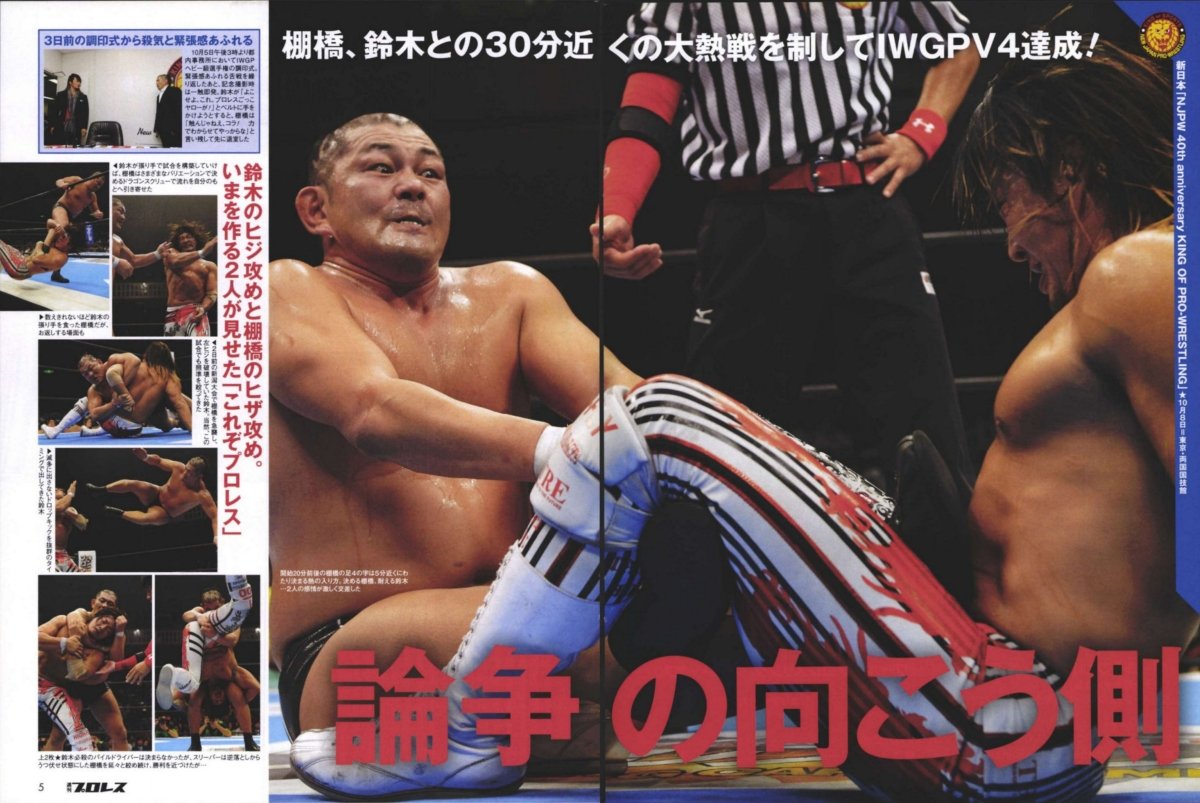
#4.vs Minoru Suzuki; NJPW 40th Anniversary King Of Pro-Wrestling
October 8th, 2012
Ryogoku Kokugikan,Tokyo
By Conor McFall
When we think of the best matches of Peak New Japan, we probably think of big moves, huge bumps, reversals and dramatic kickouts. This match is unique in that it features zero dramatic kickouts at all. Everyone enjoys a 2.999 that they bite on. I find that many wrestlers over rely on these to make a match seem more “epic” than the work deserves. Don’t kill me joshi stans, but I find that is the case in a lot of Stardom that I watch. (Editor’s Note: Conor was not killed but is now on probation.)
What makes this match stand out is the complete lack of near falls. The work itself is so basic and so effective as Tana, still in his imperial era, displays his credentials as one of the greatest babyfaces of all time while Minoru Suzuki still retained his aura as a mean, intimidating heel. This match is all in the fundamental work and the selling. There is one selling spot, that I won’t spoil, that makes the crowd gasp.
If you’ve never seen the match, you will at home too. Incidentally, while I think that this match has been overshadowed by all that came after it in the subsequent golden years, this achieved a rare (at that time) 5 star rating from Dave Meltzer that really helped New Japan garner more western attention. The Rainmaker shock happened earlier the same year but Tanahashi was still the Ace and the reigning champion. The fact that Yujiro Takahashi came out as his next challenger is a sign that this company was still being carried on his shoulders.
Tanahashi is every bit the Ace here – the company’s signature babyface seeing off the monster heel. It’s a classic formula. This, to me, may be a top ten Tanahashi performance.
© NJPW
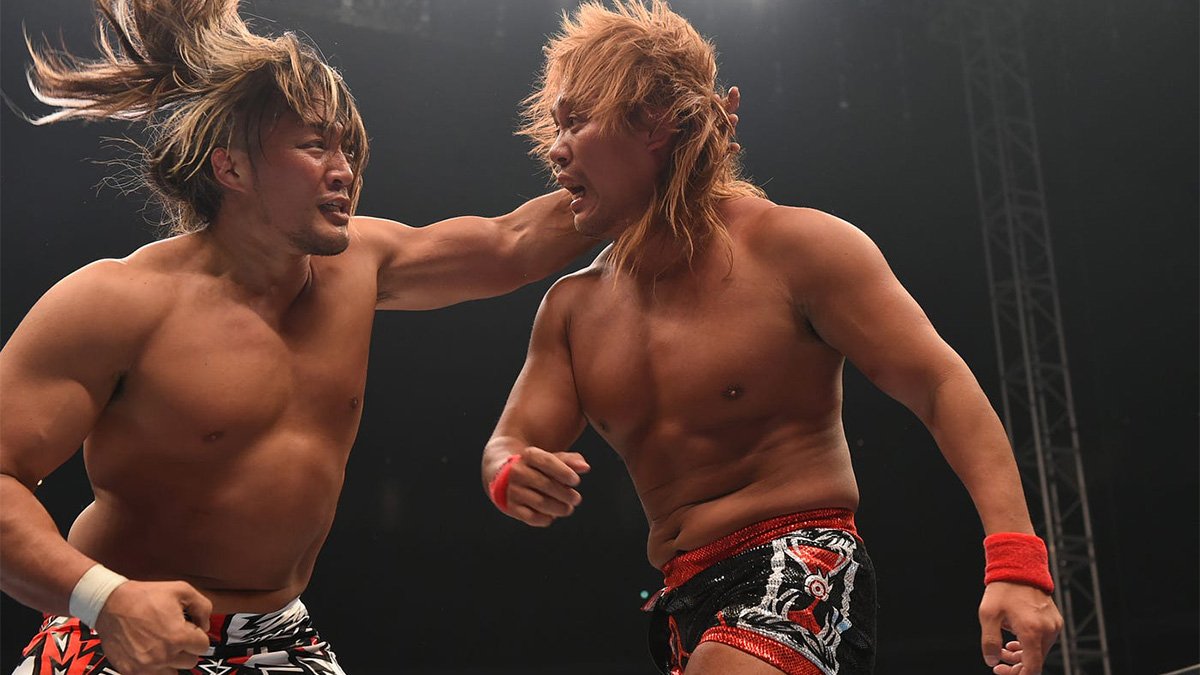
#5. vs Tetsuya Naito; NJPW Wrestle Kingdom 10
January 4th, 2016
Tokyo Dome, Tokyo
By David Hayter
So I have a confession to make: in my mind, Okada vs Omega isn’t the best match to take place on 4 January 2016.
To me, and a large portion of the white-hot Tokyo Dome crowd, it was this utterly momentous encounter between the ungovernable Tetsuya Naito and the ace, Hiroshi Tanahashi. Coming into the match, Naito was at the peak of his powers both athletically and creatively; he was a roguish dickhead wilfully disrespecting the IWGP Intercontinental title at every opportunity and going out of his way to attempt to spit on and injure Tanahashi at every turn.
The story should be so simple, right? Tanahashi, the force for all that’s good and right in this world, should banish the upstart punk with 40,000 fans cheering him on. There was just one problem: the crowd loved Naito and, for one night at least, Tanahashi didn’t want to play the hero. He hated this poser and he was determined to punish Naito by playing heel. The tone was set early as, rather than giving Naito a clean break, Tana uncorked a brutal shot to the ribs. Before long, the Ace was gleefully pulling Naito’s hair to a chorus of boos. Tanahashi’s intensity and disdain would only increase as he delivered a vicious Slingblade on the apron followed by a High Fly Flow to the floor before mocking Naito’s signature pose.
The pair would deliver a strong-style classic, but one with an uncharacteristically mean character (especially for Tanahashi) as both men, at the height of the drama, sought to destroy one another’s knees. Naito would limp away victorious in what was a clear and definitive passing of the torch from the Ace of the universe to the new most popular man in NJPW. Naito would for once unbegrudgingly bow to Tanahashi as his opponent lay defeated.
Tana had succeeded in beating some respect, on a personal level, into Naito who, even when victorious, would still refuse to respect the IWGP Intercontinental title.
© NJPW
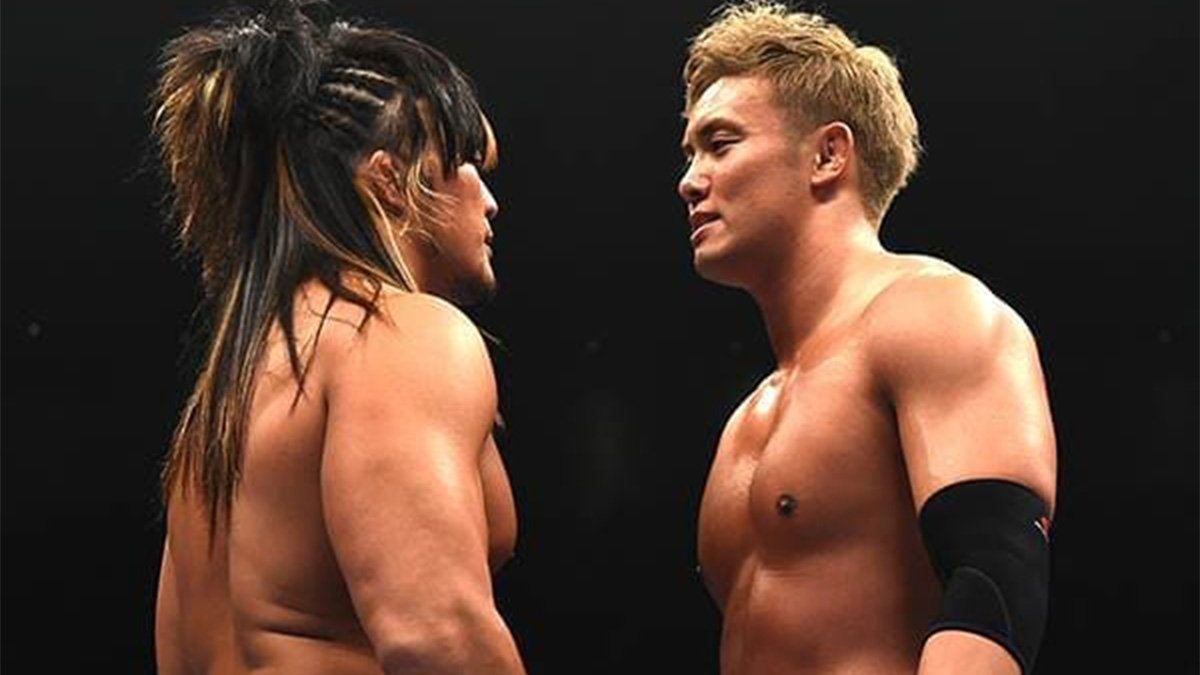
#6. vs Kazuchika Okada; NJPW G1 Climax 26, Day 17
August 12th 2016
Ryogoku Kokugikan,Tokyo
By David Hayter
When asked to pick the single highlight of New Japan’s golden era under Gedo’s stewardship, most fans will point to the Okada vs Omega series. This is, of course, perfectly understandable, but for me, no singular match better encapsulates both Gedo’s booking genius and Hiroshi Tanahashi’s incredible ability to draw fans into a compelling, live-or-die, sports-like scenario quite like this immaculate 30-minute time-limit draw.
Hiroki Goto had, just moments earlier, defeated Naomichi Marufuji in a brilliant match to secure the lead in Block A of the G1 Climax. Block B was set to be a shootout between the incredible upstart Kenny Omega and the company’s biggest star, Tetsuya Naito. For all the world it seemed obvious: either The Ace or the IWGP champion had to go to the finals. It couldn’t possibly be Goto and Omega, right? All either man needed to advance was a win over their most enduring rival.
Uncharacteristically, Okada started fast, looking to secure an early finish with the Rainmaker, before both men traded unique pinning sequences in an attempt to steal victory. With neither man able to secure the flash pin, a brilliant back-and-forth battle for the ages began, with both men countering each other’s key offence while trying to target the other’s leg.
Remarkably, despite time calls taking place every five minutes, it became impossible to avoid being swept up in the drama of the moment. I’m not ashamed to admit that, watching live, I was a total mark. I didn’t believe Goto would make the finals and I was living and dying with every twist and turn of the match. When Tanahashi clawed his way to the tope rope to hit one final High Fly Flow with the seconds counting down, I was on the very edge of my seat and in complete disbelief when the time limit expired with Red Shoes mid-count.
The enduring image of the match became the sight of Okada and Tanahashi’s exhausted bodies spread-eagle on cerulean blue as the realisation of their mutual failure dawned upon them both. The path to Omega–Okada had been paved by this spellbinding display of raw stubbornness from the two forever rivals.
© NJPW
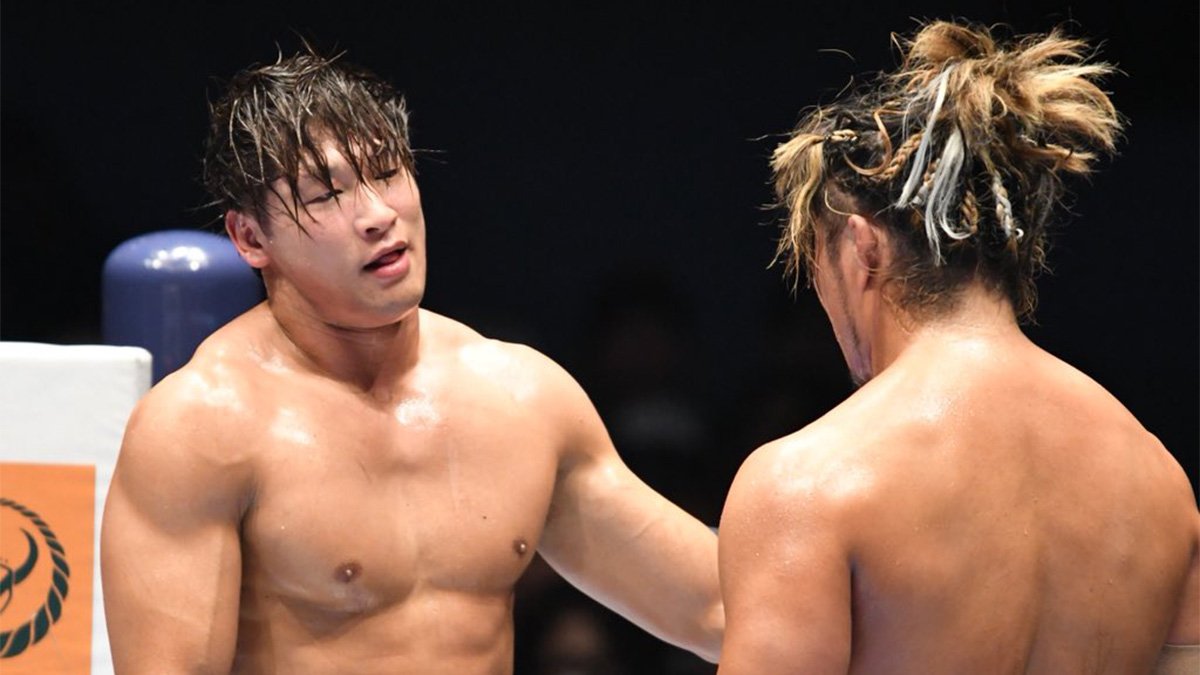
#7. vs Kota Ibushi; NJPW G1 Climax 28, Day 19
August 12th 2018
Nippon Budokan, Tokyo
By Chris Gannon
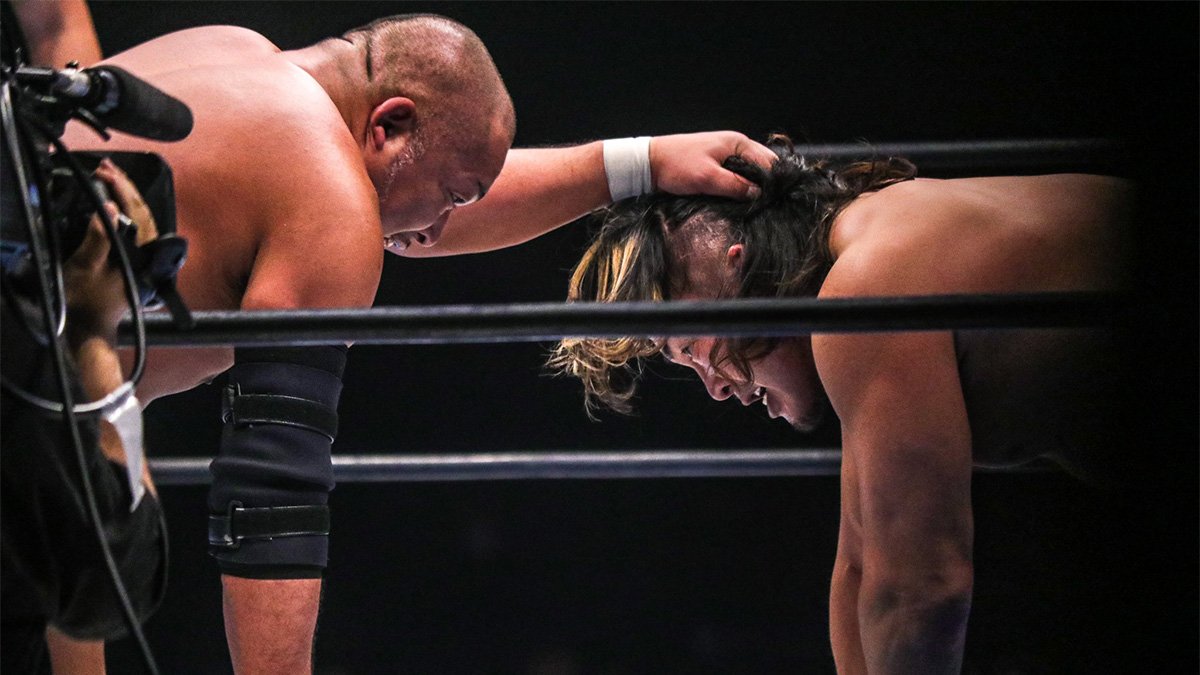
This isn’t my favourite match ever, it might not even be my favourite Tanahashi match, but it features my favourite moment in professional wrestling.
Going into this tournament, we had the question that had haunted Tanahashi for the previous couple of years since Okada had cemented – was he done at the top level? Was he going to spend the next few years descending down the card and becoming one of the New Japan dads? Then he came and won his block with a 7-1-1 record.
Kota Ibushi had a deep history with the IWGP heavyweight champion Kenny Omega, beating him in the final B Block match to secure his place in the G1 Final. It seemed obvious that he was destined to face Omega at the Dome, and yet… and yet the old lion was not going to be denied.
Tanahashi fought for thirty five minutes to show he was still the man, but there was thirty seconds in particular that will stay with me forever. Ibushi had gone into full murder mode, slapping and chopping Tana down into the corner. As he lay slumped on the ground, Omega, who was seconding Ibushi, implored him to “just finish him! Just finish him!” Ibushi instead chose to paintbrush Tana in the corner, feeling like he already had finished him.
Then Tana stood up, defiant and walked at Ibushi with the determination of a man who knew he was two pinfalls away from being at the top of the world again. Ibushi tried slapping him, tried to stop him, but it was no good and you could see in his face as he realised that he was not going to be able to beat Tanahashi today. Not this Tanahashi. The rest of the match would be filled with drama and while Ibushi had fought with confidence up until that moment, he fought with desperation after it.
And Tana? Tana fought both halves of the match with the knowledge and confidence that he was the greatest professional wrestler in the world at that moment in time.
© NJPW
#8. vs Tomohiro Ishii; NJPW Wrestling Dontaku 2022
May 1st, 2022
Fukuoka Dome, Fukuoka
By Conor McFall
I used to debate with some online wrestling friends about what Tanahashi’s last truly great match was.
We all know that the last few years have been rough for the Ace, as his body broke down. Of course, Tana went and made this entire question moot with his miraculous performance against Okada in his retirement match, but prior to that, two matches kept coming up in the conversation. The other is featured next in this article, but my nomination was Tanahashi’s IWGP US Championship defence against Tomohiro Ishii.
I don’t usually get emotional about wrestling but this match made me feel something. Specifically, during the entrances, I felt a profound sadness as I saw these two great warriors hobbling, stooped and bow legged as they hauled their broken bodies to the ring. They looked a shadow of their former selves. That is, until the bell rang.
Both men rolled back the years with phenomenal, hard hitting performances as the Ace truly flew high for one of the last times. This was a weird period for the company as we’re still kind of in clap crowd territory, which hurts the rewatchability. Tanahashi is defending the US Championship which is kind of the secondary belt at this point, but also has no real prestige. He’s largely absorbed into the Ishii formula to begin the match, and honestly he’s looking kind of fat.
All of this is not to put the match down, but to emphasise how much it had going against it, at least in my perception, before these old men pulled out a great match through sheer force of will. Seeing these guys trying to no sell and fight through the pain in kayfabe kind of hits differently when you know they’re probably in legit agony.
© AEW
#9. vs Jon Moxley; AEW/NJPW Forbidden Door 2022
June 26th 2022
United Center, Chicago, USA
By Trish Speirs
Every so often you need a reminder as to why someone is beloved in wrestling.
By 2022, long term New Japan fans had somewhat gotten used to Tanahashi being more of a fixer than the “Ace” of yesteryear. He was the guy to put others over or to step in when something went wrong. This match was no different in that aspect, with his opponent for AEW’s inaugural “Forbidden Door PPV” changed up by injury mere weeks before the event. Despite the scheduling issues, this match with alternative opponent Jon Moxley, for the AEW Interim World Championship, ends up as more of a throwback to the Tanahashi of old, rather than reinforcing the role he existed in for New Japan during the Covid era.
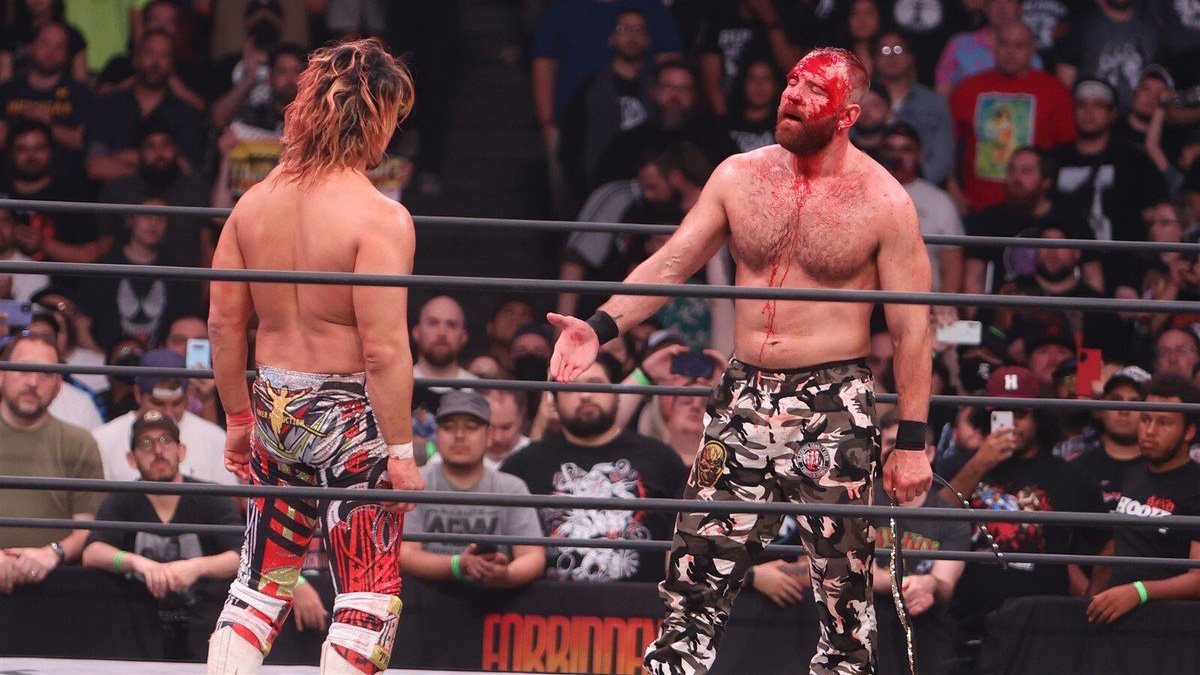
This is not a match with a complicated match structure, instead it is built off of a series of strike exchanges and submission attempts by both opponents, with the balance of the match moves back and forth. Both are aggressive in their offense, with Moxley ending the match covered in blood thanks to the actions of his opponent.
The difference between the two men, though, is just how much Tanahashi gives to the crowd. “The Ace” fires up in the right moments, emphasizes the struggles he is enduring in the match and is not afraid to repeatedly ask the crowd for support. These are all simple things, but there is nobody that does these things better in wrestling, and that was fully evident here.
As the match was approaching its end, with Moxley having locked in the bulldog choke on the mat, the crowd which had begun at opening bell 60/40 in Moxley’s favour, has been turned, and was desperately chanting “Go Ace!” in the hope their hero could rise up again.
The person who I watched this match with live in the arena had never seen Tanahashi wrestle before and was mesmerised by what had happened. Seeing the impact of Tanahashi on new eyes, even in his elder years, reminded me exactly why he may never be surpassed as a babyface.
© Chris Gannon
NJPW Wrestle Kingdom 20
January 4th 2026
Tokyo Dome, Tokyo, Japan
By Trish Speirs
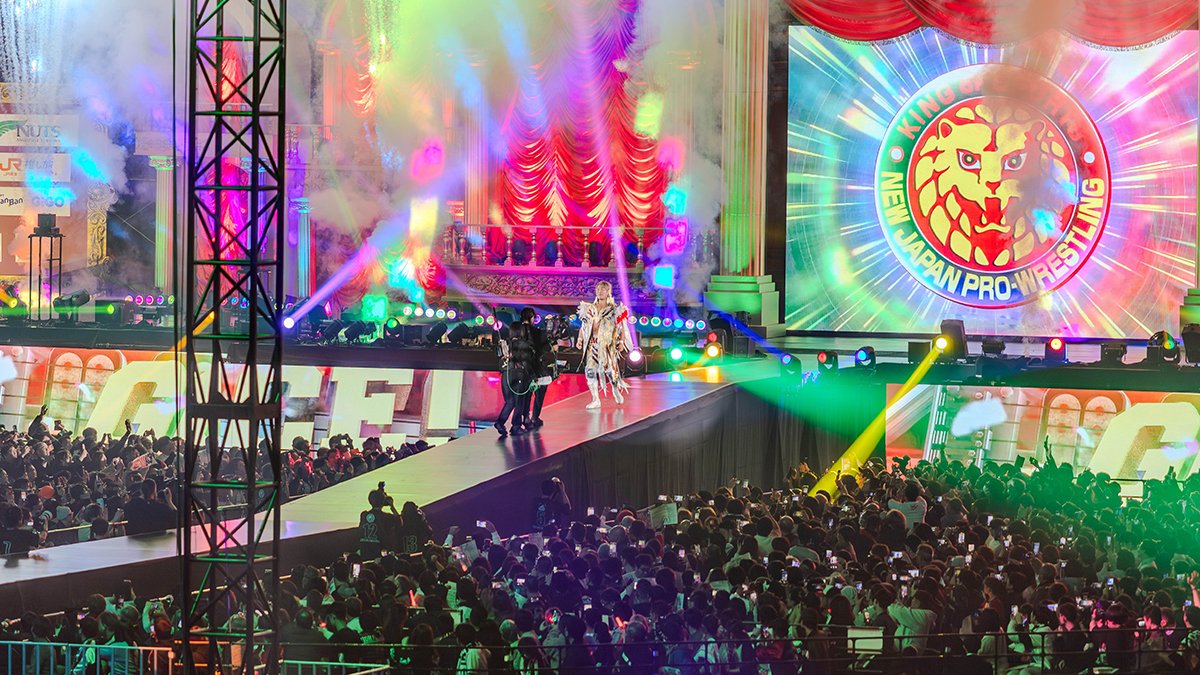
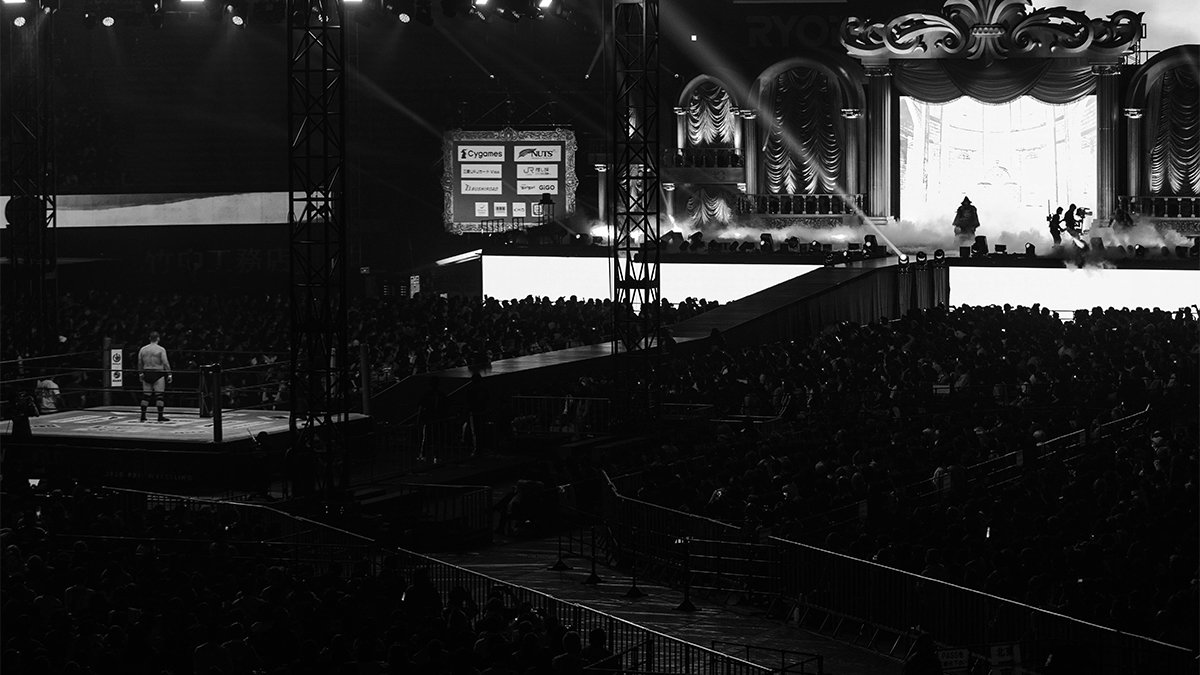
On January 4th, 2026, Hiroshi Tanahashi retired from professional wrestling. The Ace of New Japan ended his twenty-six year career in front of a sold out Tokyo Dome crowd of 46,913, the first sell out of the famous ballpark in nearly two decades. For the man who is highly credited with lifting his promotion out of the dark ages, it was one last gift to New Japan on what felt like a truly special night for wrestling as a whole. There were a number of other great moments on this night. But this was all about Tanahashi.
To their credit, New Japan ensured that all the presentation elements around this show were top notch, with banners and flags outside the Dome (showing different moments of Tanahashi’s career) and around the neighbouring Tokyo Dome City helping to create a festival atmosphere before anyone even entered the venue. The sheer amount of people only added to the anticipation; this felt like the place to be in Tokyo on that day. There were Tanahashi cosplayers, there were foreign tourists taking their picture outside of the iconic venue getting a photobomb by a hobbling Kota Ibushi and mostly, there were people meeting for the first time in the spirit of celebration. Celebration is the word that has been used most when it comes to this entire event and the retirement match when discussing it with other attendees as well as others involved in the event.
This was a shorter show than what we normally see on January 4th, as New Japan focused on catering for returning fans as well as irregular attendees attracted by the spectacles of the Tanahashi retirement and the Aaron Wolf debut. This meant a seven match main card with only four straight singles matches. The crowd also made it to the venue early; this was not a show where people chose to arrive later (as can be customary in Japan), meaning that the energy was there from the beginning of the show. What was also immediately noticeable, on top of the incredible New Japan staging, was the sheer amount of sponsors incorporated into the presentation. This didn’t feel like a company coming to the end of an era or on a downturn, it felt like one moving between eras and set for new beginnings.
© Chris Gannon
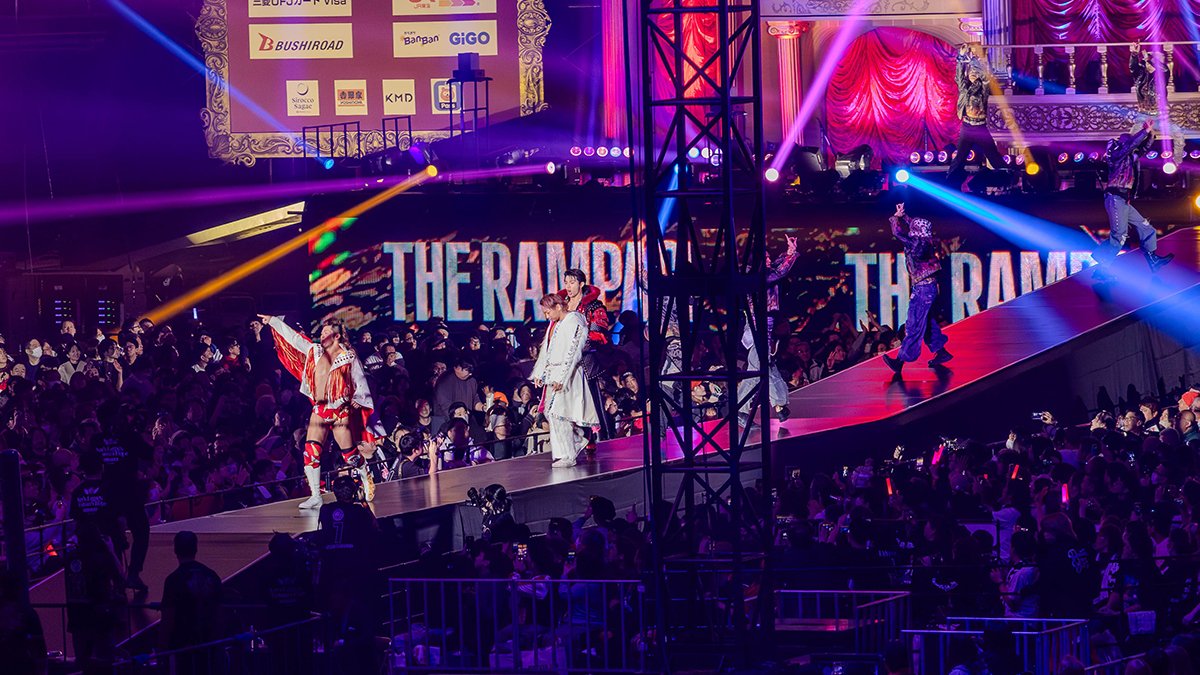
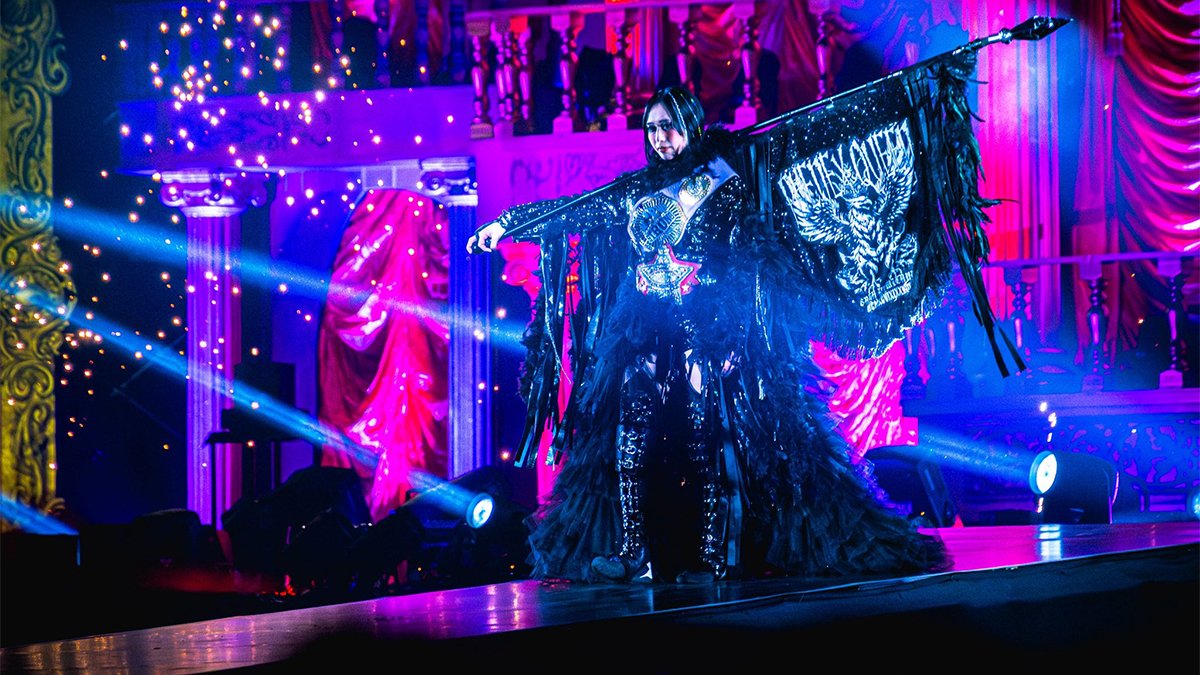
The show opened with a performance by THE RAMPAGE from EXILE TRIBE, a J-Pop group that features Kaisei Takechi of DDT. This was a high energy open that was very popular with the Japanese parts of the crowd that immediately set this up as a big time show. Takechi looked like a massive star and one that you could easily see New Japan picking up in the future. His participation in the show was as more than a singer, though, as he would be teaming with Shota Umino and Yuya Uemura in the NEVER 6 Man Openweight Rambo, which replaced the traditional singles battle royale that normally occurs on the “Wrestle Kingdom” pre-show.
This match had been planned to take various forms in the run up to event, but eventually ended up as an eight team affair that not only featured last year’s headliner Umino, but also Hirooki Goto and Zack Sabre Jr., who were the two men who held the IWGP Heavyweight Title for most of the past year. This had led to some criticism from the more hardcore parts of the support base, particularly in regard to the Knock Out Brothers vs Oiwa/Zack match being on the “New Year’s Dash” show the next night. Looking back at both shows now, though, this ended up being the right decision, with the Knock Out Brothers far more over with the Ota crowd than they were in the Dome environment. This match was also the last Tokyo Dome appearance for the soon to retire Tiger Mask and the last one under the New Japan banner for Clark Connors before his departure to AEW.
This one, quite honestly, was no classic, even though it was fun in points, beginning with SANADA’s Tron style entrance gear. It was hard to follow (with a number of fans following along more with the entrances than they were the match), and clunky for a great deal of it. Some of this may be because there was no time to plan the match in the ringside area prior to the show, the rest likely comes solely from the format. As the ring eventually began to clear, and YOH’s elimination meant there would be new champions, it came down to the two most high profile teams of TMDK and Bishamon and Oleg Boltin. As much as the participation for Sabre Jr. and Goto in this match had been criticised, it did make sense for it to come down to these two teams after the previous year, and it was Zack who got the win along with the six man titles for his team. TMDK celebrated around Hartley Jackson, who picked up his first ever championship in New Japan with this victory. Jackson had not been made aware of them picking up the straps until they were essentially walking through the curtain, so the cameras ended up catching real emotion on the face of TMDK’s big man. The opener ended with a face off between the final two teams, signifying that a program between the two would follow in the run up to “New Beginning” in February.
© NJPW
The second match out of the gate was the first of the straight singles matches of the night, as both the IWGP Women’s Title held by Syuri, as well as the New Japan Strong Women’s Title held by Saya Kamitani were on the line. Kamitani, on the back of becoming the first woman to pick up the Tokyo Sports MVP award and being part of the first women’s wrestling match on primetime TV (alongside Hanan) in twenty three years, was a priority to have on this card, and it almost never happened. Kamitani was injured during her match with Saori Anou at STARDOM’s “Dream Queendom 2025” event at Ryogoku Sumo Hall on December 28th. The official line is that she was cleared two days before January 4th, but, as first reported by our network on “Keepin’ It Strong Style”, the decision ended up being made much later, with plans for an angle and alternative matchup being put in place before the match was given clearance. It is a credit to both participants that if you were watching the match without such knowledge that you would have had barely any knowledge of how close a decision it had been over it happening at all.
It was quickly apparent as to why New Japan, STARDOM, Bushiroad and TV Asahi wanted this match on the show. Both the Phenex Queen and Syuri looked like massive stars and received strong reception from the crowd. It felt like a step up from the atmosphere for women’s matches on these cards in recent years before the bell had even rung, with the bout getting more time than anyone expected coming in, even with its early card position.
The two competitors, wrestling each other for the first time in four years, had a pretty straightforward story to tell – with the all conquering World of STARDOM Champion having never beaten Syuri in a singles match within her career so far, whilst Syuri wanted to retain the IWGP title she won from Sareee in a great effort in Ryogoku back in October, pick up the Strong title, and cap off her return from an elbow injury last autumn with a Tokyo Dome victory. It meant that the crowd didn’t need to work hard to get into the matchup, with both women fighting for dominance early, as they countered each other athletically and in striking before Syuri’s submission game kicked in. Kamitani managed a fight back after that escape, hitting the Star Crusher on her opponent for what felt like a long two count that brought the crowd up to a new level. Syuri’s first attempt at Syuri World had been countered into a poison rana, but a second one did manage to get her the victory.
Many in the crowd were as shocked as Kamitani’s face looked. This unstoppable force had met a real roadblock, very much keeping her story of not being able to find a way to defeat Syuri up til now very much alive. It is a result which can be used in story going forward but also feels like a strong call for this moment in time, with Syuri already exposed to US and European audiences and Saya Kamitani being a focal point for wider star building in Japan by Bushiroad. This match was one of four to make the primetime TV coverage for this show, and it thoroughly deserved the opportunity.
© NJPW
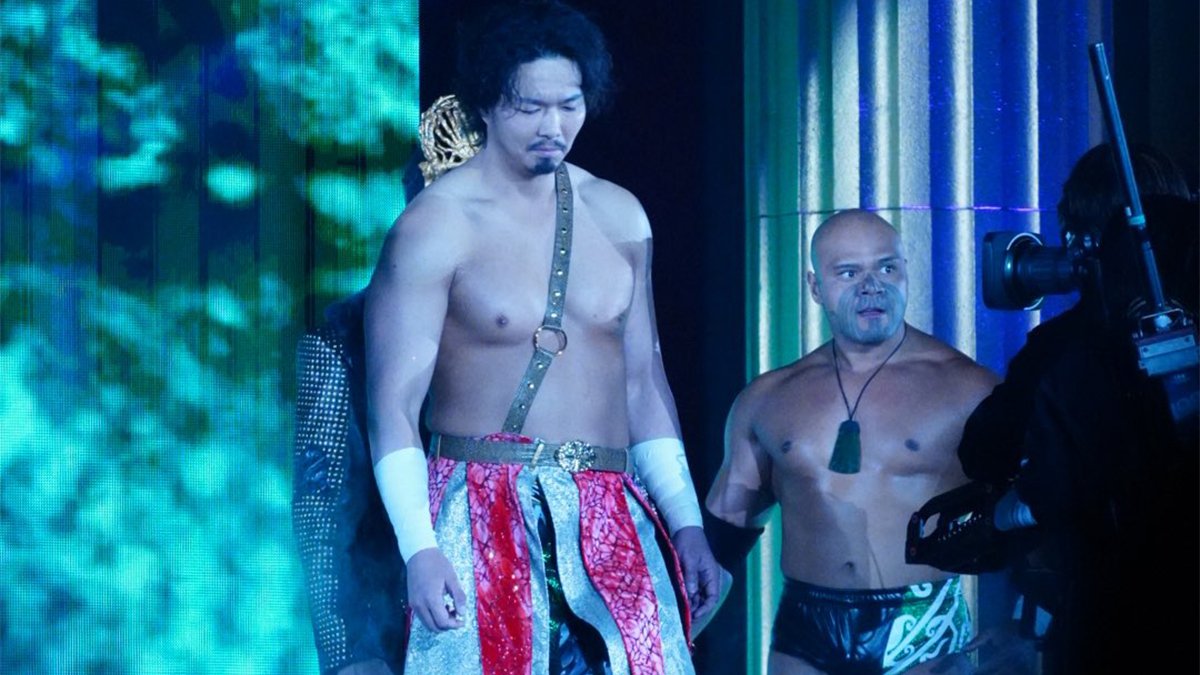
Next up was the ten man between the recently merged War Dogs and Unaffiliated factions against the United Empire. Empire would be providing a mystery tenth man for the bout, having already unveiled AEW’s Andrade El Idolo as their fourth man and mystery benefactor. The tenth man being Jake Lee, in what was a betrayal of the War Dogs, had been in place from the point the match was announced. It caused an interesting reaction inside the Dome as many viewers from further afield groaned as the name flashed across the giant screens, whilst the Japanese fans in attendance reacted in shocked surprise accompanied by anticipation.
The match built well from the success of this past December’s World Tag League, with the combinations of Drilla Maloney and Shingo Takagi and, moreover, the love/hate team of Hiromu Takahashi and David Finlay. It was Takagi and Maloney who were up first, with Takagi renewing his past NEVER title rivalry with the returning Henare before Callum Newman entered proceedings in an attempt to take control for his team. This brought Hiromu into the match for one of the biggest pops of the evening up to that point. The crowd only got louder as Takahashi and Finlay used each other for offense, culminating in Hiromu being suplexed onto everyone on the outside from the top rope. The former junior champion took a victory lap after that one.
That was as good as it got for Hiromu, though, as Jake Lee took his head off with the Face Break Shot and pinned the most popular guy in the match for the three-count one handed. It had the crowd bemused as it was happening, but ended up making somewhat more sense as the night went on. Hiromu wasn’t done taking a kicking, though, as the United Empire revealed their masked man as the also-returning Francisco Akira, who gave Hiromu a headbutt to finish things off. The closing shots of the Empire made Andrade and Lee feel like the top guys in the faction, with Callum Newman off to one side; thankfully, they made sure to correct that appearance come “Dash” the next night.
© medamayaki888
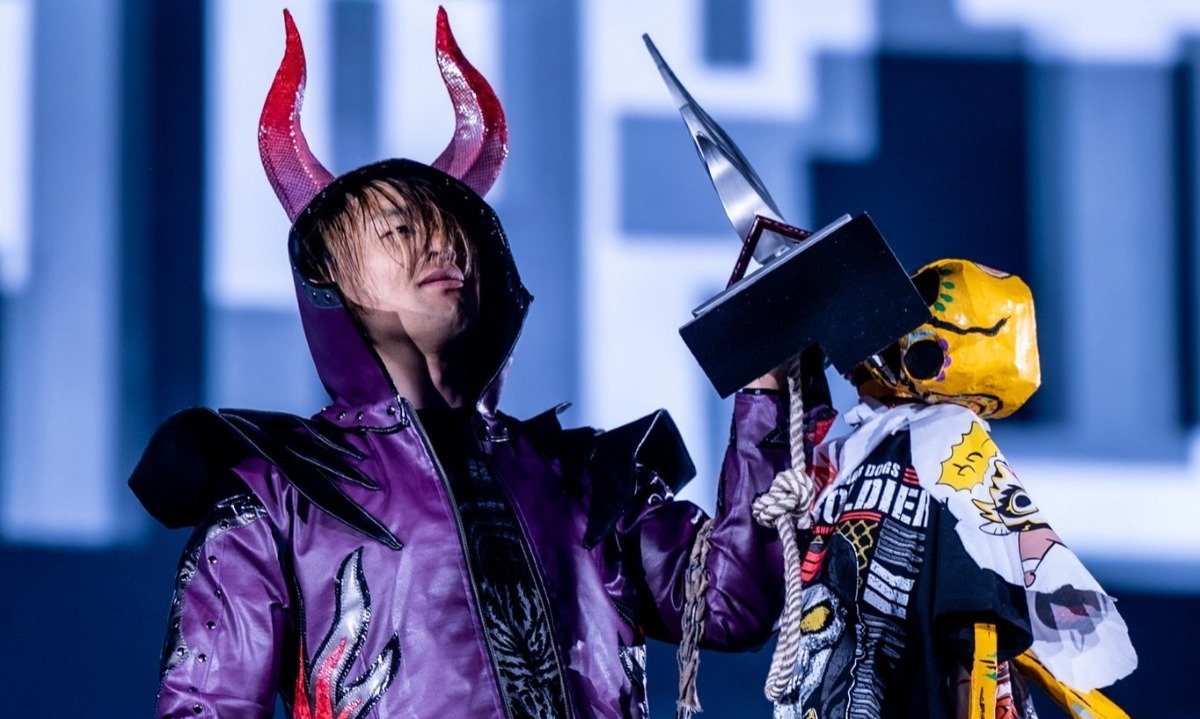
If there was one disappointment on this night, then it was the junior four way. It already felt like a relegation that the only junior match on the card was not for the Junior Heavyweight title itself, but with the stakes of the match instead being for the number one contendership for the title (a match which would instead take place as the main event of a Korakuen Hall show). This also meant that Champion DOUKI, who was horrifically injured on the Dome show last year, did not wrestle on this show, and was instead relegated to commentary. Some may have preferred this, given his House of Torture status, but that ended up making little difference as Sho did compete, meaning that the Junior match, which could have been the athletic standout on the show, ended up being more about outside interference than it was the participants in the match. The aim was to illustrate Sho was protecting DOUKI from potential challengers, but the balance wasn’t right, which meant it ended up underperforming expectations as a whole, and had some of the biggest spots in the match reserved for the interfering (on the babyface side) Robbie Eagles, Robbie X and Kuukai.
Eventually, the outside factions were removed from the ring, with the closing stages coming down to Sho and El Desperado, who had faced DOUKI in the cursed Junior title match last year in the same building. Desperado was able to avoid the final interference attempts, following up a Tiger Driver with the Pincho Loco for the win. The match only went seven minutes and was eventful, but you couldn’t help but feel a bit flat with the ending. Whilst you can have an understanding of calling back to the events of Desperado-DOUKI in the Dome last year, it felt out of place with the face/heel dynamics of the pair, but also less consequential as the match wasn’t even for the championship. It also meant a somewhat disappointing night for Kosei Fujita, who multiple New Japan sources had been stating in the run up to the show would be a real focal point for the company in 2026. Whilst there is still plenty of time for that, and his peers state he carries a level of respect far beyond his age and spot, this felt like a missed opportunity. The truth about this show, though, is that very few people will remember the undercard as discussed here (with perhaps the exception of Syuri vs Saya Kamitani), because of the success of the top three matches on the card and how truly memorable they were. This absolutely can be argued as a reason to have not gone with Fujita here, but it’s important that New Japan choose not to deliver too late on this one, as has so often been the case in recent years with a number of other performers.
© Chris Gannon
The pace, feel and atmosphere of this show was about to pick up, though, as we entered the business end of the show, beginning with Aaron Wolf challenging EVIL for the NEVER Championship. A lot had been said in the run-up to the match about Aaron Wolf’s look, his ability during the match setting angles and whether they would be able to successfully execute his debut to capitalise on the mainstream Japanese interest in the event brought by adding a home Tokyo Olympics Gold medal winning judoka. Indeed, Wolf was the primary reason why New Japan’s premier yearly show returned to primetime television and was the only other man to be featured in advertisements for the show across the local area alongside Hiroshi Tanahashi.
Even with all of those facts on the table, it felt almost impossible for us, as outsiders, to know just what the level of interest there would be for Wolf from the outset and in this building, so we waited on his entrance with a sense of anticipation. And it was this moment that told us that whatever level we thought Wolf was at before arriving in Japan, in regards to his wider popularity, we had massively underestimated it, because this reaction was HUGE. It dwarfed anything prior to it, like a real tour de force of energy. Part of that was that New Japan got his presentation spot on – from Keki Suzuki’s taiko drum, to the clean graphics, to Wolf removing his judogi to reveal the black tights and shaved head representing his transformation into a wrestler. The final moment was the catalyst for what can only be described as an almighty roar, and it was hard not to get caught up in the excitement. It had also been well set up by EVIL’s comments at the press conference the previous evening, where he had threatened Wolf with making him into a young lion after defeating him in the match. The quick change allowed him to move one step ahead as a babyface, on top of making a memorable moment before the match had even begun. Wolf looked nervous as he awaited his opponent in the ring, but the first challenge had been passed with flying colours.
This is the part of the review where we are going to be nice to EVIL. EVIL, whose House of Torture stable is popular in Japan but has also led to interference driven match ups up and down the card, excels in these kinds of moments. Similar to last year, when he faced Hiroshi Tanahashi in the ballpark, everything about his presentation and match structuring was spot on here. For the second year in a row, he stole entrance of the night, coming through the gates in the centre of the stage, before being played to the ring with an adapted version of his theme performed by guitarist Kenjio3. Watching this back on TV, I am not sure it conveyed just how ‘cool’ this was inside the building. It was just another element that made this match feel bigger, alongside Chono joining Japanese commentary.
The match structure, from the opening bell, was the definition of perfect simplicity. Striking exchanges led to an only shoulder charge takedown for Wolf that hyped up the crowd that meant that they were fully invested when the match turned in the heel champions favour. EVIL gained control after throwing Wolf into an exposed turnbuckle, leaving the new man holding his back. It looked like it would be easy work for the more experienced wrestler, but he was unable to capitalise on his advantage, as Wolf powered out of a number of pin attempts, with the crowd becoming louder on each occasion. They were rabid after a judo throw looked to change momentum, and angered when EVIL replied with a suplex of his own after Wolf had taken powder to the face, restricting his vision. In general, I am not a fan of massive amounts of interference in matches, but in this one, every inclusion of the House in the match was completed with the sole aim of stacking the deck against the babyface and getting the crowd behind him. The image of a powder covered Wolf fighting to reach the ropes under the threat of the first submission of his entire career was correctly on the front of a number of papers the next day alongside the victory photos.
It’s perhaps the most underrated part of the match that for all the weeks of rehearsals (much longer than the week or so that went into the Master Wato/YOH Best of the Super Junior final back in May), the thing that they managed to drum into Wolf was how important his selling would be and how just being able to convey the smallest amount of emotion through his struggle would lift a crowd already baying for him to succeed. His head was always up in the key moments, meaning that by the time Wolf was hitting Kurt Angle’s Olympic slam or hitting a splash off of the top turnbuckle that the crowd were rightfully going crazy.
You can perhaps argue that the House interference after this point, including Fale’s splash off the top onto Wolf and through a table, was a little more unnecessary than the rest, but it wasn’t long after that when full Wolf chants broke out as the match moved into its final moments, with the pair exchanging lariats and other big power moves. The champion went for Everything Is Evil (with many in the crowd chanting along) but found his way blocked, and instead caught an inverted triangle choke. The tap, drawn out to just the right moment, was met with rapturous celebrations, as people jumped up and down in the floor seats and hugged each other. It was a real sight to behold, which Wolf turned into after the bell was rung before falling to his knees in the middle of the ring.
This match was an absolute triumph from beginning to end and proof that wrestling, for all its complexities, can sometimes just be so simple in its construct, especially when it comes to the babyface and heel dynamics. Credit should go to New Japan in terms of the presentation, to EVIL for the excellent match structure, to the likes of Hiroshi Tanahashi, Zack Sabre Jr. and Hirooki Goto, who have all played a role in Wolf’s training up until that point, and to Wolf himself for not just executing where he was asked to but also being able to convey his struggle and his triumph in a way that was unexpected leading up to the show by many commentators. The long term jury is still out on where his level will be in New Japan Pro Wrestling, with other wrestlers believing the biggest driver of improvement is being out on the road every night, but for this moment, they got it right. There was only a brief moment to acknowledge that in the building, though, as we were soon onto another match where the execution and the result had to be strong.
© Chris Gannon
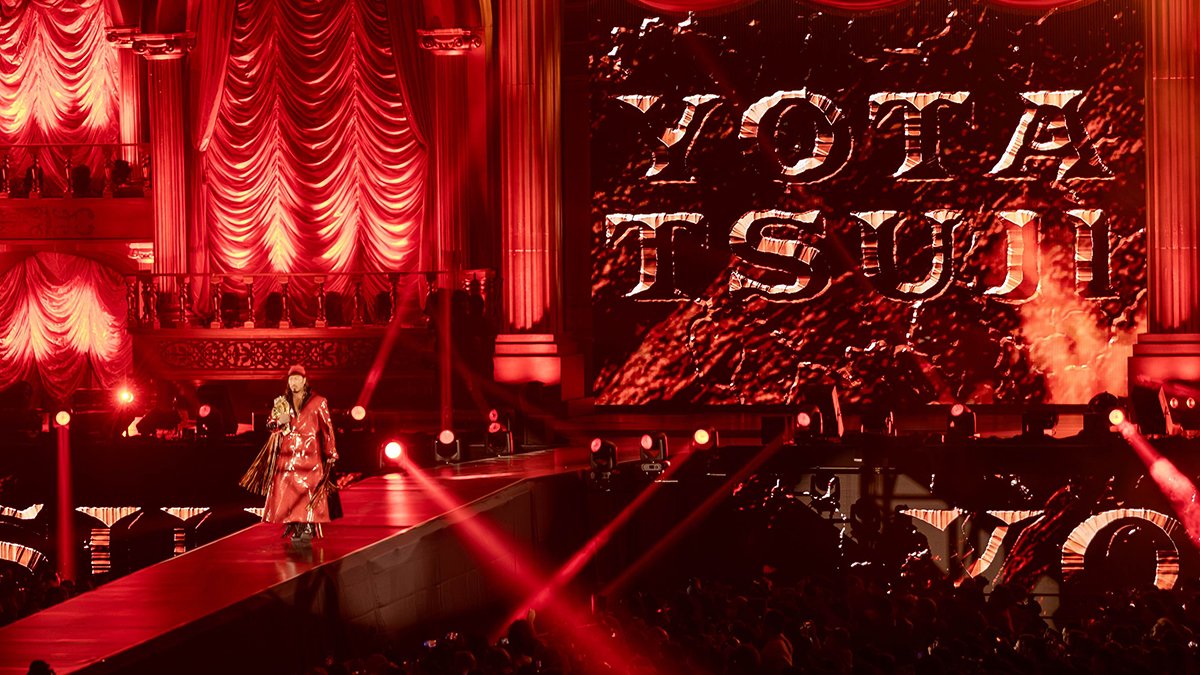
Yota Tsuji came into the Tokyo Dome with only one option really on the table: he needed to win and he needed to illustrate his in-ring growth in recent years on the biggest stage. Tsuji is perhaps the biggest surprise in recent years, having been considered the least exciting prospect of his young lion class before putting in the work during excursion that outweighed that of his former dojo compatriots. He may not be on the level of the in ring New Japan greats of the last decade, but his continued improvement, on top of his ability to convey himself as a babyface to the crowd, make him the right guy for right now as New Japan transitions into a new era to lead them forward. The success of last year’s match for the IWGP Global Championship with David Finlay, compared to Shota Umino’s efforts in the main event against Zack Sabre Jr., only made things even clearer in terms of which direction they should take.
There is something else about Tsuji in recent months that stands out as well, and it’s an increased level of confidence and assertiveness that a number of people in New Japan have been waiting on for some time; gone is the uncertainty and hesitation that he could often suffer from, and in its place is a man attempting to be a leader, who wants to inherit a role that everyone knows won’t be easy and has taken its toll on others placed in the same spot in recent times.
One of those men is Konosuke Takeshita. Takeshita entered the Tokyo Dome on the back of a year full of accomplishment, having won the G1 back in August and the IWGP Title from Zack Sabre Jr. in October, but has struggled to get New Japan fans to buy into him in this spot and was somewhat snubbed in the Tokyo Sports Awards in December. Most of this is not on the former DDT wrestler, who has kept up an unreal schedule in order to compete at the highest level for both New Japan and AEW (while still making appearances for DDT), and has had to deal with a complete lack of direction from New Japan in regards to his character and his character’s ambitions. This was particularly prevalent during the G1, where the positioning of Takeshita as the babyface in the final against the homegrown EVIL made for a great atmosphere but not one that was productive for the thirty year old, who also had to contend with not coming from New Japan’s dojo in regards to how he is viewed, alongside increased apathy towards wrestlers from other companies holding the promotion’s top championship after multiple years of disjointed booking around the somewhat cursed belt. Whether it was New Japan itself, or Tsuji and Takeshita pushing it into the narrative, all of these elements were brought into the build for the match. For the first time in several months, Konosuke Takeshita had a direction for his character and a role to play, and everyone was better off for it. In terms of being an obstacle to overcome in a big match environment, there aren’t many better than him out there.
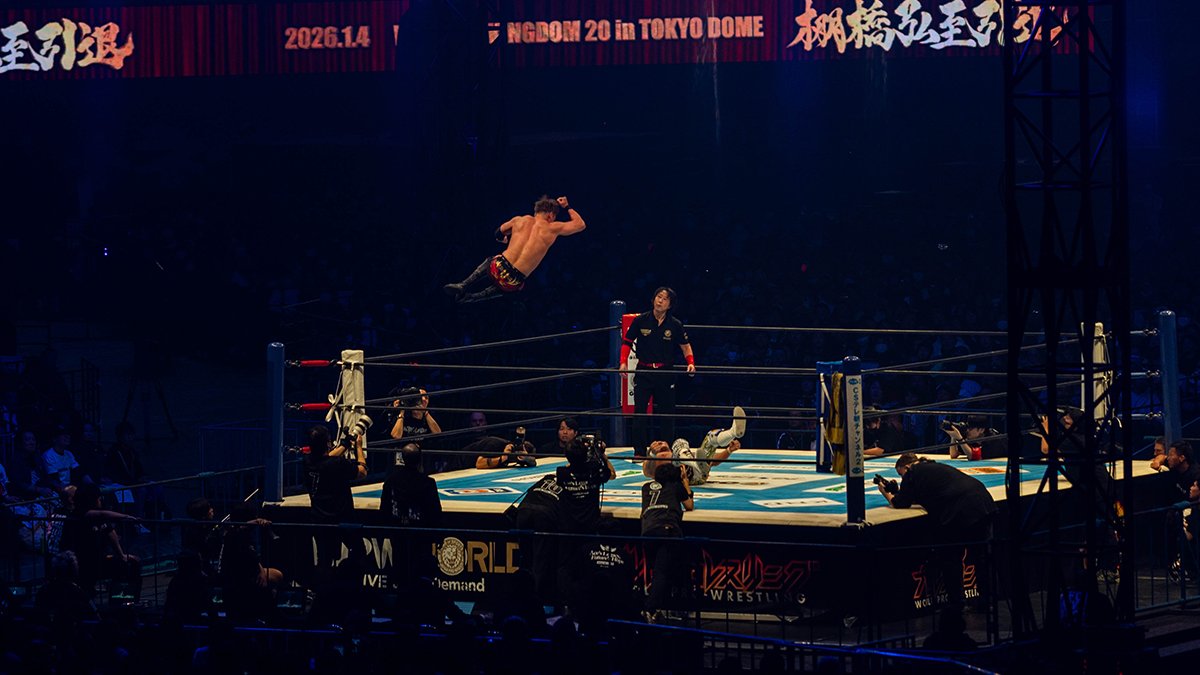
The match started slow, with both competitors fully focused as the pair looked to build the crowd back up from having just had an emotional release from the ending of Wolf/EVIL. These early moments were incredibly important for the match, though, as they laid out Tsuji’s strategy clearly from the get go. They don’t look like much in the moment, a series of attacks to the body whilst exchanging counter strikes with Takeshita, split up by slaps and hurricanranas to get the crowd riled up, but when you look back on it after match end, it adds up to some simple but really effective in-match storytelling. Takeshita was also further established as the antagonist in these early series as well, hitting Tsuji with a brainbuster that ended up affecting the challenger’s neck and right side of the body, before a DDT onto the apron and kicking Tsuji over the outside barricade to a chorus of boos from the crowd. Tsuji managed to get in before the count but was immediately struck down by his rested opponent.
Indeed, there would be no time for recovery or hesitancy in this match, with anything of the sort met with offense from the other wrestler as the tide moved back and forth. This took away one of the big criticisms of Tsuji’s in-ring pacing, whilst also making for dynamic swings in momentum that painted both wrestlers as being at the very top level. Tsuji brought out some of his more athletic stylings, including a fosbury flop to counter Takeshita’s terminator dive that had quietened the crowd down a few moments before. If this was just a match of move exchanges it could have led to much more of a split crowd, but the biggest thing both men did right was knowing how to play to the crowd in these moments. Tsuji is such an old school babyface in this sense, not afraid to ask the crowd for additional support and playing up the “Yota!” chants as they picked up. The relationship between crowd and wrestler can be so easy to captivate in these little moments in a match if you are willing to do so.
The energy from the crowd focused Tsuji, who went back to his attacks on the midsection with a series of big knees. Takeshita cut off his momentum once more at this moment in order to stop the sustained attack. This was the point in the match where the crowd was fully back up to the levels of close for the previous, and was recognised by the wrestlers, who went into a strike exchange. All of Tsuji’s punches in this go to the midsection, with the final one looking (and sounding) like a real boxing body shot. The tempo moved up from there, with suplex exchanges leaving both men down on the mat whilst raising the crowd up, leading to even more frenetic exchanges between the pair that had the crowd gasping at each high impact move and each near fall that would come after. A blue thunder bomb from the turnbuckle followed by a viscous looking Power Drive Knee convinced most of the crowd it was over, just for Tsuji to kick out at the very last moment. The man returning just a match later would have been proud of that one. Takeshita’s response was to expose his knee and try again, but his attempt was met by a nasty headbutt from the challenger, whose smile as he raised his head from underneath secured him another crowd roar.
From there, this one came down to a duel, as the two men faced off against each other. It was the Gene Blast spear versus the Power Drive Knee, New Japan versus outsider, two men desperate for the same prize. And it was Tsuji that came out on top. There was no going for a pin here, though, no celebrating hitting the move. Tsuji went straight to putting Takeshita in a Boston Crab and everything that they had done in this match up to this point all clicked in perfectly in the viewer’s mind. There was no hesitancy from Tsuji as he locked in the first move taught to New Japan young lions on the champion, having spent the entire match focused on Takeshita’s midsection just for this moment. Nothing was going to distract him from his goal and earning his spot as the guy at the top in New Japan. This was everything he had worked for and this was exactly where it mattered. All the themes of the build were being pulled together here perfectly. Takeshita attempted to raise himself up, each attempt met with the sound of boos as the crowd willed desperately for him to tap. Tsuji settled his body in lower, creating even more pressure on Takeshita’s midsection and that was enough.
Yota Tsuji had told Hiroshi Tanahashi to “leave New Japan to me” back in Gifu in November, and with the tap, the company now found itself placed firmly in his hands. His celebrations were swift, taking the microphone to thank the fans for watching him grow up in the New Japan ring and still supporting him now. It was a well received moment that was to be interrupted shortly after with a Jake Lee attack from behind. There has been a lot of criticism of Tsuji not getting his moment here with the Lee interruption, of not letting the moment of achievement breathe, but I think that the match not being the show closer means that Tsuji still has that show closing moment on the table. It is also impossible to not notice the similarities between Tsuji’s journey to the championship and stolen celebration with that of Tetsuya Naito back in 2020, whose roll call was spoiled by a jump in from KENTA. New Japan hopes that in doing so it keeps the babyface momentum of the chase going into the “New Beginning” cycle.
© Chris Gannon
With that complete, and the two matches most important in setting up 2026 from New Japan having successfully achieved their aims, it was time to provide closure to the previous era. Hiroshi Tanahashi and Kazuchika Okada had last wrestled in 2024, ahead of Okada departing the company for AEW, but it had been ten years since their last match inside the Tokyo Dome. Whilst much had been made of who his final opponent would be (including by this outlet and Tanahashi still continually discussing it in the aftermath), the choice of Kazuchika Okada felt perfect in this moment.
Okada’s coin drop intro caused what felt like a pop of surprise from the Japanese fans in attendance, before it flipped into his AEW theme. He was AEW’s Kazuchika Okada at the start of this match, for the reasons those close to Okada had listed to us in our preview piece, setting him up as the antagonist for the match rather than some sort of returning hero. There was a flash of the past, though, with the AEW International Champion being accompanied by Gedo rather than Don Callis. And then, it was time for Tanahashi.
It is kind of a weird thing: you go into this event, and even this past year, knowing that everything was building up to the end of Tanahashi’s in ring career, but I don’t know if it had really hit anyone until the point the music hit and you realised that this truly was it. I think everyone in attendance punched the air with a little extra enthusiasm for the “Go Ace” chant than they normally would at that moment.
The two competitors wasted no time once they were both in the ring; Okada moved quickly to reinforce his heel status, taking cheap shots after promising a rope break to cause a break out of boos, whilst Tanahashi surprised the audience by fighting back with crossbodys and cannonballs at a pace many thought he was no longer capable of. Okada wouldn’t allow him to bask in the audience’s appreciation for long, though, knocking him off of the top with a dropkick, before following it up with a DDT onto the floor from the barricade. As Tanahashi struggled to regain himself on the floor, Okada spent his time sarcastically clapping along to the crowd’s “Tanahashi!” chanting. This began a longer heel control segment which created the sort of atmosphere I am not sure I have seen anywhere else.
The crowd was absolutely petrified with every piece of Okada offense and cover, with one crushing DDT leaving Tanahashi in the spike causing gasps from across the stadium. The fear seemed to drive the crowd to increase their response to Tanahashi, with “Go Ace!” chants rising in their volume after each close pin. It was enough to raise the legendary babyface, who found it somewhere within himself to fight back with a series of dragon screws before launching himself onto his opponent on the outside with a High Fly Flow from the turnbuckle; the move that Tanahashi had spoken most about wanting in the match beforehand had found its way in there. There was another dragon screw to come for Okada, following a cheeky wave from Tanahashi that lifted the intense mood of the match for a brief moment, before triple twist and shouts had the crowd believing that Tanahashi just might be able to pull something off. Okada cut him off perfectly, though, hitting him with a tombstone to end the mid match rally.
The action moved to the entrance ramp, culminating in another tombstone onto the walkway that left Tanahashi with a long way back to the ring in order to avoid being counted out, with the crowd becoming louder in their desperation as the count got higher. Tanahashi made sure to fall down during the chase back to get the maximum out of it. Some things don’t change with age. The relief that was felt when he reached the ring in time was immediately destroyed as Okada hit yet another tombstone followed by a Rainmaker. It was a cruel playing of the crowd making for incredible drama. Okada didn’t fully commit to the pin, still showing a level of disrespect for his opponent, meaning that Tanahashi was able to escape.
Okada, fully in AEW mindset at this point, moved Tanahashi straight into the Boston Crab that had just seen his rival Konosuke Takeshita moments before this match had hit the ring. Tanahashi asked the crowd to help him endure the pain of the submission and they duly obliged, with even referee Red Shoes pointing towards the rope for Tanahashi. His emotions were very much part of this one. Tanahashi reached the ropes, endured some cheap stomps off the back of the head from Okada and reached his feet, only to eat a picture perfect dropkick. This wasn’t going to be it, though, this was not going to be the way Tanahashi went out, not quite yet.
Tanahashi escaped a Rainmaker attempt by countering with a slingblade causing “Go Ace!” chants to break out once more. He then channeled the power of the three musketeers, going sleeper to penalty kick in the name of Shibata, before attempting the signature Nakamura pose (bless him, he tried) and hitting Okada with the Bomaye knee strike. The crowd went insane for these call outs and were completely with him as he climbed to the top for his own High Fly Flow to finish off his musketeer barrage. Could he do it? The moment of the pin felt like an eternity, in hope and anticipation, only for Okada to kick out at two. Tanahashi raised his hands to his face and much of the crowd did as well. He wasn’t giving up, though, another slingblade and another High Fly Flow and all 46,913 bought into the prospect that he could really do this. Tanahashi didn’t go for the pin this time, however, instead opting for another High Fly Flow attempt, only to be met with the knees of Okada. It sucked the energy out of the Dome in an instant, a moment that felt devastating if you were caught up in the drama of the match.
It was to be the last real flurry from Tanahashi, as Okada took back control with an emerald flowsion (after what may have been an attempted Destino? Maybe the 2026 variation) followed by a Rainmaker. Okada once more didn’t hook the leg of Tanahashi, allowing him to kick out. He would need something more to put him away, something that would take him away from the AEW version of Kazuchika Okada and call back to the man who had made Tokyo Dome main events his second home. In remembering his former self, hitting a diving elbow followed by his infamous rainmaker pose, he showed the level of respect to Tanahashi that ensured that whilst the resulting Rainmaker may have given Okada the victory, the finish was all about Tanahashi. It was a perfect close to the story of the match and a fitting tribute to Tanahashi in how it closed. Okada made clear whose moment it was in the aftermath immediately as well, thanking his long time rival and mentor before swiftly leaving the ring, allowing for the post match ceremony to start.
© NJPW
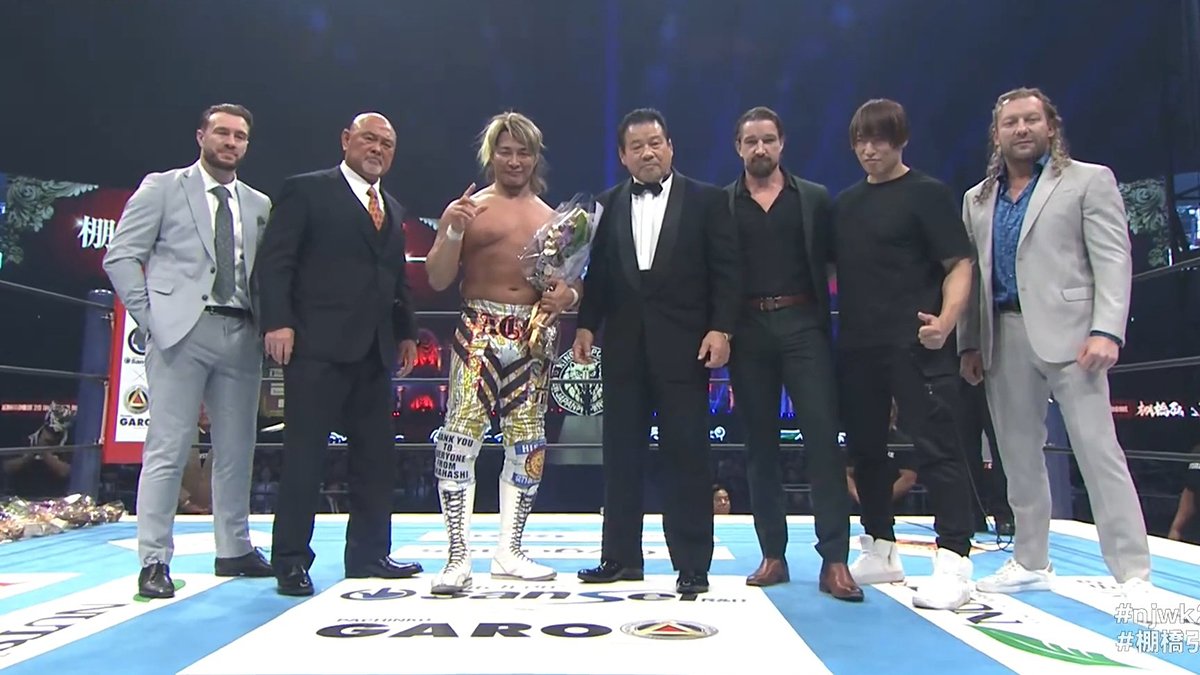
Going into this show, you may have expected to feel sadness in that moment, that the career of perhaps the greatest babyface of all time had come to an end in defeat, or simply just because it was over, but the mood of the ceremony after and on leaving the Dome was one of celebration. The ceremony was well constructed, feeling like an event of its own and was very much classy throughout. First out was Jay White, who had defeated Tanahashi for his first IWGP Title reign back in 2019. White hadn’t been seen for many months in AEW due to injury, meaning that there was a reaction of genuine surprise when his music hit. His acceptance of his invitation had not been reported, unlike his other AEW based compatriots. White was the first man to award Tanahashi with flowers and the first man to set him off crying.
Next up was Kenny Omega, accompanied by a hobbling, no-crutches-in-sight Kota Ibushi. Ibushi, who had left New Japan after making allegations of Yakuza involvement and suffering a severe injury, was perhaps the biggest surprise involved here. The man who had been a regular tag team partner for Tanahashi struggled to make it down to the ring but refused to be aided. The pair of Omega and Ibushi were followed by a suit-clad Will Ospreay and then the entrance of Katsuyori Shibata, OPPS shirt and all. Just him walking down to the ring was enough to set Tanahashi off crying again. The pair had a mini spar before embracing in a deep hug. Tanahashi’s mentor, Keiji Mutoh, and then Tatsumi Fujinami appeared to round off the guests, posing for group pictures with the Ace before leaving the ring, with Ibushi needing significant help to do so. Thankfully, New Japan removed the TV cameras from him as he was assisted down from the ring. The last man left in the ring with Tanahashi was Jay White, who made sure to check that he was holding up ok before they enacted one final ab competition pose. It was a rather cute moment during mostly structured proceedings.
The only question that remained was if either of the two noticeable missing names, Shinsuke Nakamura and Tetsuya Naito, would play any part in proceedings. Nothing happened for a moment as the crowd waited. And then, “Stardust” hit and the familiar Tokyo Dome lasers lifted up over the stadium. Tetsuya Naito, who had unceremoniously departed New Japan last May, was here; it took having his new theme played, an accompanying BUSHI and GHC Tag Title belts and a mini in-ring promo to get him. Naito will never not be Naito. The offering of the fist felt like more than just something between the two men, it felt a small bit of closure that was much needed for the New Japan audience, who reacted in shock when Tanahashi raised a fist of his own. It was a moment worth waiting for, and boy, did we wait.
The lack of Nakamura, a WWE call, was disappointing, and not even for the fans, but more for what both performers have repeatedly made clear in recent months that it would mean to them. Whilst some political challenges were overcome for this show, that one ended up as a bridge too far.
The closing of the ceremony wasn’t about who was and wasn’t there, though, it was about Hiroshi Tanahashi. As the audience held up their “I love you!” placards given to them in entering the venue, clapping along with his air guitar serenading and carrying out a Mexican wave, Tanahashi seemed to draw out each moment, trying to take it all in. Not a person had left the stadium. They all wanted to be with him in these moments, culminating in the ten bell salute that officially brought his in-ring career to a close.
From there, it was onto a chariot (which we may have dubbed a popemobile) to visit all corners of the stadium. This was the first point that you could see the physical toll of the night have an effect on Tanahashi, as he struggled to climb onto the vehicle. He would admit to his New Japan counterparts later that this was the moment where he was almost ready for the festivities to be over – not for lack of appreciation, but rather for feeling the impact of the night as a whole. The parade made its way around the entire venue before dropping him back off at the stage where he closed with the words, “I am so, so happy that I fell in love with professional wrestling,” before disappearing in a surge of smoke. The curtains on the stage closed, Tanahashi’s final performance was at an end. Fans left to the sound of his previous theme “High Energy,” pouring out into the Tokyo evening still feeling the elation of the night’s events.
We are told that Tanahashi was extremely happy with how his retirement match went, as well as the event as a whole, and that seems to be representative of a wider company view. As a TV broadcast, it was also massively successful, being watched in Japan by 3.5 million viewers with a 2.9 rating, whilst also leading to a 150,000 subscriber number for New Japan World, the highest number to date. It was one last in-ring gift he could give to the company he is now President of, and a fitting way to close out a career that was perhaps the most important of anyone’s in regards to changing the fortunes of his home promotion. There may never be another Hiroshi Tanahashi, and it was a privilege to be there for his closing moments in the ring.
This newsletter is free to access with the ambition of providing news, data and analysis to as many people as possible. All contributors are compensated for their content as we look to provide a home for both existing and emerging writers, photographers and artists.
Kids, The Royal Rumble Used To Be Good
Peter Edge reviews what has happened to the Royal Rumble match
The Road to WrestleMania & more
David Hayter reviews what has been going on in WWE & CMLL, and we have a round up from the independent scene in the lead up to “WrestleMania Weekend”
Saya Kamitani on form, New Japan contract notes, the Independents & more
Within our best-in-class coverage of Japan, Trish Speirs discusses the recent New Japan departures and we review Saya Kamitani’s latest best work
EVE, RevPro & more
We take a look at what is happening in EVE leading up to their biggest show ever on 8th March at the sold-out O2 Indigo in London
Check out these other articles from this week!
Saya Kamitani on form, New Japan contract notes, the Independents & more
Within our best-in-class coverage of Japan, Trish Speirs discusses the recent New Japan departures and we review Saya Kamitani’s latest best work
Kids, The Royal Rumble Used To Be Good
Peter Edge reviews what has happened to the Royal Rumble match
The Road to WrestleMania & more
David Hayter reviews what has been going on in WWE & CMLL, and we have a round up from the independent scene in the lead up to “WrestleMania Weekend”
EVE, RevPro & more
We take a look at what is happening in EVE leading up to their biggest show ever on 8th March at the sold-out O2 Indigo in London